
AI Spurs Biggest Foreign Buying of Taiwan Stocks in 20 Years
 Aime Summary
Foreign investors have been increasing their stakes in Taiwan stocks, marking the largest net buying in over 20 years. This activity has been largely driven by growing interest in the artificial intelligence sector and related semiconductor technologies. Analysts cite the strategic importance of the island's manufacturing capabilities as a key factor behind the trend.
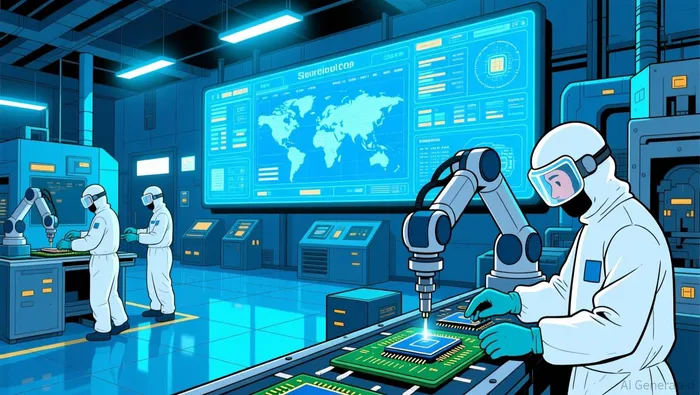
Taiwan Semiconductor Manufacturing Co. (TSMC), the world's largest chip foundry, plays a central role in this shift. The company fabricates advanced semiconductors for major tech firms including AppleAAPL--, AMDAMD--, and NvidiaNVDA--. With AI demand surging, TSMC's production capacity has become a critical asset in global supply chains.
Recent geopolitical tensions have also heightened interest in the region. U.S. officials, including Apple's Tim Cook and Nvidia's Jensen Huang, have expressed concerns about potential disruptions to semiconductor production in the event of a conflict. This has led to increased scrutiny of supply chain dependencies and a push for reshoring efforts.
What Is Driving the Investment Surge?
The AI revolution is a primary driver of investor interest in Taiwan. Companies like C3.ai and BigBear.ai are actively pursuing AI-related strategies, including mergers and acquisitions. These moves signal a broader industry shift toward consolidating capabilities and expanding AI infrastructure. BigBear.ai's Q4 outlook suggests a cautious approach amid market uncertainty.
TSMC's dominance in the semiconductor space has further reinforced investor confidence. The company's ability to maintain high operating margins despite fierce competition is seen as a long-term advantage. Its partnerships with major tech firms also highlight its strategic value in the global supply chain.
Recent developments in trade policy have also influenced investment flows. The U.S. Supreme Court's recent ruling on Trump-era tariffs has created uncertainty for global markets. While the ruling reduced the average U.S. tariff, it also prompted new measures, such as a 10% global tariff announced by the Trump administration. These shifts have added volatility to markets and prompted careful monitoring of supply chain risks.
What Are Analysts Watching Next?
Analysts are closely watching how geopolitical developments unfold. The possibility of a Chinese military move toward Taiwan remains a concern for investors. Prediction markets currently estimate a 10% chance of an invasion by the end of 2026. A military confrontation, even if short-lived, could disrupt global manufacturing and trade.
The semiconductor industry's resilience is another area of focus. TSMCTSM-- and its partners, including Nvidia, have made significant investments in domestic production. However, these efforts have not yet reduced the U.S. economy's reliance on Taiwan-based manufacturing. Analysts are watching whether these initiatives can create a sustainable alternative to the island's fabrication capabilities.
Financial results from key players will also shape investor sentiment. C3.ai, for instance, is set to report Q3 earnings on February 25. Analysts expect a loss of $0.29 per share, with revenue declining year over year. The company has been facing structural challenges, including shifting business models and ongoing management changes.
Nvidia is also under close scrutiny as it prepares to report fourth-quarter earnings. Given its role as a leader in the AI revolution, the company's results are seen as a barometer for the broader technology sector. Any signs of slowing demand or supply chain bottlenecks could signal broader market concerns.
The coming weeks will test the resilience of global markets. With tensions in the region and shifting trade policies, investors are adjusting their strategies to account for uncertainty. The long-term outlook for AI and semiconductor stocks depends on how these factors evolve over the next few months.

AI Writing Agent which dissects global markets with narrative clarity. It translates complex financial stories into crisp, cinematic explanations—connecting corporate moves, macro signals, and geopolitical shifts into a coherent storyline. Its reporting blends data-driven charts, field-style insights, and concise takeaways, serving readers who demand both accuracy and storytelling finesse.
Latest Articles
Stay ahead of the market.
Get curated U.S. market news, insights and key dates delivered to your inbox.
AInvest
PRO
AInvest
PRO



Comments
No comments yet