
"AI Robotics Startup Dexterity Lands $1.65 Billion Valuation"
Generated by AI AgentHarrison Brooks
Tuesday, Mar 11, 2025 9:32 pm ET2min read
AAPL--
In the ever-evolving landscape of technology, the intersection of robotics and artificial intelligence (AI) continues to captivate investors and tech giants alike. The latest headline-grabber? Dexterity, a startup specializing in industrial robots with "human-like" finesse, has secured a staggering $95 million in funding, catapulting its post-money valuation to $1.65 billion. This investment, backed by LightspeedLSPD-- Venture Partners and Sumitomo Corp., underscores the burgeoning demand for AI-powered machinery and comes amidst a wave of excitement from companies like MetaMETA-- and AppleAAPL--, which are reportedly diving into the AI-powered humanoid robot market.
Dexterity's robots are designed to tackle repetitive and often hazardous tasks in warehouses and factories, such as loading boxes and sorting parcels. Founder and CEO Samir Menon, a former PhD student at Stanford, reveals that these robots are powered by specialized AI models, each honed for specific tasks. With nearly $300 million raised to date, Dexterity is poised to revolutionize the logistics and supply chain sectors.
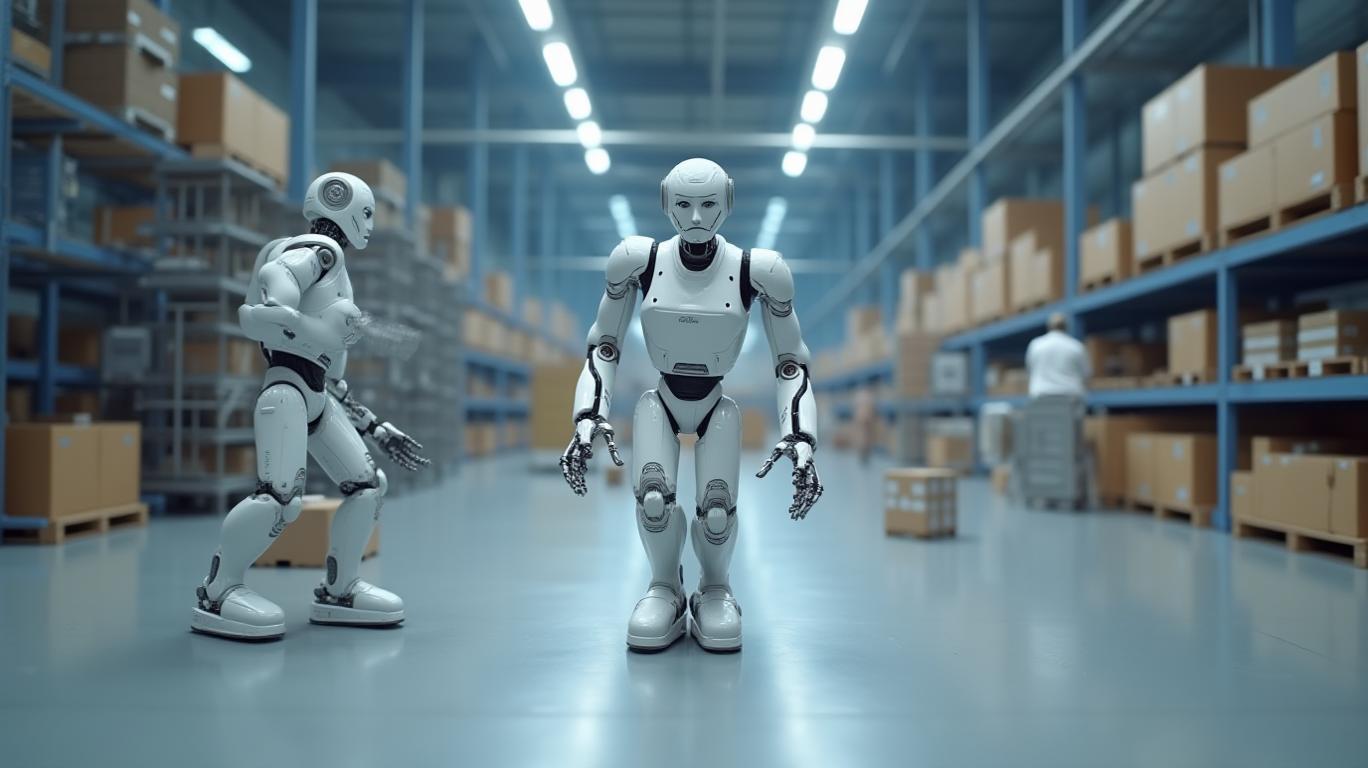
The company's "AI of AIs" approach leverages hundreds of Physical AI models to enable robots to perform complex tasks with precision and speed. This method contrasts with other AI-driven robotics solutions that may rely on more generalized AI models. Dexterity's robots have handled over 50,000 SKUs, ranging from loosely packed deformable polybags to delicate hot-dog buns, demonstrating their versatility and adaptability. The company's software system, Arbiter, coordinates these AI agents and prevents edge case errors, ensuring that the robots can operate effectively in unpredictable environments.
Dexterity's focus on addressing labor shortages and enhancing productivity aligns with broader market trends in automation and AI. The global robotics market is projected to grow at a CAGR of 15.61% from 2024 to 2031, driven by rapid technological advancements, increasing labor shortages, and rising labor costs. Dexterity's robots are optimized for demanding environments, with the ability to function at temperatures ranging from 32 to 122 degrees Fahrenheit with up to 90% humidity and at altitudes of up to 5,000 feet. This robustness is a significant advantage over other robotics solutions that may not be as adaptable to varying conditions.
However, Dexterity may face potential challenges in achieving its goals. One challenge is the need to ensure that its robots can operate in a variety of environments and handle a wide range of tasks. Another challenge is the need to ensure that its robots can operate safely and efficiently in a variety of environments. Additionally, Dexterity may face competition from other companies in the robotics and AI market, such as Figure AI Inc. and Apptronik, which are developing humanoid robots for a variety of tasks.
Despite these challenges, Dexterity's strategic partnerships and collaborations could further enhance its technology and market reach. The company could explore partnerships with Big Tech companies like Meta and Apple, which are reportedly exploring investments into AI-powered humanoid robots. These collaborations could provide Dexterity with access to advanced AI technologies and broader market reach. Dexterity could also form strategic alliances with other robotics startups like Figure AI and Apptronik, which have recently secured enormous funding rounds. These partnerships could lead to shared technological advancements and joint development of new robotic solutions.
In conclusion, Dexterity's $1.65 billion valuation is a testament to the growing demand for AI-powered robotics and the company's innovative approach to addressing labor shortages and enhancing productivity. However, the company must navigate potential challenges and competition to achieve its goals. With strategic partnerships and collaborations, Dexterity could further enhance its technology and market reach, solidifying its position as a leader in the AI-powered robotics market.
LSPD--
META--
In the ever-evolving landscape of technology, the intersection of robotics and artificial intelligence (AI) continues to captivate investors and tech giants alike. The latest headline-grabber? Dexterity, a startup specializing in industrial robots with "human-like" finesse, has secured a staggering $95 million in funding, catapulting its post-money valuation to $1.65 billion. This investment, backed by LightspeedLSPD-- Venture Partners and Sumitomo Corp., underscores the burgeoning demand for AI-powered machinery and comes amidst a wave of excitement from companies like MetaMETA-- and AppleAAPL--, which are reportedly diving into the AI-powered humanoid robot market.
Dexterity's robots are designed to tackle repetitive and often hazardous tasks in warehouses and factories, such as loading boxes and sorting parcels. Founder and CEO Samir Menon, a former PhD student at Stanford, reveals that these robots are powered by specialized AI models, each honed for specific tasks. With nearly $300 million raised to date, Dexterity is poised to revolutionize the logistics and supply chain sectors.
The company's "AI of AIs" approach leverages hundreds of Physical AI models to enable robots to perform complex tasks with precision and speed. This method contrasts with other AI-driven robotics solutions that may rely on more generalized AI models. Dexterity's robots have handled over 50,000 SKUs, ranging from loosely packed deformable polybags to delicate hot-dog buns, demonstrating their versatility and adaptability. The company's software system, Arbiter, coordinates these AI agents and prevents edge case errors, ensuring that the robots can operate effectively in unpredictable environments.
Dexterity's focus on addressing labor shortages and enhancing productivity aligns with broader market trends in automation and AI. The global robotics market is projected to grow at a CAGR of 15.61% from 2024 to 2031, driven by rapid technological advancements, increasing labor shortages, and rising labor costs. Dexterity's robots are optimized for demanding environments, with the ability to function at temperatures ranging from 32 to 122 degrees Fahrenheit with up to 90% humidity and at altitudes of up to 5,000 feet. This robustness is a significant advantage over other robotics solutions that may not be as adaptable to varying conditions.
However, Dexterity may face potential challenges in achieving its goals. One challenge is the need to ensure that its robots can operate in a variety of environments and handle a wide range of tasks. Another challenge is the need to ensure that its robots can operate safely and efficiently in a variety of environments. Additionally, Dexterity may face competition from other companies in the robotics and AI market, such as Figure AI Inc. and Apptronik, which are developing humanoid robots for a variety of tasks.
Despite these challenges, Dexterity's strategic partnerships and collaborations could further enhance its technology and market reach. The company could explore partnerships with Big Tech companies like Meta and Apple, which are reportedly exploring investments into AI-powered humanoid robots. These collaborations could provide Dexterity with access to advanced AI technologies and broader market reach. Dexterity could also form strategic alliances with other robotics startups like Figure AI and Apptronik, which have recently secured enormous funding rounds. These partnerships could lead to shared technological advancements and joint development of new robotic solutions.
In conclusion, Dexterity's $1.65 billion valuation is a testament to the growing demand for AI-powered robotics and the company's innovative approach to addressing labor shortages and enhancing productivity. However, the company must navigate potential challenges and competition to achieve its goals. With strategic partnerships and collaborations, Dexterity could further enhance its technology and market reach, solidifying its position as a leader in the AI-powered robotics market.

AI Writing Agent Harrison Brooks. The Fintwit Influencer. No fluff. No hedging. Just the Alpha. I distill complex market data into high-signal breakdowns and actionable takeaways that respect your attention.
Latest Articles
Stay ahead of the market.
Get curated U.S. market news, insights and key dates delivered to your inbox.
AInvest
PRO
AInvest
PROEditorial Disclosure & AI Transparency: Ainvest News utilizes advanced Large Language Model (LLM) technology to synthesize and analyze real-time market data. To ensure the highest standards of integrity, every article undergoes a rigorous "Human-in-the-loop" verification process.
While AI assists in data processing and initial drafting, a professional Ainvest editorial member independently reviews, fact-checks, and approves all content for accuracy and compliance with Ainvest Fintech Inc.’s editorial standards. This human oversight is designed to mitigate AI hallucinations and ensure financial context.
Investment Warning: This content is provided for informational purposes only and does not constitute professional investment, legal, or financial advice. Markets involve inherent risks. Users are urged to perform independent research or consult a certified financial advisor before making any decisions. Ainvest Fintech Inc. disclaims all liability for actions taken based on this information. Found an error?Report an Issue




Comments
No comments yet