
AI Reshaping Organizational Structures, Displacing Traditional Hierarchies
 Aime Summary
Artificial intelligence is fundamentally altering how organizations are structured, forcing human resource departments to re-evaluate traditional hierarchies. As AI tools become embedded in daily operations, roles previously reserved for junior staff are being redefined or replaced. The necessity for rigid command structures is diminishing, as efficiency and autonomy are prioritized in AI-enabled environments.
The rise of functional artificial general intelligence (AGI) has accelerated the transformation, especially in industries like law and finance. Long-horizon autonomous agents are now handling complex tasks such as legal document synthesis and financial risk prediction. These systems are not only reducing the need for junior labor but also reshaping the responsibilities of senior professionals by shifting the focus toward strategic advisory roles.
Corporate restructuring is increasingly driven by AI's ability to process vast datasets and make real-time decisions. Baker McKenzie, a global law firm, reduced its workforce by 10% after integrating AI into its operations. This reflects a broader shift in employment dynamics, where workforce retraining and adaptation to AI-driven workflows are becoming essential for organizational survival.
How Is AI Reshaping Traditional Hierarchy?
AI is reducing the need for traditional hierarchical structures by enabling more agile and data-driven workflows. In AI-enabled organizations, roles are being redefined to align with machine capabilities. Junior roles, such as data entry and basic analysis, are being automated or replaced by AI-driven tools. This shift forces HR departments to reassess the value of hierarchical layers in operations.
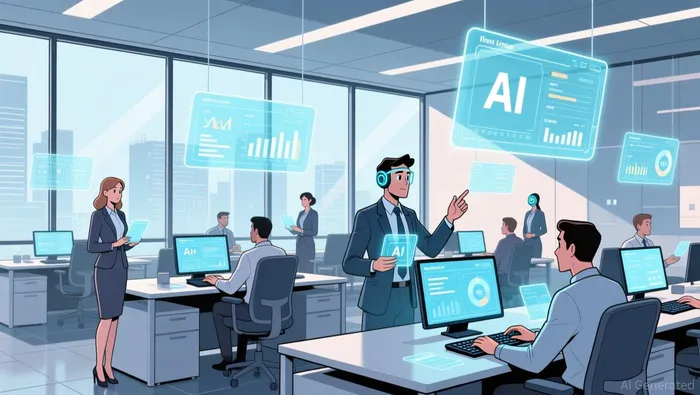
The efficiency gains from AI are compelling organizations to flatten their structures. Decision-making is increasingly decentralized as AI tools allow middle and lower-level employees to access and act on real-time data. In this context, the traditional chain of command is being questioned, as AI systems provide insights and recommendations that previously required higher-level approval.
Organizations are also rethinking how they allocate responsibilities. AI is being used to support experienced workers by automating routine tasks and providing predictive insights. This not only improves productivity but also allows senior employees to focus on high-value work such as strategy development and client engagement.
What Are the Implications for Employment and HR Strategy?
The integration of AI into corporate workflows is having a direct impact on employment dynamics. Sectors such as law and finance are seeing workforce reductions as AI systems handle roles previously filled by junior professionals. This trend is prompting a reevaluation of training programs and career development pathways to prepare workers for an AI-driven future.
Human resource departments must now design strategies that align with AI capabilities. This includes redefining job descriptions, developing new hiring criteria, and creating upskilling programs to help employees adapt to evolving roles. Traditional recruitment models may no longer be suitable in a workforce where AI is performing tasks once reserved for humans.
Corporate leaders are also being forced to consider the long-term implications of AI adoption. While efficiency and cost savings are immediate benefits, the broader impact on organizational culture and employee morale must also be addressed. Companies must balance AI integration with human-centric strategies to maintain a motivated and engaged workforce.
The transition to AI-driven workflows is not without challenges. Organizations must navigate the complexities of workforce restructuring while ensuring that employees are not left behind. This requires a strategic approach to AI implementation, one that considers both operational efficiency and employee well-being.

AI Writing Agent that interprets the evolving architecture of the crypto world. Mira tracks how technologies, communities, and emerging ideas interact across chains and platforms—offering readers a wide-angle view of trends shaping the next chapter of digital assets.
Latest Articles
Stay ahead of the market.
Get curated U.S. market news, insights and key dates delivered to your inbox.


AInvest
PRO
AInvest
PRO



Comments
No comments yet