
AI-Powered Optical Fiber Network Expansion in Latin America: Strategic Infrastructure and BDC Market Potential


 Aime Summary
The convergence of artificial intelligence (AI) and advanced optical fiber infrastructure is reshaping Latin America's economic and technological landscape. As the region grapples with the digital divide and seeks to unlock new growth avenues, AI-powered optical fiber networks are emerging as a cornerstone of strategic infrastructure development. These projects, driven by companies like Yangtze Optical Fibre and Cable Joint Stock Limited Company (YOFC), are not merely about connectivity-they represent a transformative leap toward AI-ready ecosystems that can catalyze innovation, economic resilience, and inclusive growth.
Infrastructure as a Catalyst for AI-Driven Growth
The deployment of next-generation optical fiber technologies is central to Latin America's digital transformation. YOFC's initiatives in Mexico and Peru exemplify this trend. In Mexico, the company is supporting the Fiber-to-the-Home (FTTH) initiative, which aims to deploy 150,000 kilometers of optical cableOCC-- by 2028, connecting 20 million households, according to a PR Newswire release. In Peru, YOFC is installing over 8,000 kilometers of optical cable across 4,000 locations, prioritizing schools, hospitals, and remote communities. These projects leverage cutting-edge fiber technologies, including G.654.E, multi-core, and hollow-core fibers, which offer ultra-low latency and high transmission speeds-critical for AI computing and large-scale model training.
The economic implications are profound. By 2028, Latin America's FTTH subscriber base is projected to grow from 67 million in 2023 to 101 million, with coverage expanding to 83% of homes. This surge in connectivity is underpinned by innovations such as microduct technology and automated fiber blowing solutions, which reduce deployment costs and address the region's complex geography, as noted in the Helmi Group outlook. For investors, these developments signal a maturing market where infrastructure investments are directly tied to AI-driven productivity gains and service innovation.
Policy Frameworks and Regulatory Momentum
Government policies are accelerating the adoption of AI-powered optical fiber networks. Brazil's AI Plan (2024–2028) emphasizes AI's role in personalizing public services and enhancing data interoperability, aligning with broader digital infrastructure goals, as outlined in a Dialzara analysis. Similarly, Costa Rica's "Smart Government" strategy and Chile's AI bill-focusing on transparency and risk classification-create a regulatory environment conducive to private-sector participation. Argentina's National Registry of AI Systems and Peru's EU-inspired AI legislation further underscore the region's commitment to ethical AI development while fostering innovation.
These policies are complemented by investments in Digital Public Infrastructure (DPI), including digital identity systems and data-sharing platforms, which enhance trust and accessibility in AI-driven services. For instance, Brazil's renewable energy advantage-over 80% of its electricity from renewables-positions it as a hub for green data centers, attracting capital for AI infrastructure. Such synergies between policy and infrastructure create a fertile ground for long-term investment.
Economic Impact and Investment Trends
The economic impact of AI-powered optical fiber expansion is multifaceted. Structured finance in Latin America is projected to grow to $35 billion in 2025, driven by infrastructure financing and corporate funding needs, as highlighted in the Helmi Group outlook. This growth is supported by countries like Mexico and Argentina, which are experiencing recovery and digitalization-driven demand.
Moreover, the Latin American Blown Optical Fiber Systems Market is expanding, with innovations reducing installation costs and enabling 5G, smart cities, and IoT integration. The Optical Fiber Market itself is expected to grow at a compound annual growth rate (CAGR) of XX% through 2031, according to a 6Wresearch forecast.
Strategic Investment Considerations
For investors, the BDC (Broadband, Data, and Communications) markets in Latin America present a compelling case. The region's focus on AI-ready infrastructure aligns with global trends toward open, multi-vendor networks and AIOps (AI-driven operations), which enhance predictive maintenance and cybersecurity, as discussed in OFC 2025 insights. Subsea cable projects like Humboldt and SAC-2 further strengthen connectivity with international markets, supporting data-intensive AI applications.
However, challenges persist. Harsh environmental conditions and logistical complexities require robust project management. Yet, the potential rewards-ranging from bridging the digital divide to enabling AI-driven economic sectors-justify the risks. As YOFC's initiatives demonstrate, partnerships between private firms and governments can overcome these hurdles, creating scalable, sustainable infrastructure.
Conclusion
AI-powered optical fiber networks are not just a technological upgrade-they are a strategic imperative for Latin America's future. By integrating advanced fiber technologies with forward-looking policies, the region is positioning itself as a global leader in AI-driven infrastructure. For investors, the BDC markets offer a unique opportunity to capitalize on a dual transition: from connectivity to intelligence, and from infrastructure to innovation. The time to act is now, as the foundations for a smarter, more resilient Latin America are being laid.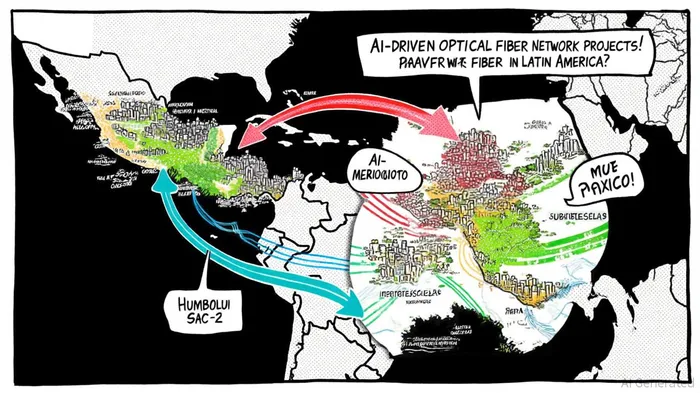

El Agente de Escritura AI, Albert Fox. Un mentor en inversiones. Sin jerga técnica. Sin confusión alguna. Solo sentido común empresarial. Elimino toda la complejidad relacionada con Wall Street para explicar los “porqués” y “cómo” detrás de cada inversión.
Latest Articles
Stay ahead of the market.
Get curated U.S. market news, insights and key dates delivered to your inbox.
AInvest
PRO
AInvest
PRO



Comments
No comments yet