
The AI Power Trade: JPMorgan’s Top US Grid Stocks
According to the latest research from J.P. Morgan Global Markets Strategy, the rapid electrification of the global economy—driven by electric vehicles, industrial electrification, AI data centers, and renewable energy expansion—is exposing decades of underinvestment in transmission and distribution infrastructure.
J.P. Morgan’s central thesis is clear: modernizing and expanding global electricity grids could become one of the largest infrastructure investment cycles of the coming decade.
Global grid investment reached roughly $490 billion in 2025 and is expected to rise to around $590 billion annually by 2030, implying approximately 4% annual growth.
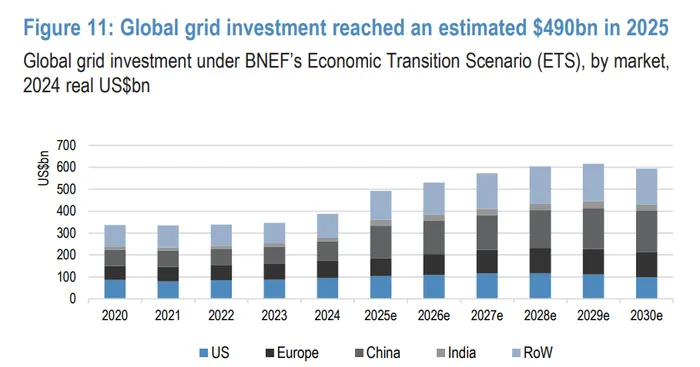
At first glance, that growth appears moderate. But the composition of investment reveals a far more powerful structural opportunity:
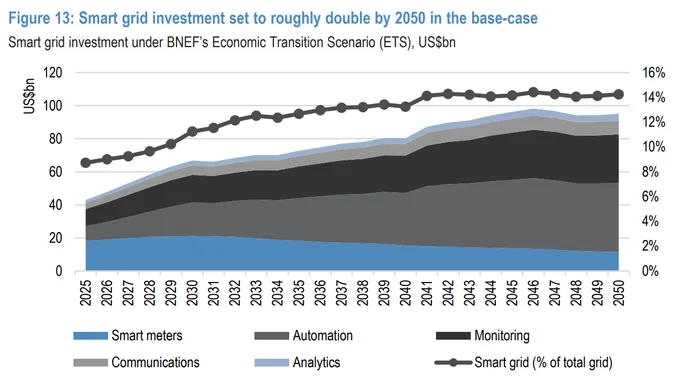
Smart grids and digitalization are expected to expand at roughly 9% CAGR
Grid cybersecurity spending is rising rapidly as utilities defend against cyber threats
Energy storage deployment could grow at roughly 20% CAGR globally
Together, these trends suggest that electricity networks are evolving from passive infrastructure into digital, flexible energy platforms.
Structural Demand Drivers: Electrification, AI, and Renewables
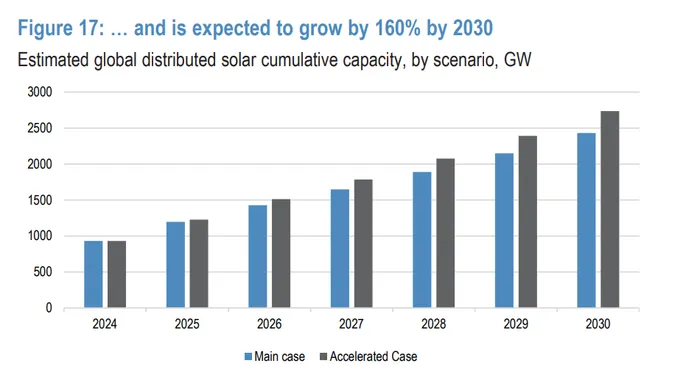
Electricity demand is accelerating across multiple sectors simultaneously. Buildings, transportation, and industrial production are undergoing rapid electrification, placing increasing strain on legacy grid infrastructure.
This pressure is being amplified by the rapid expansion of AI and hyperscale data centers, among the most electricity-intensive assets in the modern economy.
The result is a structural demand shock for power networks that were largely designed decades ago.
Renewable Integration: The Grid Bottleneck
Renewable energy is also reshaping grid requirements. Solar and wind generation are inherently intermittent, requiring more flexible and sophisticated grid management.
As renewable penetration rises, curtailment—the forced shutdown of generation due to grid constraints—is becoming increasingly common. In some markets, curtailment rates can reach 30% for solar and 20% for wind, representing lost output and lost revenue for developers.
More than 2,500 gigawatts of renewable energy, storage, and data-center capacity worldwide are currently waiting for grid connection approvals.
In the United States, the median wait time for grid interconnection has reached five years, while some European markets face delays exceeding ten years.
These delays highlight a critical reality: transmission bottlenecks—not generation capacity—are becoming the primary constraint in the energy transition.
Advanced grid digitalization and monitoring technologies could reduce curtailment losses by more than 25% by 2030, according to the report.
Aging Infrastructure: A Growing Reliability Risk
Another major driver of grid investment is the aging of existing power networks.
In the United States, nearly 70% of grid transformers are already beyond their intended service life, while roughly 80% of transformer capacity across advanced economies could reach age limits by 2035.
Aging infrastructure increases the risk of outages, inefficiencies, and system failures. Without significant reinvestment, grid reliability could deteriorate just as electricity demand accelerates.
The “Picks and Shovels” Opportunity
One of the report’s most important insights is that the largest investment opportunities may lie not in electricity generation, but in the infrastructure enabling it.
Traditional grid components—including cables, transformers, substations, and transmission lines—still account for more than 90% of total grid investment.
But supply chains for these components are tightening rapidly. Lead times for critical equipment have more than doubled in some markets over the past five years, while prices for key components have risen significantly above inflation.
This dynamic is creating a favorable pricing environment for grid equipment manufacturers and infrastructure contractors.
Emerging Technologies: Smart Grids and Energy Storage
Beyond physical infrastructure, grid modernization increasingly depends on digitalization and energy storage.
Smart-grid technologies—including digital sensors, automated monitoring systems, and smart meters—are seeing rapid adoption as utilities attempt to optimize electricity flows and integrate renewable energy.
Energy storage represents an even faster-growing segment. Global storage capacity is expected to expand from roughly 247 GWh in 2025 to more than 600 GWh by 2030, implying around 20% annual growth.
By storing surplus electricity and deploying it during peak demand, storage systems effectively act as buffers for renewable energy volatility.
Investment Universe: Global Grid Beneficiaries
J.P. Morgan identifies 132 companies globally with meaningful exposure to grid resilience, electrification infrastructure, and energy-system digitalization.
North America hosts the largest concentration of these companies, reflecting both the scale of grid modernization required in the United States and the strength of its industrial ecosystem.
Among U.S.-listed companies exposed to the grid investment cycle are:
Utilities and regulated grid operators
PG&E (PCG)
NextEra Energy (NEE)
Entergy (ETR)
American Electric Power (AEP)
FirstEnergy (FE)
Edison International (EIX)
Portland General Electric (POR)
Dominion Energy (D)
NiSource (NI)
Xcel Energy (XEL)
CMS Energy (CMS)
Grid infrastructure, construction, and equipment providers
GE Vernova (GEV)
Quanta Services (PWR)
MasTec (MTZ)
Valmont Industries (VMI)
Caterpillar (CAT)
United Rentals (URI)
Power electronics, storage, and smart-grid technologies
Itron (ITRI)
Enphase Energy (ENPH)
SolarEdge Technologies (SEDG)
Eos Energy Enterprises (EOSE)
Bloom Energy (BE)
Sunrun (RUN)
Together, these companies span the entire electrification value chain, from regulated transmission expansion and grid construction to distributed energy systems, battery storage, and smart-grid technology.
Key Investment Risks
Despite the compelling structural opportunity, several risks remain.
Regulatory risk: Electric utilities operate in heavily regulated markets, where tariff changes or policy shifts can materially affect returns.
Capital intensity: Grid projects require large upfront investment and long payback periods, making them sensitive to financing conditions and interest rates.
Supply chain constraints: Surging demand for cables, transformers, and grid equipment could create production bottlenecks.
Cybersecurity threats: As power systems become more digitalized, they also become more vulnerable to cyberattacks. A large-scale attack on the U.S. grid could generate $240 billion to $1 trillion in economic losses.
Investment Conclusion: A Decade-Long Infrastructure Theme
The transformation of global electricity networks is shaping up to be one of the defining infrastructure investment cycles of the next decade.
Three powerful structural forces are converging:
1. Rapid electrification of the global economy
2. Massive expansion of renewable energy
3. Aging and underinvested grid infrastructure
Together, these forces are creating a long-term investment theme centered on grid modernization, digitalization, and system resilience.
For investors, the implication is clear: the most attractive opportunities in the energy transition may lie not in generation technologies, but in the infrastructure that enables electrification—the global power grid.

Independent investment research powered by a team of market strategists with 20+ years of Wall Street and global macro experience. We uncover high-conviction opportunities across equities, metals, and options through disciplined, data-driven analysis.
Latest Articles
Unlock Market-Moving Insights.
Subscribe to PRO Articles.
Already have an account? Sign in
Unlock Market-Moving Insights.
Subscribe to PRO Articles.
Already have an account? Sign in
Stay ahead of the market.
Get curated U.S. market news, insights and key dates delivered to your inbox.
AInvest
PRO
AInvest
PRO



