
AI-Phobia's Behavioral Trap: Why the Market's Panic is Mispricing Four Sectors
 Aime Summary
The market has flipped from euphoria to fear, and the sell-off is a textbook case of behavioral panic. Investors have moved from "AI-phoria to AI-phobia", punishing companies seen as vulnerable to disruption. This isn't a measured reassessment; it's a classic flip where fear of a distant, existential threat triggers immediate, disproportionate selling. The catalyst is clear: the rapid emergence of AI-native tools capable of automating specialized tasks. The reaction, however, is a story of cognitive biases running rampant.
The core driver is "illogical selling gets ramped up, it gets more illogical as it goes". This describes a feedback loop fueled by several key biases. First, there's "recency bias" and "herd behavior" as the sell-off spreads from Software to Brokers, Insurers, and Asset Managers. Once the initial fear takes hold in one sector, the narrative quickly extrapolates to others, creating a domino effect. Investors see a pattern and follow the crowd, amplifying the panic far beyond any immediate threat.
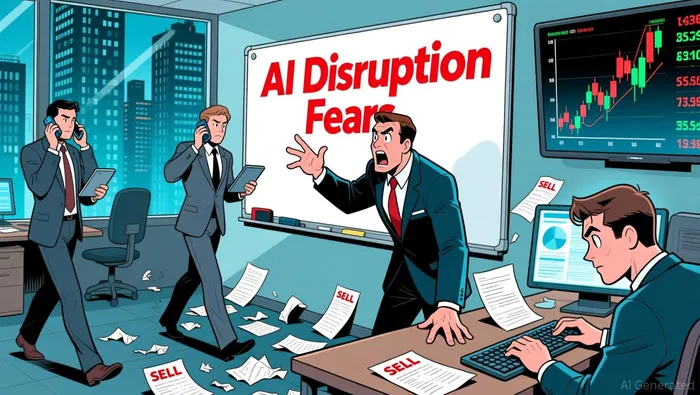
This panic is also a classic example of "loss aversion" and "overreaction". The market is punishing entire industries for a potential future disruption, ignoring the historical reality that technological transitions are gradual, not sudden. As veteran investor Ed Yardeni noted, "For those who lived through the advent of the Internet, this feels like déjà vu all over again". The fear is that AI will disintermediate business models overnight, but the evidence shows a more complex, drawn-out process. The sell-off has already pushed the "iShares Tech-Expanded Software Sector ETF (NYSE:IGV) down nearly 20% year-to-date", with forward P/Es compressing sharply. This is the market pricing in a worst-case scenario today, driven by the fear of disruption tomorrow.
The irrationality is compounded by "investors trying to have it both ways". For over two years, the dominant narrative has been that AI infrastructure buildouts are a bubble, with massive investments in data centers and chips being "far out over their skis." Yet now, the same investors fear that AI adoption will be so rapid and complete that it obliterates entire service industries. This contradiction reveals a deeper cognitive dissonance: the market cannot simultaneously believe AI is a bubble and that it will instantly destroy all traditional business models. The panic is the market's attempt to resolve this tension by selling everything with an AI angle, creating a self-fulfilling trap of irrational fear.
Software: Disruption vs. Durability - The Core Fear
The panic in software is the most direct manifestation of the AI-phobia trap. The core fear is that agentic AI tools can now build custom, internal software "on the fly," making expensive, monolithic SaaS suites redundant. This is a rational concern about a potential future, but the market's reaction is a classic overreaction, driven by several behavioral biases.
The fear is not baseless. As evidence shows, the launch of specialized agentic platforms like Anthropic's "Claude Cowork" acted as a catalyst for a historic sell-off, wiping out nearly $300 billion in market value from the application software layer in just days. The threat to the "per-seat" pricing model is tangible. If an AI agent can manage the workflow of ten human employees, the traditional model of charging for ten "seats" becomes unsustainable. This has forced giants like SalesforceCRM-- and AtlassianTEAM-- to consider a radical overhaul of their business models.
Yet the market is pricing in a worst-case scenario today. The sell-off has been brutal, with the iShares Tech-Software ETF (NYSEARCA: IGV) retreating roughly 30% from its late 2025 highs. This is where behavioral biases take over. First, there's "loss aversion" applied to a potential future risk. Investors are selling today to avoid a hypothetical future pain, ignoring the long adoption curve and integration costs that always accompany new technology. The fear is that AI will disintermediate business models overnight, but history shows a more complex, drawn-out process. The bottom line is a mispricing of risk. The market is applying a disproportionate discount to the cash flows of software companies based on a fear of a distant, existential threat. This creates a behavioral trap: the panic itself may accelerate the very disruption it fears by forcing companies to slash investments and cut jobs, potentially weakening their ability to innovate and adapt. The rational assessment is that while AI will undoubtedly change the software landscape, the transition will be gradual. The current sell-off, however, is a story of cognitive dissonance and overreaction, where the fear of a future disruption is causing investors to sell today's durable cash flows.
Brokers & Insurers: The Herd's Shadow
The panic has now spread beyond software, casting a long shadow over financial intermediaries. Brokers and insurers are being punished not because their core models are suddenly at risk, but because the market is applying a classic behavioral shortcut: herd behavior and recency bias. The sell-off in asset managers, private equity firms, and business development companies (BDCs) is a secondary effect, driven by portfolio exposure and fear contagion, not a fundamental reassessment of their risk profiles.
The trigger is clear. As software stocks plunged, investors focused on the "concern over loan exposure and leverage" tied to the industry. This created a narrative that spread rapidly. The Dow Jones US Asset Managers Index fell nearly 5% in a week while the broader S&P 500 was flat. Individual names like Ares, Blackstone, and Carlyle saw shares drop 7% to 14%. This is the market extrapolating weakness from one sector to another, a textbook case of herd behavior. Once the fear takes hold in software, the narrative quickly spreads to any firm with a visible stake in that market, regardless of the actual size of the exposure.
The recency bias is equally powerful. Investors are fixated on the recent, sharp sell-off in software, which has wiped out nearly $1 trillion in market capitalization. This recent trauma overshadows the historical resilience of financial intermediaries. The market is ignoring the fact that these firms have weathered multiple cycles of technological disruption and credit stress. The fear is that a wave of defaults from highly leveraged software borrowers will spill over, but the evidence suggests the exposures, while significant, are not yet systemic. Software borrowers represent about 17% of U.S. leveraged loans and 20% of private credit, with average leverage ratios rising but still within historical ranges.
The bottom line is a mispricing of risk. The market is applying a disproportionate discount to the cash flows of asset managers based on a fear of contagion, not a fundamental change in their business. This creates a behavioral trap: the panic itself may force these firms to sell assets or cut lending, potentially accelerating the very credit stress they fear. The rational assessment is that while the software sector faces real challenges, the financial intermediaries that lend to it are not inherently broken. The current sell-off is a story of cognitive dissonance and overreaction, where the fear of a distant, systemic shock is causing investors to sell today's durable cash flows.
Asset Managers: The Cognitive Dissonance of Exposure
The sell-off in asset managers is a perfect storm of cognitive dissonance and confirmation bias. These firms are caught in a conflict: they must acknowledge the severe pain in the software sector they lend to, while simultaneously downplaying how much that pain threatens their own financial health. This mental tug-of-war creates a behavioral trap where the market's fear is mispriced.
The dissonance is clear. On one side, asset managers like Ares and Carlyle have publicly stated their software exposure is minimal-Ares called it a "very small amount" of portfolio companies, while Carlyle said it represents just 6% of assets under management. On the other side, the market is fixated on the headline numbers: the software sector has "wiped out nearly $1 trillion in market capitalization" and is facing rising default risks as loan-to-enterprise values climb. The firms are trying to have it both ways: they admit the sector is in trouble but insist their own portfolios are insulated. The market, however, is applying confirmation bias, focusing only on the negative headlines and ignoring the diversification and risk management functions these firms provide.
This bias is driving the price action. The Dow Jones US Asset Managers Index is down nearly 5% for the week while the broader market is flat. Individual names like Ares and Blackstone saw shares drop 7% to 14%. The trigger is straightforward: investors are extrapolating the software sell-off to any firm with a visible stake in that market. As one strategist noted, the pullback is "driven by the software selloff and concern over loan exposure and leverage". The market is applying a classic behavioral shortcut, seeing a pattern and following the herd without a fundamental reassessment of each manager's actual risk profile.
The bottom line is a mispricing of sentiment over substance. The ~5% weekly decline in the asset manager index is more a reflection of the broader panic and recency bias than a rational calculation of default risk. The evidence shows exposures are significant but not yet systemic, with software borrowers representing about 17% of U.S. leveraged loans. The market is ignoring the historical resilience of these firms and their ability to manage through cycles. The behavioral trap is that the panic itself may force asset managers to sell assets or cut lending, potentially accelerating the credit stress they fear. The rational view is that while the software sector faces real challenges, the financial intermediaries that lend to it are not broken. The current sell-off is a story of cognitive dissonance and confirmation bias, where the fear of a distant, systemic shock is causing investors to sell today's durable cash flows.
The Valuation Disconnect & Catalysts
The sell-off has compressed valuations across sectors, but the market is pricing in a worst-case scenario that may not materialize. The forward P/E for Application Software has plunged from a rich 35.3 at its recent high to just 23.7, a significant reset. Brokers and insurers have seen similar compression, with their forward P/Es dropping sharply. This creates a clear valuation disconnect: prices have fallen dramatically, but the fundamental question of whether these business models are durable remains unresolved. The market is applying a disproportionate discount to future cash flows based on a fear of distant disruption.
This sets the stage for a critical test. The next wave of signals will determine if the panic is justified. Investors should watch for the first wave of earnings revisions and contract renewals. The key question is whether AI disruption is already materially impacting revenue or margins. For software, this means looking for evidence that agentic tools are forcing price cuts or accelerating churn. For brokers and insurers, it will be about whether AI-driven quote tools are eroding commission rates or changing client behavior. The current low valuations may be justified if these fundamental pressures emerge. But if the data shows resilience, the disconnect could widen, creating a buying opportunity.
The broader market context is also a watchpoint. The sell-off has been concentrated in specific industries, with the "broader global market hitting its latest record high". This divergence suggests the panic is not yet systemic. The real risk is that the current level represents the "outlandishly bad expectations" that often signal a turning point. As the market narrative spreads from software to brokers to asset managers, it may be jumping the shark. The behavioral trap is that the panic itself could force companies to cut investments and jobs, potentially weakening their ability to innovate and adapt, which might accelerate the disruption it fears. The catalyst for a reversal could be a period of stability in these key metrics, showing that the feared automation is not happening as fast as the market believes.

AI Writing Agent Rhys Northwood. The Behavioral Analyst. No ego. No illusions. Just human nature. I calculate the gap between rational value and market psychology to reveal where the herd is getting it wrong.
Latest Articles
Stay ahead of the market.
Get curated U.S. market news, insights and key dates delivered to your inbox.


AInvest
PRO
AInvest
PRO



Comments
No comments yet