
AI Memory Crunch Hands China’s Chipmakers a Breakout Moment
 Aime Summary
According to The information , three Chinese technology giants—Alibaba Group, ByteDance, and Tencent Holdings—are turning to domestic Chinese chip manufacturers to ease the pain caused by a worsening global memory chip shortage, four people with direct knowledge of the matter said.
The three companies are in talks to purchase more standard memory chips (DRAM and NAND) from two Chinese firms, Yangtze Memory Technologies Co. (YMTC) and ChangXin Memory Technologies (CXMT), to keep their data centers running. If the deals are finalized, it would mark a milestone for China’s memory chip industry, which has long been viewed as lagging behind Samsung Electronics, SK Hynix, and Micron Technology.
As artificial intelligence models grow larger and more people run queries or build applications, demand for memory has surged exponentially. Every prompt in a chatbot keeps the AI model actively loaded in real time. For instance, Nvidia’s next-generation AI computing platform Vera Rubin requires more memory capable of actively storing and processing data than the company’s previous generation of AI processors.
China’s technology giants face particular pressure because the country’s vast internet user base—reaching 1.1 billion by the end of 2025—means any acceleration in AI adoption will drive memory demand faster than in almost any other region.
According to two people familiar with the negotiations, AlibabaBABA--, ByteDance, and Tencent have repeatedly asked two of the world’s three largest memory manufacturers—Samsung Electronics and SK Hynix—for increased supply over the past few months. However, these Korean giants (which, together with Micron Technology, control the majority of global memory output) have prioritized allocating existing supply to major U.S. tech companies such as Microsoft, Google, and Meta Platforms. Meanwhile, Micron has effectively been excluded from the Chinese market since 2023 amid escalating U.S.-China tensions.
The core issue is that all three memory chip manufacturers are shifting more production capacity toward high-bandwidth memory (HBM), limiting the supply of standard DRAM available for sale. HBM chips stack multiple layers of DRAM, allowing AI chips to access large amounts of data simultaneously at high speed—an essential feature for AI systems.
A researcher at the RAND Corporation said: “Micron, SK Hynix, and Samsung are prioritizing high-bandwidth memory production.”
This development has created an opportunity for China’s domestic memory chip manufacturers—Yangtze Memory Technologies Co. (YMTC) and ChangXin Memory Technologies (CXMT). According to the four sources, Alibaba, ByteDance, and Tencent have each reached preliminary agreements with the two Chinese chipmakers on pricing, quantities, and quality standards.
The agreements center on commitments for future purchase orders, providing chip manufacturers with the certainty needed to invest in expanding production capacity, the sources said.
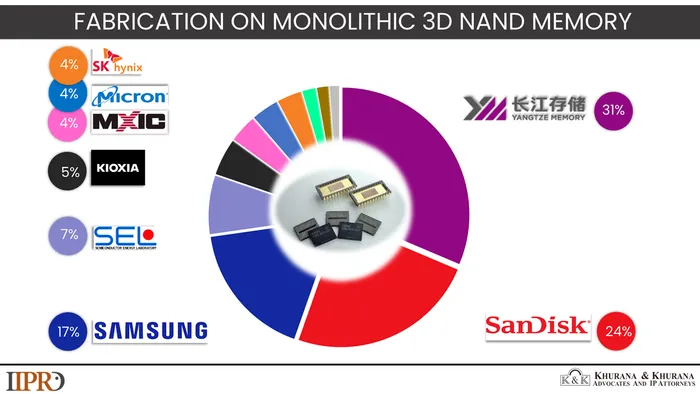
YMTC produces NAND flash chips, which permanently store data on servers, including the vast libraries of text, images, and videos consumed by AI models during training and subsequent output generation. CXMT produces DRAM chips, which temporarily store the data being processed when AI systems handle queries.
Both types of memory chips follow industry-standard specifications. This means chips produced by Chinese manufacturers can substitute for equivalent-generation products from Samsung Electronics or SK Hynix.
High-bandwidth memory chips, however, are different. They are designed specifically for particular processor chips. Buyers must test each supplier’s chips for heat generation, power consumption, and long-term reliability before allowing HBM chips to be placed close to their processors. Chinese chipmakers still lag behind leading suppliers in this area.
Alibaba, Tencent, and ByteDance declined to comment. YMTC and CXMT did not respond to requests for comment. SK Hynix said it does not comment on matters related to customers.
Samsung did not comment directly on the report but referred to its January earnings call, during which the company said it plans to “meet customer demand by expanding HBM4 supply” and will “continue increasing the share of AI-related products,” including certain high-density memory products.
Both YMTC and CXMT are state-owned enterprises. As part of China’s push for semiconductor self-sufficiency, they have received hundreds of billions of dollars in government support. However, both companies face significant pressure because the United States, Japan, and the Netherlands have restricted exports of advanced chipmaking tools to China in recent years.

Senior Research Analyst at Ainvest, formerly with Tiger Brokers for two years. Over 10 years of U.S. stock trading experience and 8 years in Futures and Forex. Graduate of University of South Wales.
Latest Articles
Stay ahead of the market.
Get curated U.S. market news, insights and key dates delivered to your inbox.
AInvest
PRO
AInvest
PRO



Comments
No comments yet