
AI Jobs Impact: Sovereign Wealth Funds And Workforce Shifts Explained
 Aime Summary
The artificial intelligence revolution is no longer just about technological capability; it has fundamentally shifted the conversation toward labor economics, wealth distribution, and corporate governance. As AI models become more sophisticated, the immediate impact on the workforce is bifurcating. While some sectors experience rapid hiring and productivity gains, others face structural headwinds that disproportionately affect younger workers and traditional roles. For investors, understanding this divergence is essential, as it dictates which companies will thrive on efficiency and which will face headwinds from shifting consumer sentiment and regulatory scrutiny.
How Will Sanders Sovereign Wealth Fund Impact AI Jobs And Wealth?
The political response to the AI boom is taking shape in Washington, with Senator Bernie Sanders introducing legislation that would fundamentally alter how the economic benefits of artificial intelligence are distributed. The proposal mandates that AI companies transfer 50% of their stock to a government-run sovereign wealth fund, designed to act as a vehicle for distributing AI-generated wealth to all Americans. This initiative arrives at a critical juncture, with the US AI market projected to surge from $173.56 billion in 2025 to $976.23 billion by 2035. The financial stakes are massive, and the concentration of wealth is stark; since late 2022, overall wealth has risen 70%, with the top 1% capturing a disproportionate share of these gains.
The political calculus behind the proposal is supported by approximately 70% of surveyed Americans, reflecting a broad anxiety about the future of work. The urgency is underscored by a warning issued in July 2026 by roughly 200 economists and computer scientists, including 16 Nobel laureates. They cautioned that AI could become radically more powerful over the next decade, bringing large-scale job displacement alongside potential gains in living standards. The proposed $7 trillion fund would utilize a one-time stock tax to build its capitalization, modeled somewhat after Alaska's Permanent Fund, which has distributed oil revenue surpluses to residents since 1976. However, the mechanics of implementing such a fund in the context of intellectual property and software valuation remain highly complex, with critics arguing that government ownership could distort competition and slow innovation .
How Is AI Reshaping The Global Jobs Market For Young Workers?
Beyond the legislative debates, the tangible effects of AI on the labor market are becoming increasingly visible, particularly in how it affects different demographics and regions. In the United States, Morgan Stanley data indicates that AI-driven labor disruption is currently more micro than macro, yet it is disproportionately affecting workers aged 22 to 27. Unemployment spells between jobs are lengthening, and the unemployment rate for these young workers has risen throughout the first half of 2026, following a sharper trend that began in 2023. The aggregate labor market effects remain modest, but the structural shift is clear: employed workers in these sectors report significant changes in their daily activities due to AI adoption, fundamentally altering the nature of entry-level work.
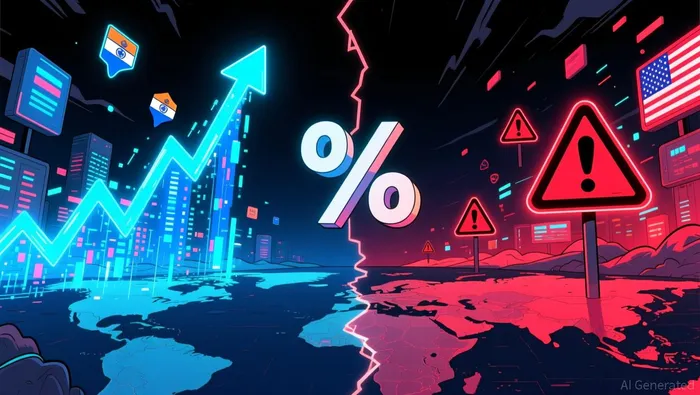
This dynamic is playing out differently across the Atlantic and in Asia. In the UK, the labor market is splitting into two distinct speeds. While AI cannot yet replicate physical trades, hiring has slowed steeply for blue-collar and entry-level roles. Manufacturing job postings are down 58% since June 2022, and youth unemployment has hit its highest level in over a decade. Bank of England Governor Andrew Bailey attributes this to a "low hire, low fire" economy, where the bar for jobseekers is rising sharply. In contrast, Nomura economists highlight that India is currently seeing AI-related hiring significantly outpace layoffs. Between 2022 and August 2026, AI-related hiring in India totaled over 83,000 jobs, compared to roughly 31,900 in layoffs. However, this creates a two-tier labor market in both India and the UK, reducing demand for entry-level workers while boosting demand for experienced employees with deep business context.
Can Insperity Balance AI Productivity With Human-Centric Client Trust?
For businesses navigating this transition, the balance between technological efficiency and human connection is paramount. Insperity (NSP), a provider of HR solutions for small and medium-sized businesses, recently provided a clear case study on how to integrate AI without losing its core value proposition. During its Q2 2026 earnings call, management confirmed that AI is being integrated across its software development cycle to accelerate product launches and improve code quality. However, the company emphasized that human-to-human interaction remains essential for their business model. While AI provides valuable data insights, experienced human judgment is considered irreplaceable for decisions affecting client companies and their employees. This human-centric approach, built on trust and care, is the highest value proposition for SMB clients.
Financially, this balance has led to a cautious outlook for 2026. Insperity revised its unit growth forecast downward to reflect weakening economic sentiment among small businesses, which has impacted new client sales and retention. The company is also navigating the effects of its own margin recovery plan, which is slightly ahead of schedule but has created friction in the sales pipeline. Consequently, Insperity forecasts adjusted EBITDA for 2026 in the range of $170 million to $230 million, with worksite employee growth expected to decrease by 1% to 2.3% year-over-year. The takeaway for investors is that while AI can drive internal efficiency, the external growth of human-centric service firms remains tightly coupled with broader economic confidence .
Is AI Disrupting The Cybersecurity Jobs And Market Landscape?
The disruption caused by AI is not limited to HR or general office work; it is actively reshaping the cybersecurity industry, threatening traditional business models. Tenable Holdings (NASDAQ: TENB) recently saw its stock decline following a report by short-selling firm The Bear Cave, which argued that AI is fundamentally altering the vulnerability management market. The report highlights that tech giants like Microsoft and CrowdStrike are bundling vulnerability management into their existing platforms, while AI-native startups are launching proprietary security products. This trend threatens to commoditize traditional scanning and detection tools, which competitors now describe as merely "table stakes".
In response to this shifting landscape, companies like Tenable are partnering with AI leaders, such as Anthropic, to launch agentic security tools. However, the report notes that Tenable’s sequential quarterly revenue growth has declined even as overall cybersecurity demand increases. Simbian has launched an autonomous AI Threat Hunt Agent designed to identify threats that bypass initial detection, completing a "Self-Improving SecOps" loop. These developments suggest that the cybersecurity job market is moving away from manual scanning toward complex remediation and strategic risk assessment, requiring a workforce that can manage AI-driven threats rather than just detect them .
What Should Investors Watch For Next In AI And Employment?
As the AI sector matures, the focus for investors is shifting from pure technological capability to economic integration and labor market stability. The divergence between regions like India and the US, or sectors like physical trades and digital services, will likely widen in the coming quarters. Regulatory developments, such as the proposed sovereign wealth fund, will continue to influence how AI companies are valued and how their profits are taxed. Furthermore, the ability of service-oriented firms like Insperity to maintain growth amid weakening small business sentiment will serve as a key indicator of the real-world limits of AI adoption.
The bottom line is that AI is not a monolith; it is a set of tools that are creating distinct winners and losers across the global economy. Investors must look beyond the headline revenue growth of AI companies and examine the underlying labor dynamics and regulatory risks that will define the next phase of the technology's expansion.

Stay ahead of the market.
Get curated U.S. market news, insights and key dates delivered to your inbox.


AInvest
PRO
AInvest
PRO




Comments
No comments yet