
The AI Infrastructure Gold Rush: Why NVIDIA, AMD, and MP Materials Are Leading the Charge
The rapid adoption of generative AI is fueling a seismic shift in the semiconductor industry, with NVIDIANVDA--, AMDAMD--, and rare earth supplier MP MaterialsMP-- emerging as pivotal players. NVIDIA's record-breaking data center revenue—$26.3 billion in Q2 2025—epitomizes this era of hypergrowth, driven by enterprises and cloud providers racing to build AI infrastructure. This surge has ripple effects across the supply chain, creating both opportunities and challenges for investors.
NVIDIA: The Unstoppable AI Engine
NVIDIA's dominance in AI hardware and software is undeniable. Its Hopper (H200) GPUs and Blackwell processors, which outperformed competitors in MLPerf benchmarks, are the backbone of large language model (LLM) training and deployment. The company's Q2 data center revenue jumped 16% sequentially and 154% year-over-year, accounting for 88% of total revenue. This growth is not merely cyclical but structural, as enterprises increasingly view AI as a core competency.
NVIDIA's ecosystem—spanning its AI Blueprints, Llama models, and partnerships with cloud giants like AWS and Microsoft—creates a moat that's hard to breach. Even as competitors like AMD gain traction, NVIDIA's full-stack advantage (hardware + software + networking) keeps it ahead. However, its valuation is a concern: NVIDIA's trailing P/E of ~50x is elevated, but its 154% YoY growth justifies premium multiples—if it can sustain momentum.
AMD: Closing the Gap with AI Chips and Strategic Deals
AMD is no slouch. Its Q2 data center revenue grew 57% year-over-year, fueled by AI chip sales and the lifting of export restrictions on its MI300X processors to China. A reported $10 billion deal with a Saudi AI startup underscores its ability to land large-scale enterprise contracts. AMD's pricing competitiveness and diversified customer base—spanning hyperscalers and startups—position it as NVIDIA's closest rival.
While AMD's valuation is more reasonable (P/E ~28x), it faces challenges. Its recovery from China-related supply hiccups is critical, and it must prove it can sustain growth amid NVIDIA's relentless innovation. Investors should monitor its gross margin trajectory and market share in the high-end AI chip segment.
MP Materials: The Rare Earth Play in the AI Supply Chain
Behind the scenes, MP Materials is quietly benefiting from the AI boom. Rare earth metals like neodymium and praseodymium are essential for manufacturing magnets in GPUs, data center servers, and electric vehicles. MP's Texas magnet plant, set to produce 1,00. metric tons annually by late 2025, will alleviate U.S. reliance on Chinese imports. A $500 million deal with Apple—securing magnet supplies for future products—adds credibility to its long-term prospects.
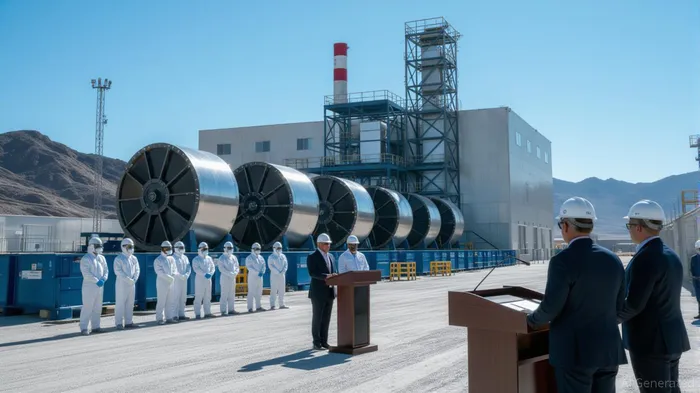
The U.S. government's price guarantees (USD 110/kg for NdPr) and DoD equity stake ($400 million) further insulate MP from market volatility. However, risks include oversupply if global production ramps faster than demand and the lag between production expansion and revenue recognition (e.g., Apple's deliveries start in 2027).
Structural Demand Drivers: CapEx and Subsidies
The AI infrastructure boom is underpinned by two unstoppable forces: enterprise capital expenditures (CapEx) and government subsidies. Companies are pouring money into AI servers, cloud infrastructure, and generative AI tools, with global AI hardware spending expected to hit $100 billion annually by 2027. Meanwhile, the U.S. CHIPS Act ($52 billion in subsidies) and China's tech stimulus packages ensure supply-side investments in semiconductor capacity and rare earth mining.
Risks to the Bull Case
1. Overvaluation: NVIDIA's stock trades at 50x trailing earnings, a level that requires perpetual growth to justify. A slowdown in AI adoption or margin compression (due to price wars) could trigger a correction.
2. Regulatory Headwinds: U.S. export controls on advanced chips (e.g., H200) to China could crimp NVIDIA's growth, while global trade tensions risk supply chain disruptions.
3. Supply Chain Bottlenecks: MP Materials' Texas plant faces construction delays or cost overruns, which could delay revenue.
Investment Thesis
- NVIDIA: A must-hold for growth investors despite its high valuation. Its ecosystem dominance and AI-driven demand make it a “buy the dip” candidate.
- AMD: A compelling growth play at current valuations, with upside from China recovery and hyperscaler AI deployments.
- MP Materials: A strategic long-term hold for investors willing to ride out near-term volatility. Its AppleAAPL-- deal and government backing mitigate execution risks.
The historical impact of earnings beats on these companies' stock prices offers further insight. For instance, when NVIDIA beat earnings expectations, its stock rose by a maximum of only 2.25%, while AMD's dipped slightly (-1.51%) and MP's rose a modest 0.26%. This underscores the importance of a long-term perspective, as short-term volatility may not reflect the structural growth drivers.
Final Take
The AI infrastructure boom is no flash in the pan. NVIDIA's Q2 results and AMD's resurgence highlight the secular shift toward AI-driven computing, while MP Materials' role in securing rare earth supplies underscores the strategic importance of the supply chain. Investors should prioritize companies with scale, ecosystem control, and government support—while staying vigilant to valuation extremes and geopolitical risks.
The gold rush is on. Will you ride it?

Delivering real-time insights and analysis on emerging financial trends and market movements.
Latest Articles
Stay ahead of the market.
Get curated U.S. market news, insights and key dates delivered to your inbox.




Comments
No comments yet