
AI's Energy Paradox: Boosting Sustainability While Fueling Demand


 Aime Summary
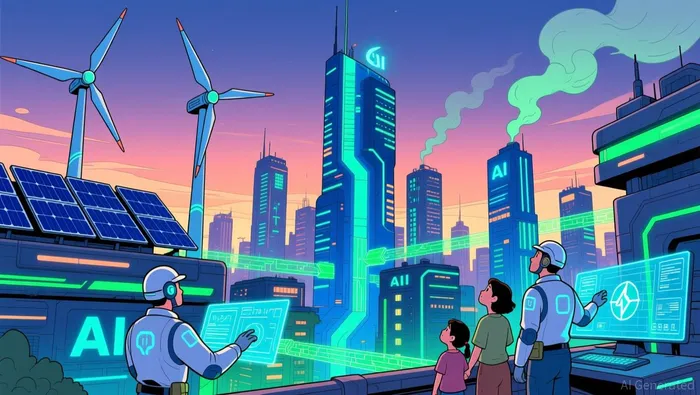
The integration of artificial intelligence (AI) into the energy sector is reshaping how power is generated, distributed, and consumed, with transformative implications for efficiency and sustainability. AI is now a cornerstone of the fourth industrial revolution, addressing critical challenges such as climate change and pollution while optimizing operations across the energy value chain. Energy companies are leveraging AI to digitize records, analyze geological data, and predict equipment failures, reducing environmental impact and human error. For instance, Baker HughesBKR-- (NYSE:BKR) and C3.ai (NYSE:AI) employ enterprise AI to monitor assets, while Buzz Solutions uses visual data analysis for power line inspections as reported in the article.
Renewable energy integration has also been revolutionized by AI, which analyzes weather patterns to forecast solar and wind output, enabling real-time grid balancing and reducing downtime. Platforms like Envision and PowerFactors manage large-scale renewable fleets, while AI-driven tools from Clir and WindESCo adjust wind turbine performance to maximize energy capture. Smart grids, powered by AI and machine learning, are critical to managing congestion and preventing blackouts. Kraken Technologies, for example, uses AI to coordinate decentralized energy assets and automate grid operations, ensuring stability amid intermittent renewable supply as the article indicates.
However, AI's energy demands are creating new challenges. States with high concentrations of AI data centers, such as Virginia and Illinois, are experiencing significant electricity price surges. Virginia, home to 666 data centers, saw residential electricity prices rise 13% year-over-year in August 2025, the second-highest increase in the U.S.. This has sparked political backlash, with critics accusing Big Tech of forcing consumers to subsidize energy costs. Solutions like Oklo's (NYSE:OKLO) model, where data centers generate their own power, are gaining traction to mitigate this burden.
The demand for AI-driven efficiency extends to energy consumption, where tools like Brainbox AI and Uplight help utilities incentivize energy-saving behaviors. Meanwhile, AI is central to carbon emissions and ESG management, automating supply chain monitoring and emissions reporting. Platforms like Carbon Chain and Watershed use machine learning to track Scope 3 emissions, offering granular insights into supply chain impacts and enabling actionable decarbonization strategies.
C3.ai, a key player in enterprise AI, has seen mixed stock performance amid these developments. Despite a 35% stock surge in late 2025 following expanded partnerships with Microsoft and Google Cloud, the company reported a 21% year-over-year revenue increase of $87.2 million in Q1 2025 but faces profitability challenges. Analysts project a loss of $0.32 per share for its December 2025 earnings report, reflecting broader uncertainties in the AI market.
Looking ahead, AI's role in energy is poised to expand as companies like Shell and industrial manufacturers adopt AI for predictive maintenance and inventory optimization. Yet, the sector must navigate regulatory complexities, data privacy concerns, and the sustainability of AI's energy footprint. As the power sector embraces AI-driven solutions, the balance between innovation and energy consumption will remain a defining challenge for policymakers and industry leaders.

Stay ahead of the market.
Get curated U.S. market news, insights and key dates delivered to your inbox.




Comments
No comments yet