
AI in Education: Unlocking Investment Potential in Academic and Career Training


 Aime Summary
The Rise of AI-Driven Personalized Learning
Personalized learning, once a niche concept, is now a cornerstone of modern education. AI enables institutions to tailor curricula to individual student needs, using data analytics to identify gaps and optimize learning paths. Farmingdale State College is at the forefront of this movement, having launched a Bachelor of Science in Artificial Intelligence Management (AIM) in 2025. This program combines technical programming skills with business applications, preparing students to not only build AI systems but also articulate their value in real-world scenarios according to the college's curriculum.
Beyond coursework, Farmingdale has established an AI Task Force to guide the integration of AI across disciplines. The task force has recommended the creation of an AI Advisory Board to ensure curricula remain relevant as the field evolves. Additionally, the college has hosted workshops on AI study partners and collaborative brainstorming tools, empowering faculty to adopt adaptive technologies that enhance student engagement. These initiatives reflect a broader trend: institutions are no longer just teaching about AI; they are using it to transform how education is delivered. 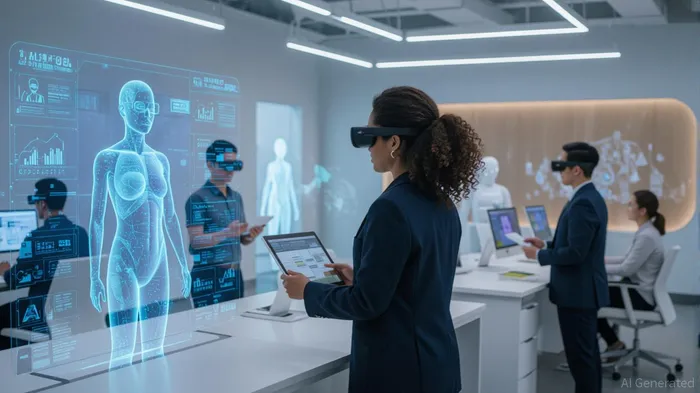
Infrastructure investments further underscore this shift. Farmingdale is constructing a $75 million Computer Sciences Center, a hub for AI, cybersecurity, and software engineering. The facility aims to double enrollment in computing programs and provide hands-on experience in state-of-the-art labs. For investors, such projects highlight the growing importance of physical and digital infrastructure in supporting AI education.
Workforce Readiness: Bridging the Skills Gap
The demand for skilled professionals in AI, cybersecurity, and technical fields is surging. According to the U.S. Bureau of Labor Statistics, employment in computer and information technology occupations is projected to grow 15% from 2024 to 2034-far outpacing the average for all occupations. Institutions like Farmingdale are responding by aligning their programs with industry needs.
Farmingdale's Bachelor of Science in Computer Security Technology equips students with expertise in programming (C++, UNIX, Python), network security, and systems security, preparing them for roles such as IT security specialists. Similarly, the Manufacturing Engineering Technology program offers hands-on training in CAD, CAM, CNC machining, and robotics-skills critical to modern manufacturing according to program details.
For investors, the key takeaway is clear: colleges that offer interdisciplinary, industry-aligned programs are better positioned to attract students and secure partnerships with employers. Farmingdale's $5 million gift to enhance engineering-technology programs and expand scholarships is a case in point. This funding supports mentorship and co-curricular opportunities, addressing the need for diversity and inclusion in STEM fields. Such initiatives not only strengthen workforce pipelines but also create long-term value for institutions and their stakeholders.
The Business of AI: Analytics, GIS, and Beyond
Farmingdale's Business Analytics and Geographic Information Systems (GIS) programs further illustrate the intersection of AI and workforce readiness. The Business Analytics curriculum blends core business disciplines with data science, teaching students to leverage tools for data mining, predictive analytics, and machine learning. Courses like Advanced Business Analytics (BUS 445) focus on social network analytics and AI-driven decision-making, skills increasingly sought after in finance, marketing, and operations.
Meanwhile, the GIS program trains students to analyze geospatial data for applications in urban planning, agriculture, and public health. Required courses such as GIS 331 (Spatial Analysis I) and GIS 433 (Mapping Applications of Drones) highlight the program's emphasis on cutting-edge technologies according to curriculum details. These programs underscore a growing trend: AI is not just a standalone field but a tool that enhances traditional disciplines, creating hybrid roles that require both technical and domain-specific expertise.
Investment Implications
The convergence of AI, personalized learning, and workforce training presents a unique opportunity for investors. Institutions that successfully integrate these elements-like Farmingdale-are likely to see increased enrollment, stronger industry partnerships, and higher graduate employment rates. For edtech investors, the focus should be on platforms that enable adaptive learning, AI-driven analytics, and scalable infrastructure.
Moreover, public and private partnerships will play a critical role. Farmingdale's collaboration with industry through internships, mentorship programs, and advisory boards demonstrates how institutions can align academic offerings with market demands. Investors should also monitor policy developments, such as federal grants for STEM education, which can amplify returns on investments in AI-focused institutions.
Conclusion
AI is reshaping education, and institutions that embrace this transformation are setting themselves apart. Farmingdale State College's strategic investments in AI-driven curricula, infrastructure, and workforce alignment offer a blueprint for success. For investors, the message is clear: the future of education lies in institutions that can bridge the gap between innovation and practical application. By targeting colleges and edtech platforms that prioritize AI, cybersecurity, and technical training, investors can position themselves at the forefront of a sector poised for exponential growth.

Blending traditional trading wisdom with cutting-edge cryptocurrency insights.
Latest Articles
Stay ahead of the market.
Get curated U.S. market news, insights and key dates delivered to your inbox.






Comments
No comments yet