
The AI Earnings Illusion: Are Big Tech Giants Manipulating Growth Narratives?


 Aime Summary
The Earnings Illusion: Burry's Warning on AI Infrastructure
Michael Burry's recent analysis of AI-driven tech stocks has drawn parallels to the dot-com bubble, but with a critical twist. Unlike the speculative frenzy of the late 1990s, today's AI sector is underpinned by real infrastructure-specifically, the semiconductor chips that power models. However, Burry argues that the short lifespan of these chips creates a "depreciation trap." Hyperscalers like MetaMETA--, OracleORCL--, and MicrosoftMSFT-- are investing heavily in AI infrastructure, but the rapid obsolescence of hardware means these companies may be under-depreciating their assets. This, in turn, artificially inflates earnings. Burry estimates that by 2028, Oracle could overstate its earnings by 26%, and Meta by 20%. His concerns align with those of short-seller , who warns that AI spending is outpacing revenue growth, creating a "disconnect between expectations and execution" according to data.
A Case Study in Overvaluation: C3.ai's Struggles
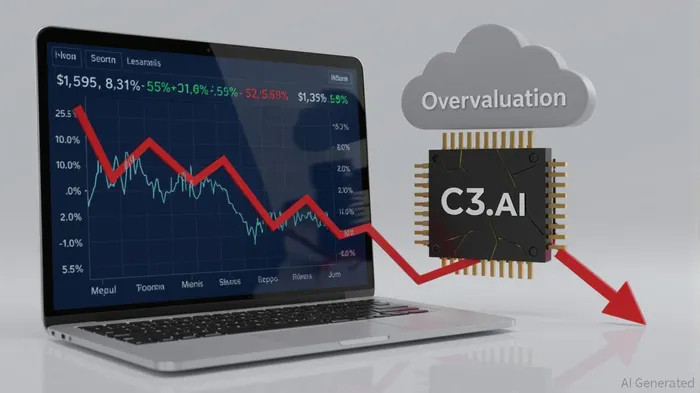
The challenges facing C3.ai, an enterprise AI software provider, offer a microcosm of the sector's broader risks. Despite being a pioneer in AI applications, C3.ai has seen its shares . withdrew its full-year guidance. Leadership changes, including the departure of founder due to health issues, have further eroded confidence. C3.ai's exploration of a potential sale or private capital raise underscores the fragility of its business model according to analysis.
What makes C3.ai's plight particularly telling is its valuation. , the company's stock price remains disconnected from its financial performance. This disconnect mirrors broader trends in the AI sector, where firms are valued more for their potential than their current profitability. As one analyst noted, "C3.ai's struggles highlight the risks of overpaying for AI hype without a clear path to monetization."
Retail Investor Sentiment: A Mixed Picture
Retail investor sentiment toward AI stocks in 2025 reflects a tug-of-war between optimism and caution. According to a Q1 2025 survey by Schwab, , . Notably, , suggesting a generational shift in risk appetite. However, two-thirds of respondents identified mega-cap tech and AI stocks as "," a term Wall Street uses to describe sectors where excessive capital inflows increase the risk of a sharp correction according to survey data.
This duality-between institutional overconfidence and retail skepticism-highlights the sector's volatility. While AI stocks continue to attract speculative bets, the growing awareness of overvaluation risks could trigger a sell-off if earnings fail to meet expectations.
Macroeconomic Risks: The Bubble Debate
The macroeconomic risks facing the AI sector are no longer confined to individual companies. , a trajectory that has drawn comparisons to the dot-com bubble. However, unlike the early 2000s, today's AI firms generate substantial cash flow, which some argue justifies their valuations. and Bank of America's Global Fund Manager Survey have both labeled an "AI equity bubble" as the top tail risk.
The concentration of AI investment among a handful of dominant players-Nvidia, Microsoft, AMDAMD--, and OpenAI-intensifies systemic risks. For instance, Nvidia's chips power most AI infrastructure, but their rapid obsolescence could lead to a cascade of write-downs if demand slows. Meanwhile, companies like Google and OpenAI are committing to multi-billion-dollar infrastructure projects, with analysts warning that these investments could become "white elephants" if ROI fails to materialize according to industry analysis.
Valuation Metrics: A Tale of Two Sectors
The valuation metrics for AI-driven tech stocks paint a mixed picture. Advanced Micro DevicesAMD-- (AMD), a key supplier of AI chips, , . This suggests the market is pricing in aggressive future earnings, which may or may not materialize. In contrast, according to financial reports.
SoftBank's investment in OpenAI offers another perspective. according to financial disclosures, a valuation boost driven by speculative bets rather than operating performance. Such gains highlight the sector's reliance on narrative-driven growth rather than sustainable earnings.
Strategic Hedging in a Speculative Environment
For investors, the key takeaway is clear: the AI sector's growth is being fueled by a combination of technological promise and . While this creates opportunities, it also amplifies risks. Michael Burry's warnings about depreciation cycles and earnings manipulation underscore the need for caution. Retail investors, meanwhile, are beginning to recognize the dangers of crowded trades, but their bullishness-particularly among younger traders-suggests the bubble may persist for now.
Strategic hedging is essential. Investors should consider diversifying into AI firms with proven revenue models, such as those with recurring software subscriptions, while avoiding overhyped infrastructure plays. Short-term volatility is likely, and the sector's long-term success will depend on whether AI delivers tangible ROI rather than just speculative hype.
As the AI revolution unfolds, the line between innovation and overvaluation grows increasingly blurred. For now, the earnings illusion remains intact-but history suggests it may not last.

Delivering real-time insights and analysis on emerging financial trends and market movements.
Latest Articles
Stay ahead of the market.
Get curated U.S. market news, insights and key dates delivered to your inbox.




Comments
No comments yet