
AI-Driven Stock-Picking Tools: Navigating the Limits of Algorithmic Mastery in Volatile Markets
The rise of artificial intelligence in stock-picking has been hailed as a transformative force in modern finance. By 2025, AI-driven tools had become indispensable for investors seeking to navigate volatile markets, leveraging machine learning, natural language processing, and alternative data to identify opportunities. Platforms like Danelfin and Zen Investor demonstrated impressive returns, with the former outperforming the S&P 500 by 73% from 2017 to August 2023, according to a Morningstar analysis, while the latter achieved a 32.52% average annual return on A-rated stocks since 2003 in a WallStreetZen review. These tools promised to democratize access to sophisticated investment strategies, offering real-time insights and reducing emotional biases in decision-making, as discussed in a FinanceMastering article.
However, the same tools that thrived in structured environments have increasingly exposed vulnerabilities during periods of extreme market turbulence. The 2025 Dow plunge—a single-day drop of 1,500 points—served as a stark reminder of AI's limitations. During this event, six leading AI models generated an 8.4% loss in August 2025, lagging behind the S&P 500's 2% gain, a shortcoming later highlighted by MorningstarMORN--. This underperformance underscores a critical flaw: AI systems often rely on historical data and predefined patterns, which falter when confronted with unprecedented shocks like geopolitical crises or sudden regulatory changes, as noted in an Entrepreneur piece.
The Data Dependency Dilemma
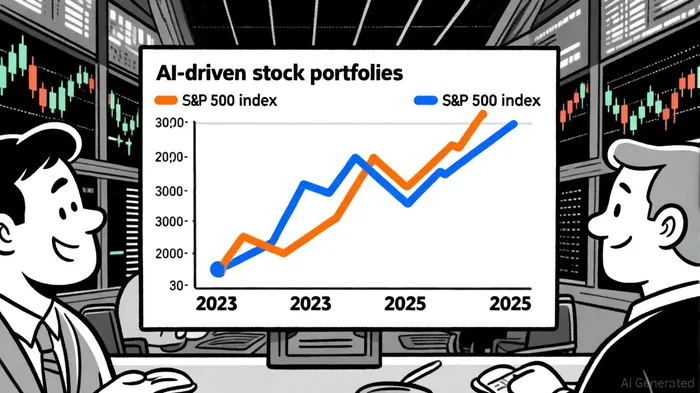
AI's reliance on high-quality input data becomes a double-edged sword in volatile markets. While these tools excel at processing vast datasets—including social media sentiment, web traffic, and earnings call transcripts—they struggle when faced with incomplete or rapidly shifting information. For instance, during the 2023-2025 period, ChatGPT-generated stock portfolios surged 55% in a bull market but faltered in downturns, as the model lacked access to real-time data and paywalled insights (as discussed in the FinanceMastering article). Similarly, the Stanford AI analyst's 30-year simulation, which outperformed human managers by 600%, was conducted under pre-AI market conditions where volatility was less frequent and regulatory landscapes more predictable, according to a Stanford analysis.
Black Swans and Regulatory Whiplash
The inability to predict black swan events further compounds AI's shortcomings. A 2024 study revealed that AI portfolios outperformed traditional benchmarks by 2–5% annually (reported in the FinanceMastering article), but this edge evaporated during the DeepSeek AI-related market disruptions in 2025. The sudden emergence of DeepSeek's AI model triggered regulatory scrutiny and market volatility, exposing gaps in AI-driven strategies that lacked mechanisms to adapt to real-time legal and geopolitical shifts (as the FinanceMastering article outlines). Meanwhile, California's retreat from stringent AI regulations highlighted jurisdictional inconsistencies, complicating risk assessments for global investors, according to a CalMatters report.
The Human Element
Despite these challenges, AI tools remain valuable when integrated with human expertise. Platforms like TradeRiser and Kavout combine machine learning with customizable strategies, enabling investors to adjust for unpredictable events (as noted in the Entrepreneur piece). Yet, as Jeremy Leung, a former UBS analyst, noted, AI cannot replicate the depth of market intelligence available through professional services like Bloomberg (as reported in the Stanford analysis). The 2025 Dow plunge also revealed that inexperienced users, relying solely on AI-generated signals, often lack the judgment to manage risk during rapid market shifts (echoing concerns raised in the CalMatters report).
Conclusion: A Balanced Approach
AI-driven stock-picking tools have undeniably enhanced speed, scalability, and objectivity in investment decisions. However, their limitations—data dependency, overfitting, and vulnerability to black swan events—demand a cautious, hybrid approach. Investors must treat AI as a complementary tool rather than a standalone solution, pairing algorithmic insights with human oversight and scenario planning. As markets grow increasingly complex, the fusion of AI's analytical power and human adaptability will likely define the next era of resilient investing.

Senior strategist with 20+ years experience delivering data-driven research, ETF and stock analysis, and practical investment ideas.
Latest Articles
Stay ahead of the market.
Get curated U.S. market news, insights and key dates delivered to your inbox.
AInvest
PRO
AInvest
PRO



Comments
No comments yet