
AI-Driven Retail Efficiency: The Next Wave of Margin Expansion in General Merchandise Retail


 Aime Summary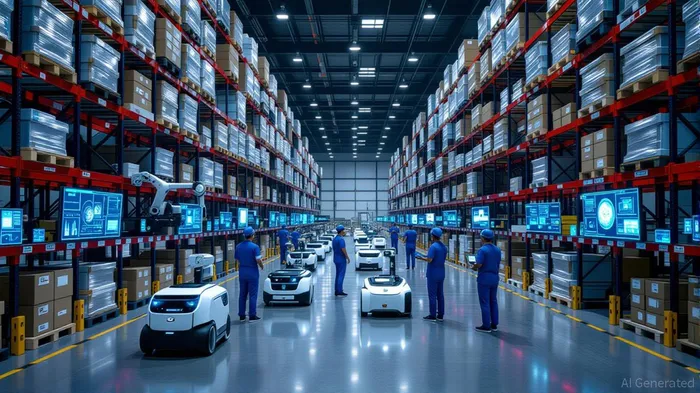
The retail sector is undergoing a seismic shift as artificial intelligence (AI) redefines operational efficiency, customer engagement, and profitability. For investors, the next frontier of margin expansion lies in AI-driven general merchandise retail, where companies like WalmartWMT-- (WMT), TargetTGT-- (TGT), and CostcoCOST-- (COST) are leveraging predictive analytics, automation, and generative AI to outpace competitors. These retailers are not merely adopting technology—they are embedding it into their DNA, creating scalable systems that reduce costs, enhance personalization, and future-proof their supply chains.
The AI Revolution in Supply Chain and Inventory Management
Walmart's AI initiatives exemplify the transformative potential of this sector. Its self-healing inventory systems in Mexico City autonomously reroute overstocked goods, saving $55 million annually. Predictive AI in Costa Rica optimizes delivery routes for perishables before sunrise, minimizing waste and ensuring freshness. Meanwhile, agentic AI tools empower associates to ask questions like “What items were shorted in these stores?” and receive instant, actionable insights. These systems, part of a unified global intelligence layer, have reduced delivery costs by 40% and enabled 45% of e-commerce orders to arrive in under an hour.
Target is similarly innovating, using AI to forecast demand and correct out-of-stocks in real time. Its Target Circle 360 loyalty program now delivers hyper-personalized offers via AI-driven analytics, while store renovations and 300+ new locations over the next decade will be optimized with AI for inventory placement and fulfillment. Costco, though less vocal, is streamlining operations with AI-powered inventory tracking and robotics in warehouses, ensuring product availability and reducing waste for its 68 million global members.
Personalization: The New Currency of Customer Retention
AI is reshaping how retailers engage consumers. Walmart's Sparky, a generative AI shopping assistant, accepts voice, text, and image inputs to offer tailored recommendations, resonating with 27% of shoppers who now prefer AI over influencer marketing. Target's AI-powered app personalizes offers and product suggestions, driving a 20-30% increase in customer retention. Costco's data-driven approach adjusts inventory and promotions based on regional preferences, ensuring relevance in diverse markets.
These personalization engines are not just enhancing customer experiences—they are driving profitability. Walmart's AI-driven personalization has boosted retention rates, while Target's loyalty program expansion aims to triple its membership base by 2027. For investors, the ability to monetize customer data through AI is a critical differentiator in an era where switching costs are low.
Sustainability and Scalability: The Long-Term Play
AI's role in sustainability is another compelling angle. Walmart's Route Optimization SaaS solution, which cut 30 million unnecessary miles driven and 94 million pounds of CO₂ emissions, is now a revenue stream for external businesses. Costco's AI-powered energy management systems reduce store energy consumption, aligning with global ESG trends. These initiatives not only lower costs but also attract environmentally conscious consumers and investors.
Investment Implications: Who Leads the AI Race?
Walmart's $11 billion investment in logistics and automation positions it as the sector leader, with a clear edge in global scalability and execution. Its Trend-to-Product system, which uses social media data to design products in six weeks, exemplifies its agility. Target's focus on omnichannel integration and store growth offers high-growth potential, while Costco's efficient, low-cost model ensures steady returns.
For investors, the key is to balance short-term margin expansion with long-term innovation. Walmart's stock, with its robust AI-driven cost savings and expanding SaaS offerings, is a core holding. Target's personalization and store growth make it a high-conviction growth play. Costco, with its proven efficiency and loyal customer base, serves as a defensive bet in this AI-driven sector.
Conclusion: The AI-First Retailer Wins
The next decade of retail will be defined by AI's ability to optimize every touchpoint—from warehouse to checkout. Walmart, Target, and Costco are not just adapting; they are redefining the rules. For investors, the winners will be those who recognize that AI is no longer a buzzword but a strategic imperative. As these retailers scale their AI initiatives, they will unlock margins, customer loyalty, and sustainability gains that traditional competitors cannot match.
The time to act is now. The AI-driven retail revolution is here—and it's rewriting the playbook for profitability in general merchandise retail.

Stay ahead of the market.
Get curated U.S. market news, insights and key dates delivered to your inbox.




Comments
No comments yet