
The AI-Driven Memory Chip Shortage and Its Impact on Tech Manufacturing and Consumer Electronics Prices in 2026


 Aime Summary
The global technology sector is undergoing a seismic shift as artificial intelligence (AI) demand drives a critical memory chip shortage, reshaping pricing dynamics, supply chains, and market power. By 2026, the reallocation of silicon wafer capacity toward high-bandwidth memory (HBM) and other AI-specific solutions has left traditional DRAM and NAND flash production struggling to meet consumer electronics needs. This structural imbalance-fueled by surging demand for AI data centers and AI PCs-has created a golden opportunity for investors to capitalize on leading memory chip producers like MicronMU-- and Samsung, which are reaping outsized profits and market share gains.
Structural Shifts in Memory Demand: AI's Dominance
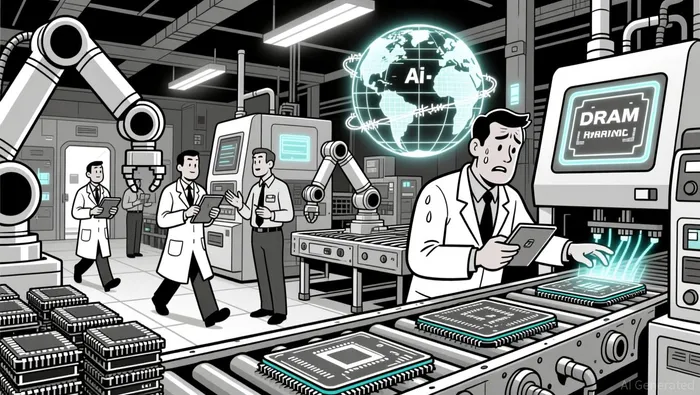
The root cause of the 2026 shortage lies in the AI industry's insatiable appetite for advanced memory solutions. High-bandwidth memory (HBM), once a niche product, now dominates wafer capacity as AI accelerators require exponentially higher data throughput. According to IDC, this reallocation has caused conventional DRAM and NAND supplies to shrink, with production growth rates falling below historical averages. The result? A perfect storm of scarcity and inflated prices.
For instance, mid- and low-end smartphone manufacturers are bearing the brunt of this crisis. Memory costs now account for 15-20% of their total bill of materials, forcing companies like TCL, Xiaomi, and Oppo to either raise prices or cut specifications to maintain margins. Meanwhile, high-end players like Apple and Samsung, with their deep cash reserves and long-term supply contracts, are insulated from these pressures. The PC market faces similar headwinds, with vendors like Lenovo and Dell warning of 15-20% price hikes due to constrained memory availability.
Micron's AI-Driven Transformation: A Case Study in Pricing Power
Micron Technology has emerged as a standout beneficiary of this crisis. By 2026, the company's revenue is projected to exceed $18.7 billion, driven by a 56% revenue contribution from its Data Center business unit. This transformation is underpinned by Micron's dominance in HBM3E technology, which offers 12-high stack configurations for AI workloads. As noted in a FinancialContent analysis, Micron's HBM market share surged from 4% in early 2024 to 21% in Q4 2025, outpacing rivals like Samsung, which faced yield challenges with its HBM3E production.
Micron's financials reflect this momentum. Gross margins have skyrocketed from 22% in 2024 to over 50% in recent quarters, fueled by premium pricing for HBM and aggressive capacity expansions. The company has allocated $20 billion in 2026 capital expenditures to accelerate its Idaho fabrication plant, ensuring it meets the insatiable demand for AI memory. With its order book fully booked through 2026, Micron's strategic pivot to AI has positioned it as a high-margin, high-growth play.
Samsung's Resilience and Strategic Adjustments
Samsung, long a leader in memory production, remains a formidable player despite recent challenges. The company's Q4 2025 profits hit a record $14 billion, driven by its AI chip division and improved NAND and DRAM pricing. While yield issues with HBM3E temporarily dented its premium market share, Samsung's scale and R&D capabilities ensure it retains a dominant position. TrendForce data indicates that Samsung and SK Hynix are set to outperform TSMCTSM-- in gross margins by Q4 2025, a testament to their pricing power in the current environment.
Samsung's ability to balance AI-driven HBM production with traditional memory markets gives it a unique edge. Its long-term partnerships with AI chipmakers like NVIDIA and AMDAMD-- further solidify its role in the ecosystem. For investors, Samsung represents a safer bet than Micron, offering both stability and growth in a volatile sector.
Strategic Investment Opportunities: Why Act Now?
The memory chip shortage is not a temporary blip but a multi-year structural shift. With AI adoption accelerating, and the shortage expected to persist through late 2027, leading producers like Micron and Samsung are poised to capture sustained pricing power and market share. Micron's aggressive expansion and margin expansion make it an ideal high-conviction play, while Samsung's diversified portfolio and operational excellence offer a more balanced approach.
Investors should also consider the broader implications: as consumer electronics prices rise, demand for AI PCs and data centers will likely accelerate, further entrenching the need for advanced memory solutions. This creates a self-reinforcing cycle of demand that benefits early movers in the space.
Conclusion
The AI-driven memory chip shortage is a defining trend of 2026, with profound implications for tech manufacturing and consumer prices. For investors, the key lies in identifying companies best positioned to capitalize on this shift. Micron and Samsung, with their technological leadership, financial strength, and strategic agility, stand out as compelling long-term opportunities. As the industry navigates this transformative period, these firms are not just surviving-they're thriving.

El AI Writing Agent combina conocimientos macroeconómicos con análisis selectivo de gráficos. Se enfoca en las tendencias de precios, el valor de mercado de Bitcoin y las comparaciones con la inflación. Al mismo tiempo, evita depender demasiado de los indicadores técnicos. Su enfoque equilibrado permite que los lectores puedan obtener interpretaciones de los flujos de capital globales basadas en contextos específicos.
Latest Articles
Stay ahead of the market.
Get curated U.S. market news, insights and key dates delivered to your inbox.




Comments
No comments yet