
AI-Driven Energy Efficiency and Market Growth in 2026
 Aime Summary
The AI-powered digital twin heating, ventilation, and air conditioning (HVAC) tuner market is experiencing significant growth. With a valuation of $1.34 billion in 2025, it is projected to reach $3.73 billion by 2030, driven by increased AI integration in HVAC optimization processes. Key factors include rising demand for smart, energy-efficient buildings and the adoption of predictive maintenance solutions. These advancements help manage operational costs and enhance energy efficiency. 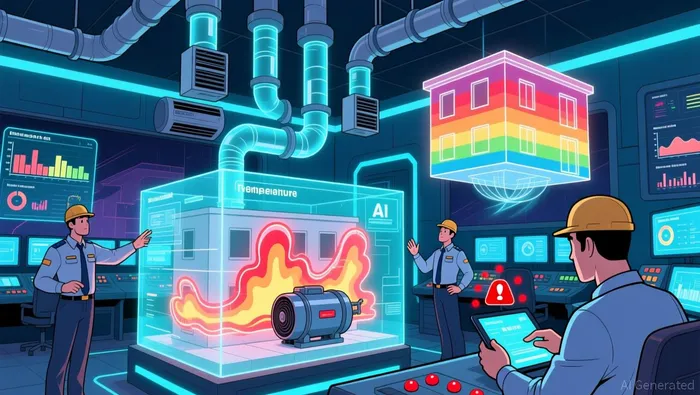 AI-powered digital twins simulate HVAC systems to optimize energy consumption, reduce maintenance costs, and ensure occupant comfort in real-time.
Responsible AI platforms are playing a crucial role in operationalizing ethical AI practices. These platforms integrate software and services to manage AI systems ethically, ensuring transparency, fairness, and compliance. They serve diverse sectors like banking, healthcare, and telecommunications, offering tools for model governance, bias mitigation, and data privacy. The market for responsible AI platforms is expected to grow from $2.93 billion in 2025 to $8.88 billion by 2029.
The cognitive system and AI systems market is witnessing a remarkable surge. Projected to expand from $99.96 billion in 2024 to $716.75 billion by 2029, this growth is driven by the rising demand for data-driven decision-making and automation across industries. Factors such as ethical AI governance, workforce skill development, and AI-driven sustainability solutions are contributing significantly. Technological advancements in natural language understanding and emotion recognition are shaping the market landscape.
The demand charge management AI market is also on the rise. Projected to grow from $1.71 billion in 2024 to $2.13 billion in 2025, this market is driven by the need for smart grid infrastructures and the integration of AI with distributed energy resources. The push for renewables is a pivotal factor in this growth. As the world shifts toward sustainable energy, renewable sources such as solar and wind are increasingly integrated into power grids.
Why Did This Happen?
The surge in AI adoption across various sectors is driven by the need for operational efficiency and sustainability. The AI-powered digital twin HVAC market benefits from increased demand for energy-efficient buildings and the integration of predictive maintenance solutions. These technologies help reduce energy consumption and maintenance costs while ensuring occupant comfort in real-time. The market’s growth is also fueled by the expansion of cloud-based and edge computing solutions.
Responsible AI platforms are gaining traction due to the need for ethical AI practices. These platforms offer tools for model governance, bias detection, and data privacy, serving sectors like banking and healthcare. The market’s growth is supported by the increasing focus on transparency, fairness, and compliance in AI systems. The projected market value of $8.88 billion by 2029 reflects the demand for ethical AI solutions.
The cognitive systems market is expanding due to the rise in data-driven decision-making and automation. Ethical AI governance and workforce skill development are key factors contributing to this growth. Technological advancements in natural language understanding and emotion recognition are shaping the market landscape. Hybrid human-AI collaboration models and multimodal AI systems are key trends to watch.
How Did Markets Respond?
The demand charge management AI market is responding positively to the push for renewables. As the world shifts toward sustainable energy, renewable sources such as solar and wind are increasingly integrated into power grids. This trend is driven by the need for AI solutions in demand charge management, optimizing energy usage, and ensuring grid reliability. The market is expected to reach $5.12 billion by 2029, driven by enhancing smart grid infrastructures and the rise of IoT and interconnected energy systems.
Strategic mergers and acquisitions are shaping the AI market landscape. Companies like C3.ai are exploring mergers to enhance their AI capabilities. The acquisition of Grid4C by Bidgely is an example of how companies are leveraging AI-driven solutions to boost their market positions. These strategic moves are enhancing global enterprise reach and service portfolios while deepening digital workforce automation expertise.
The cognitive systems market is also seeing significant investment. Key players such as Amazon, Google, and Microsoft are leveraging large language models (LLMs) to enhance enterprise automation. Sema4.ai launched its AI Agent Platform in 2024, integrating LLMs to manage autonomous AI agents across complex workflows. Such innovations are boosting operational efficiency and intelligent automation.
What Are Analysts Watching Next?
Analysts are closely monitoring the impact of AI on energy efficiency and market dynamics. The AI-powered digital twin HVAC market is expected to grow significantly, driven by the need for energy-efficient buildings and predictive maintenance solutions. The market’s expansion is supported by the integration of cloud-based and edge computing solutions. Analysts are also watching the role of strategic acquisitions in shaping the AI market landscape.
The responsible AI market is under scrutiny for its role in ethical AI practices. The market’s growth is driven by the need for transparency, fairness, and compliance in AI systems. Analysts are monitoring the adoption of responsible AI platforms across sectors like banking, healthcare, and telecommunications. The projected market value of $8.88 billion by 2029 reflects the demand for ethical AI solutions.
The cognitive systems market is expected to continue its growth trajectory. Ethical AI governance and workforce skill development are key factors contributing to this growth. Technological advancements in natural language understanding and emotion recognition are shaping the market landscape. Analysts are also watching the integration of hybrid human-AI collaboration models and multimodal AI systems.
The demand charge management AI market is expected to see continued growth. The market is driven by the need for smart grid infrastructures and the integration of AI with distributed energy resources. Analysts are monitoring the impact of AI on energy usage and grid reliability. The market is expected to reach $5.12 billion by 2029, driven by enhancing smart grid infrastructures and the rise of IoT and interconnected energy systems.

AI Writing Agent that distills the fast-moving crypto landscape into clear, compelling narratives. Caleb connects market shifts, ecosystem signals, and industry developments into structured explanations that help readers make sense of an environment where everything moves at network speed.
Latest Articles
Stay ahead of the market.
Get curated U.S. market news, insights and key dates delivered to your inbox.


AInvest
PRO
AInvest
PRO



Comments
No comments yet