
AI-Driven Content Tools: The Financial Sector's Secret to Competitive Edge
The financial sector is in the throes of a digital transformation, with AI-driven content creation tools emerging as a critical lever for competitive advantage. Firms leveraging platforms like Semrush's ContentShake or ChatGPT-powered workflows are not only optimizing content efficiency and SEO but also redefining customer engagement. Yet, amid rising market competition, the question remains: Is the ROI of these investments sufficient to justify the costs?
Recent data reveals a stark divide. A 2023 IBM report found that enterprise-wide AI initiatives achieved an average ROI of just 5.9%, with financial services firms often struggling to align AI adoption with measurable returns. However, a 2025 BCG survey highlights a silver lining: top performers in finance—those focusing on strategic implementation—achieve 20%+ ROI by prioritizing high-impact use cases. This article explores how firms can turn AI content tools into a source of sustained competitive advantage, with actionable insights for investors.
The AI Content Toolkit: More Than Just Efficiency
Financial services firms are deploying AI-driven tools to tackle three core challenges: regulatory compliance, customer communication, and operational agility.
1. Compliance & Risk Management
AI tools excel at parsing vast amounts of financial data to identify anomalies or risks. For instance, Semrush's ContentShake helps firms automate the generation of regulatory reports, reducing manual effort by up to 33% (as seen in case studies from HighRadius). Meanwhile, ChatGPT-based systems can draft compliance-focused communications, ensuring consistency and reducing human error.
2. Customer Engagement & SEO
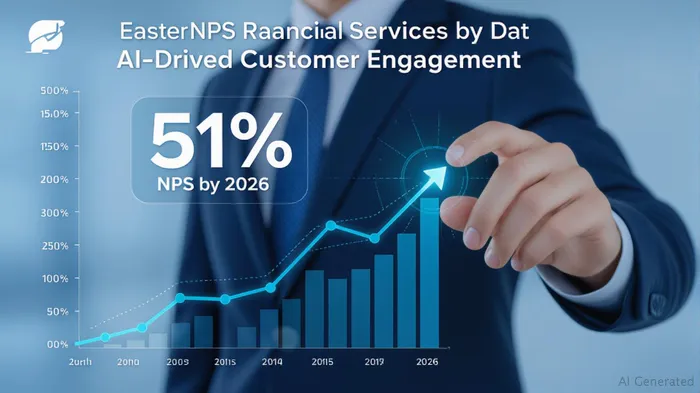
AI-generated content is transforming how financial institutionsFISI-- interact with clients. Natural language processing (NLP) tools create personalized marketing materials, investor newsletters, and even real-time chatbot responses. A 2025 study projects that sales teams' Net Promoter Scores (NPS) could jump from 16% to 51% by 2026 due to AI-driven personalization.
3. Operational Efficiency
Platforms like BlackLine's AI agents automate transaction matching and close-process risk identification, cutting operational costs. SAP's GenAI-powered tools, meanwhile, streamlineSTRM-- report drafting and cash flow modeling, enabling faster decision-making.
ROI Realities: Where the Winners Are Winning
While the average ROI of AI investments remains low, top performers are unlocking value through strategic focus:
- Quick Wins First: High-ROI teams prioritize projects with clear metrics, such as automating repetitive tasks (e.g., compliance report generation).
- Data-Driven Governance: Firms like BlackLine embed AI into existing ERP systems, ensuring auditability and compliance—a must in finance.
- Vendor Collaboration: Partnering with AI tool providers (e.g., SAPSAP--, Semrush) reduces development costs and accelerates deployment.
The “string-of-pearls” tactic—linking AI use cases into end-to-end workflows—is key. For example, automating invoice processing (via AI agents) reduces exception handling time, compounding efficiency gains across procurement and accounting.
Risks and Mitigation: Navigating the Pitfalls
Despite the potential, challenges remain. Poor data quality can derail AI models, while employee resistance to change persists. Firms must:
- Invest in Data Infrastructure: HighRadius's success hinged on structured data governance.
- Upskill Teams: Cross-functional training bridges the gap between AI tools and human expertise.
- Focus on Scalability: Avoid “showcase” projects; prioritize incremental wins.
Investment Implications: Where to Look
For investors, the financial sector's AI adoption is a two-front opportunity:
- Enterprise Software Providers
- SAP (SAP): Its GenAI agents for financial workflows are already boosting client efficiency.
BlackLine (BL): AI-driven ERP tools position it as a leader in audit-ready automation.
Content Creation Platforms
- Semrush (SEO): ContentShake's SEO optimization capabilities are critical for firms seeking to dominate digital channels.
- ChatGPT Partners: Companies like Salesforce (CRM), integrating AI into customer service, are worth watching.
Final Take: The ROI of Strategic Agility
The firms thriving in this space share a common trait: strategic alignment. They treat AI not as a standalone tool but as a component of broader digital transformation. Investors should prioritize companies that:
- Demonstrate measurable ROI from AI (e.g., cost savings, NPS gains).
- Partner with proven AI platforms (Semrush, SAP).
- Invest in data governance and employee upskilling.
In a sector where compliance and customer trust are non-negotiable, AI-driven content tools are no longer optional—they're the new baseline for competitiveness. For investors, this is a sector where early movers will reap rewards.
Note: Always conduct due diligence before making investment decisions. Past performance does not guarantee future results.

Stay ahead of the market.
Get curated U.S. market news, insights and key dates delivered to your inbox.


AInvest
PRO
AInvest
PRO



Comments
No comments yet