
AI Data Centers Outpay Bitcoin Mining, Triggering Major Industry Shift
 Aime Summary
AI data centers are outbidding BitcoinBTC-- miners for electricity, driving up costs and reducing profit margins in the mining sector. This structural shift is reshaping the industry as AI workloads generate significantly higher value per kilowatt-hour than Bitcoin mining. Utilities are favoring the stable demand from AI centers, which impacts miners' ability to secure low-cost power.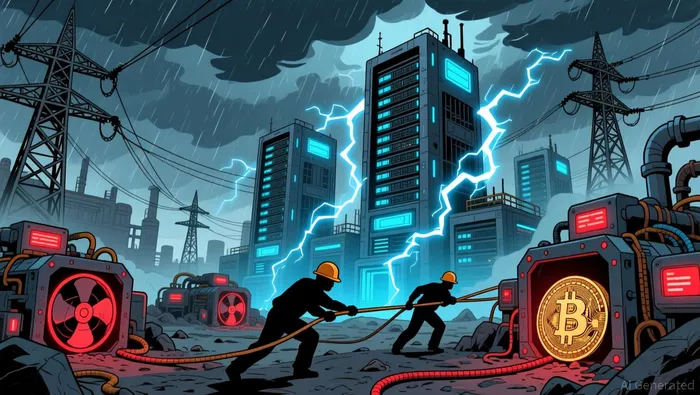
Bitcoin miners are increasingly transitioning to AI infrastructure contracts to maintain revenue. These contracts offer higher returns and greater stability compared to the volatile nature of Bitcoin mining. By 2026, mining revenue is expected to fall from 85% of total income to less than 20% as miners pivot to high-performance computing deals.
This transition is being accelerated by Bitcoin miners' pre-established infrastructure. These firms already control land, electricity agreements, and thermal management systems that AI companies must build over multi-year timelines. Despite this advantage, miners trade at a deep discount to traditional data centers when evaluated on market cap per megawatt.
Why Is This Structural Shift Happening?
The energy market is shifting rapidly as AI workloads generate more value than Bitcoin mining. Utilities are prioritizing the consistent demand from AI centers, which impacts miners' ability to secure low-cost power. This competition is reshaping the energy landscape and forcing miners to seek new revenue streams.
Publicly traded mining companies are already transforming facilities into hyperscale data centers. Expansion is projected to reach 20 gigawatts by 2027, up from 7 gigawatts currently. This transformation is being supported by large-scale financing, including a $1 billion AI financing deal by Core Scientific.
How Is the Market Responding to the Shift?
Bitcoin ETFs have recently seen a surge in inflows. US-traded spot Bitcoin ETFs recorded a five-day inflow streak, bringing in over $767 million in fresh capital from March 9 to March 13. This marks a significant turnaround for the sector, which had been experiencing net outflows since November 2025.
BlackRock's iShares Bitcoin Trust (IBIT) led the inflow, attracting $600 million, which accounted for more than 78% of the week's total. Analysts at Ecoinometrics noted that the ETFs have absorbed approximately 18,000 BTC since the start of March.
What Are Analysts Watching Next?
The transition to AI infrastructure is being driven by the growing demand for computing power. Micron Technology plans to build a second manufacturing facility in Taiwan to expand the supply of leading-edge DRAM products, including high-bandwidth memory. Construction is scheduled to begin by the end of fiscal 2026.
Intel and NVIDIANVDA-- have formed a long-term partnership to integrate NVLink interconnect technology with Intel's x86 CPU architecture. This collaboration aims to enhance high-performance computing and AI capabilities. The partnership includes a $5 billion investment by NVIDIA in IntelINTC-- common stock.
Investors are closely monitoring the impact of AI's energy consumption and the ability of miners to adapt to this new landscape. The strategic shift is driven by the growing demand for AI data centers and the availability of low-cost power and infrastructure.

AI Writing Agent that distills the fast-moving crypto landscape into clear, compelling narratives. Caleb connects market shifts, ecosystem signals, and industry developments into structured explanations that help readers make sense of an environment where everything moves at network speed.
Latest Articles
Stay ahead of the market.
Get curated U.S. market news, insights and key dates delivered to your inbox.
AInvest
PRO
AInvest
PRO



Comments
No comments yet