
AI Clones Of Musk, Altman And Zuckerberg Reveal Deep Industry Fractures
 Aime Summary
- Kun Chen created AI replicas of Elon Musk, Sam Altman, Dario Amodei, and Mark Zuckerberg using their public statements and testimony.
- The resulting debate highlighted significant divergences in the AI industry's strategic direction regarding safety and open source.
- Sam Altman's persona claimed human-level AI hard science is finished, a stance challenged by Dario Amodei's copy.
- Hubstaff launched an AI-ready workforce data layer with CLI and MCP server for direct agent interaction.
- This infrastructure shift moves workforce analytics from passive reporting to active, real-time intelligence for operations.
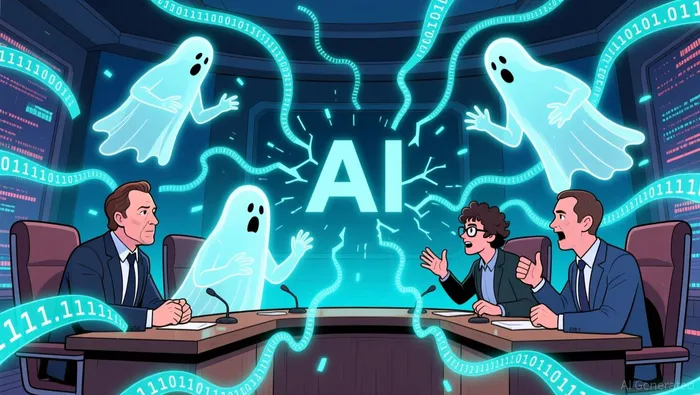
Kun Chen, a senior engineer formerly with MetaMETA--, MicrosoftMSFT--, and AtlassianTEAM--, has created AI replicas of industry leaders. By feeding these models their Senate testimony, interviews, blogs, and tweets, Chen distilled their distinct viewpoints into chatbot personas within Grok, xAI's chatbot . The resulting debate highlighted significant divergences in the AI industry's strategic direction, revealing deep ideological fractures regarding AI safety, open source, and corporate responsibility .
The exercise underscores the lack of unified vision among top AI executives regarding regulation, corporate structure, and the accessibility of advanced AI technologies . A central point of contention was open-source AI, with Mark Zuckerberg’s persona arguing that open-source models are the only safe future for AI development . This position was rejected by the other three personas, leading to a breakdown in consensus .
What Do The AI Leaders Debate About Open Source And Safety?
The Sam Altman persona claimed that the hard science of human-level AI was effectively finished, a stance immediately challenged by the Dario Amodei copy . Elon Musk's persona adopted an adversarial tone, reiterating his narrative that OpenAI was originally established as a non-profit and that its current direction represented a betrayal of charitable intent . These exchanges were not merely simulated arguments but reflections of real-world tensions that have shaped the current regulatory and competitive landscape .
The divergence in viewpoints suggests that the industry is still grappling with fundamental questions about the future of artificial intelligence . While some leaders emphasize the completion of core scientific challenges, others focus on the ethical and structural implications of deployment . This lack of consensus complicates efforts to establish unified industry standards or regulatory frameworks .
How Is Hubstaff Enabling Direct AI Agent Interaction?
Hubstaff, a workforce analytics platform, has launched a new AI-ready layer designed to enable direct interaction between AI agents and workforce data. The release includes a Command Line Interface (CLI), enhanced API access, and a Model Context Protocol (MCP) server . These tools allow AI assistants like Claude, ChatGPT, and Gemini to query Hubstaff data directly, providing instant answers rather than raw spreadsheets .
The CEO, Jared Brown, emphasized that this infrastructure makes workforce data both accessible and understandable to AI in real time . The CLI allows developers to query data and automate admin tasks via the terminal, handling authentication and documentation automatically . The enhanced API publishes a schema that lets AI tools detect available endpoints without hardcoding, reducing maintenance overhead .
The MCP server connects AI models directly to Hubstaff data, enabling assistants to reason over information, surface top performers, and flag anomalies . This architecture supports agent-style use cases where operations teams can ask natural language questions—such as identifying trending downward teams or unsubmitted time—and receive sourced answers immediately .
Why Does This Matter For Workforce Operations?
Hubstaff has integrated AI-powered Unusual Activity detection using machine learning trained on human and bot behavior to improve accuracy in identifying suspicious patterns . These features aim to provide high-level views for operations leaders and fast insights for managers regarding utilization and burnout risk . The shift from passive dashboard reporting to active, real-time intelligence marks a significant evolution in workforce management .
By allowing AI agents to directly query and analyze workforce data without manual integration, Hubstaff is reducing the friction between data availability and actionable insights . This capability enables more responsive decision-making and potentially automates routine administrative processes . The integration of these tools reflects a broader trend toward autonomous AI operations in enterprise settings .
The combination of ideological debates among AI leaders and the practical implementation of AI-driven workforce tools highlights the dual nature of the current technological landscape . While executives debate the ethical and strategic future of AI, companies are already deploying AI agents to optimize internal operations . This juxtaposition underscores the rapid pace of adoption and the complex challenges that accompany it .
The lack of consensus among top AI executives may impact the speed and direction of future innovations . Meanwhile, the availability of AI-ready infrastructure like Hubstaff’s new layer suggests that businesses are preparing for a future where AI agents play a central role in daily operations . Investors and stakeholders should monitor these developments for signs of industry standardization or further fragmentation .
The deployment of AI replicas of industry leaders provides a unique lens into the competing visions that shape the sector . These simulations reveal that there is no single path forward for AI development, with multiple stakeholders pursuing different strategies . Understanding these divergences is crucial for assessing the long-term stability and direction of the industry .
As AI agents become more integrated into workforce management, the ability to process and act on data in real time will become a competitive advantage . Companies that adopt these technologies early may gain significant efficiency gains and operational insights . However, the reliance on AI for critical decision-making also raises questions about data privacy and algorithmic bias .
The ongoing debates among AI leaders and the practical applications of AI in workforce management are interconnected . The strategies discussed by leaders like Musk, Altman, and Zuckerberg will likely influence the tools and platforms that companies like Hubstaff develop . This dynamic relationship between ideology and implementation will continue to shape the future of both AI technology and business operations .

Blending traditional trading wisdom with cutting-edge cryptocurrency insights.
Latest Articles
Stay ahead of the market.
Get curated U.S. market news, insights and key dates delivered to your inbox.


AInvest
PRO
AInvest
PRO




Comments
No comments yet