
The AI Chip War: How Alphabet's Gemini and New AI Hardware Challenge Nvidia's Dominance


 Aime Summary
Alphabet's Vertical Integration: A Strategic Edge
Alphabet's decade-long investment in Tensor Processing Units (TPUs) has culminated in the Ironwood TPU v7, a chip designed to outperform Nvidia's H100/H200 GPUs in AI-specific workloads. According to a report by Startup Story Media, Ironwood delivers and , enabling it to achieve in a full-scale pod configuration- of Nvidia's GB300 NVL72 system. This performance leap is compounded by Ironwood's and compared to its predecessor, making it a cost-effective solution for inference-heavy tasks.
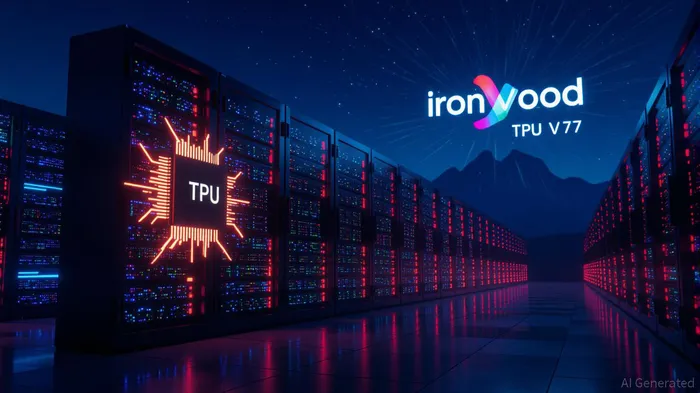 Alphabet's vertically integrated approach-where hardware design is tightly coupled with software optimization-has allowed Gemini AI models like Gemini 3.0 Pro and 3.0 Deep Think to , including OpenAI's GPT-5 Pro. This synergy between custom silicon and AI models creates a flywheel effect, reducing costs for developers while enhancing performance for end-users.
Nvidia's Counteroffensive: The Blackwell Platform
Nvidia, which currently holds , is countering Alphabet's advances with its Blackwell platform. As stated by Webpronews, . The platform has already secured broad adoption from cloud providers like AWS, Google Cloud, and Microsoft, underscoring Nvidia's entrenched ecosystem. However, Alphabet's Ironwood TPUs are carving out a niche .
Market Dynamics and Strategic Partnerships
The AI chip war is not just a technical battle but a strategic one. Alphabet's partnerships with companies like Anthropic and Lightricks, along with potential collaborations with Meta Platforms (META), signal a broader industry realignment. According to Forbes, Meta is reportedly considering Google's TPUs for deployment in its data centers starting in 2027, with possible TPU rentals through Google Cloud as early as 2026. This shift is driven by hyperscalers' desire to diversify chip supply chains and reduce reliance on a single supplier.
Alphabet's dual-track strategy-using TPUs for efficiency and NvidiaNVDA-- GPUs for flexibility-positions it to control costs while maintaining agility. For instance, Google's capital expenditures on AI infrastructure are projected to reach , . This aggressive investment underscores Alphabet's commitment to scaling its AI infrastructure, with by 2025.
Investment Implications: A Diversified Market
For investors, the AI chip war highlights the importance of diversification. While Nvidia's Blackwell platform reinforces its short-term dominance, Alphabet's vertical integration and cost advantages position it to capture significant market share in the long term. Data from Yahoo Finance indicates , .
The key differentiator lies in workload specialization. Nvidia's GPUs remain superior for general-purpose computing and training tasks, but Alphabet's TPUs are redefining the economics of inference workloads. As AI adoption accelerates, the demand for cost-effective inference solutions will likely tilt the market in Alphabet's favor.
Conclusion: Positioning for the AI Era
The AI chip war is reshaping the semiconductor industry, with Alphabet and Nvidia representing two distinct but complementary strategies. For investors, the takeaway is clear: a diversified portfolio that includes both leaders in AI hardware and vertically integrated players like Alphabet is essential. Alphabet's Gemini AI and Ironwood TPU are not just challenging Nvidia's dominance-they are redefining the rules of the game. As the market evolves, those who recognize the strategic value of vertical integration and workload specialization will be best positioned to capitalize on the AI-driven future.

Delivering real-time insights and analysis on emerging financial trends and market movements.
Latest Articles
Stay ahead of the market.
Get curated U.S. market news, insights and key dates delivered to your inbox.




Comments
No comments yet