
AI's Algorithmic Noise vs. Human Engagement: Internet's Credibility Crisis


 Aime Summary
The "Dead Internet Theory," a hypothesis suggesting that much of the content online is no longer seen by human eyes, has gained renewed attention as artificial intelligence-generated material floods digital platforms. This surge in AI-driven content, coupled with declining ad viewability rates, has sparked debates among marketers, regulators, and technologists about the integrity of online engagement metrics. Recent data from Pixalate, a global ad fraud protection platform, underscores the tension between AI's expanding role and the credibility of digital advertising ecosystems.
Pixalate's Q3 2025 ad viewability benchmarks reveal a fragmented landscape. In Brazil, mobile app ad viewability reached 62%, while desktop web ads hit 69%, yet these figures mask persistent issues with bot traffic and non-human interactions. Globally, desktop web ad viewability averaged 63%, with mobile web at 60% and mobile app at 67%. The data highlights a critical challenge: as AI tools generate vast amounts of content and automate ad placements, the line between legitimate human engagement and algorithmic noise blurs. 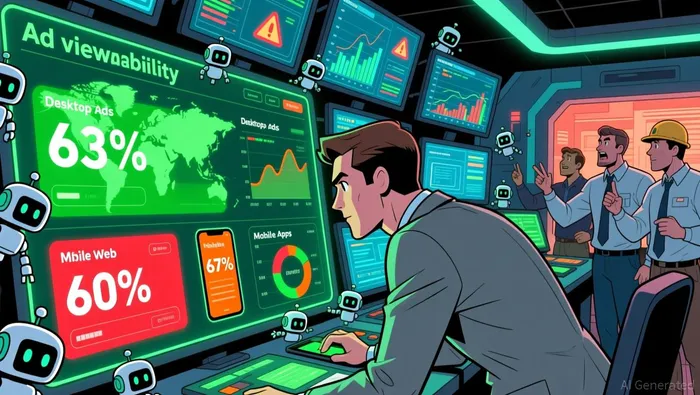 Pixalate's analysis of 39 billion programmatic ad impressions further emphasizes the scale of the problem, with non-human traffic potentially skewing metrics that advertisers rely on to measure campaign success.
The implications extend beyond ad viewability. Companies like C3.ai, an enterprise AI software provider, are grappling with the economic fallout of AI's rapid integration. According to C3.ai's financial reports, the company reported a 19% year-over-year revenue drop and a $117 million net loss in its most recent quarter, now exploring a potential sale amid leadership transitions and operational challenges. Analysts note that C3.ai's struggles reflect broader uncertainties in the AI sector, where high development costs and competitive pressures threaten to erode profitability even as demand for AI tools grows.
The Dead Internet Theory gains traction in this context. With AI-generated content dominating social media, search results, and even ad inventories, critics argue that the internet is becoming a "ghost town" of algorithmic interactions. Pixalate's data suggests that up to 37% of mobile app ad impressions in Brazil may not reach human audiences, a figure that aligns with the theory's core premise. Advertisers, meanwhile, face a dilemma: investing in platforms where engagement metrics are increasingly unreliable could lead to wasted budgets and diminished returns. The situation has prompted calls for stricter regulations and advanced analytics to differentiate between human and bot activity.
For now, the debate remains unresolved. While Pixalate's benchmarks highlight the urgency of addressing non-human traffic, companies like C3.ai illustrate the financial risks of overreliance on AI. As the digital ecosystem evolves, stakeholders must balance innovation with accountability to ensure that the internet remains a space for meaningful human interaction rather than a black box of algorithmic churn.

Stay ahead of the market.
Get curated U.S. market news, insights and key dates delivered to your inbox.






Comments
No comments yet