
Agriculture Automation Market Grows as AI, IoT, and Sustainability Drive Innovation
 Aime Summary
The agriculture automation control systems market was valued at US$5.2 billion in 2024 and is projected to reach US$9 billion by 2030, growing at a compound annual growth rate (CAGR) of 9.5%. Technological innovations such as artificial intelligence (AI), Internet of Things (IoT), and cloud-based platforms are enabling real-time monitoring of soil conditions, crop health, and climate, optimizing resource use and reducing waste.
In 2026, advancements in precision agriculture are evident in farm equipment innovations. GPS-guided tractors, AI-based monitoring, and remote diagnostics are improving efficiency and reducing operational costs. For example, the Laverda Combine 2026 integrates AI-powered threshing, precision GPS steering, and IoT connectivity, achieving up to 30% higher productivity while reducing grain loss and fuel consumption. Additionally, over 70% of new farm machinery in 2025 featured sustainability-focused technology to reduce resource waste, with more than 60% of 2026 models supporting smart device integration.
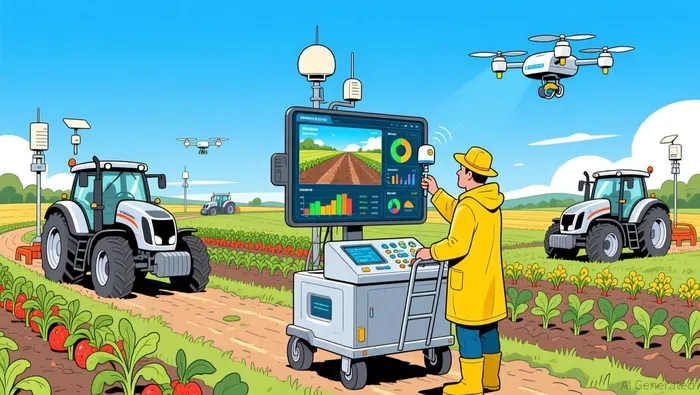
- The agriculture automation market is also being driven by the need for sustainability and efficiency. Innovations in AI and machine learning, coupled with IoT integration, are transforming how farmers manage their operations. These tools enable data-driven decision-making, which is essential for optimizing inputs and reducing costs. Furthermore, government subsidies and technological innovation are encouraging the adoption of smart farming solutions.
What Factors Are Driving Growth in the Agricultural Automation Market?
The global market is expanding due to increasing demand for precision farming techniques, rising labor costs, and the need for resource efficiency. Technological advancements such as AI-powered analytics, IoT devices, and cloud-based platforms are transforming automation systems, allowing for real-time monitoring of soil conditions, crop health, and climate. These tools help farmers anticipate threats like disease outbreaks and weather fluctuations, enabling more informed decision-making.
Government support through subsidies is also playing a critical role in market expansion. For instance, the China agricultural machinery market, valued at USD 21.8 billion in 2025, is expected to grow to USD 36.2 billion by 2032 at a CAGR of 7.47%. The 25–100 HP tractor segment is expected to dominate the market, capturing around 51% of the share in 2026. Structural barriers such as high initial investment costs remain, but government support and technological advancements are mitigating these challenges.
How Are Innovations in Farm Equipment Affecting Agricultural Productivity?
The integration of AI and IoT into farm equipment is enhancing productivity and efficiency. Precision agriculture systems, such as those offered by Fastline Farm Equipment and St Antoine Farm Equipment, are incorporating AI-driven diagnostics, remote monitoring, and resource-efficient technologies. These innovations improve seed placement, reduce input waste, and minimize operational costs. For example, variable-rate sprayers and automated irrigation systems reduce input waste and improve crop yields.
Sustainability is a central theme in 2026 farm equipment. Solar-powered equipment and fuel-efficient models are gaining traction, with predictive AI improving fuel efficiency by an average of 20% per unit compared to pre-2020 models. Remote diagnostics and fleet management tools are streamlining operations, reducing downtime by up to 25%. Additionally, over 70% of new farm machinery in 2025 featured sustainability-focused technology.
What Challenges and Opportunities Exist in the Agricultural Automation Market?
Despite the market's growth, challenges such as high initial investment costs and interoperability issues persist. However, opportunities exist for cost-effective, user-friendly solutions that cater to the growing demand for smart, scalable farming systems. Market trends include advancements in AI and machine learning, IoT integration, and the expansion of smart greenhouses.
The Sensor Technologies segment is expected to grow at a CAGR of 10.9%, while the Robotics & Automation Equipment Technology segment will grow at 10%. Regional growth is highlighted in the U.S. and China, with the U.S. market valued at $1.4 billion in 2024. Innovations in AI-powered crop monitoring, blockchain traceability, and integrated digital tools are expected to become standard by 2026, enabling sustainable and scalable agricultural systems.
Agribusinesses are also leveraging precision agriculture to reduce waste and improve environmental stewardship. Smart farming technologies such as satellite imagery, AI advisory systems, and blockchain traceability are helping farmers optimize resource use and increase profitability while meeting sustainability goals. These advancements are enabling the development of high-yield, climate-resistant crops and supporting renewable energy integration into farming practices.

Blending traditional trading wisdom with cutting-edge cryptocurrency insights.
Latest Articles
Stay ahead of the market.
Get curated U.S. market news, insights and key dates delivered to your inbox.


AInvest
PRO
AInvest
PRO



Comments
No comments yet