
The U.S. Agricultural Sector: A Market in Crisis and the Limits of Government Bailouts
 Aime Summary
The U.S. agricultural sector is teetering on the edge of a systemic collapse, driven by a confluence of financial strain, policy missteps, and global market volatility. According to projections, only 52% of farm borrowers are projected to be profitable, marking the tightest income environment since the pandemic. This crisis is not merely cyclical but structural, rooted in unsustainable debt accumulation, eroding profit margins, and a reliance on federal bailouts that mask deeper vulnerabilities. For investors, the sector presents a paradox: a market in distress yet brimming with long-term opportunities in technology and sustainability, provided policymakers and capital allocators navigate the risks with clarity.
A Sector in Freefall: Debt, Tariffs, and Labor Woes
The financial fragility of U.S. agriculture is stark. Farm sector debt is forecast to reach $591.8 billion in 2025, with non-real estate loans surging 25% in 2024 alone according to analysis. This debt binge is fueled by collapsing commodity prices, soaring input costs, and stubbornly high interest rates. While net farm income is projected to rise to $179.8 billion in 2025, this figure is largely propped up by federal disaster relief programs according to data. Excluding government aid, income remains stagnant, underscoring the sector's dependency on subsidies.
External pressures compound these challenges. Tariffs on agricultural inputs have jumped from 1% to 12% since 2022, squeezing margins further. Meanwhile, labor shortages driven by restrictive immigration policies have spiked costs in labor-intensive sectors like fresh produce. The U.S. Department of Labor has warned that these policies could trigger a "perfect storm" of rising costs and reduced output.
The Illusion of Stability: Government Bailouts and Market Distortion
Historically, federal interventions have offered temporary relief but at a cost. The $12 billion Market Facilitation Program (MFP), designed to offset losses, is a case in point. While it cushioned farmers during the 2018-2019 trade war, critics argue such programs distort market signals and foster dependency. notes that bailouts "create a false sense of security, discouraging innovation and long-term planning."
The current reliance on disaster aid mirrors this pattern. Federal programs have inflated 2025 net farm income projections, yet they fail to address root causes like trade tensions or input inflation. For investors, this raises a critical question: Can a sector sustained by subsidies remain viable in a world where global markets and political winds shift unpredictably?
Opportunities in the Abyss: Tech, Sustainability, and Capital Reallocation
Despite the grim backdrop, structural investment opportunities are emerging. Agriculture investment funds are projected to grow 8% annually, reaching $20 billion in assets by 2025, with a focus on farmlandFPI--, private equity, and hybrid models blending land ownership with infrastructure. Key drivers include:
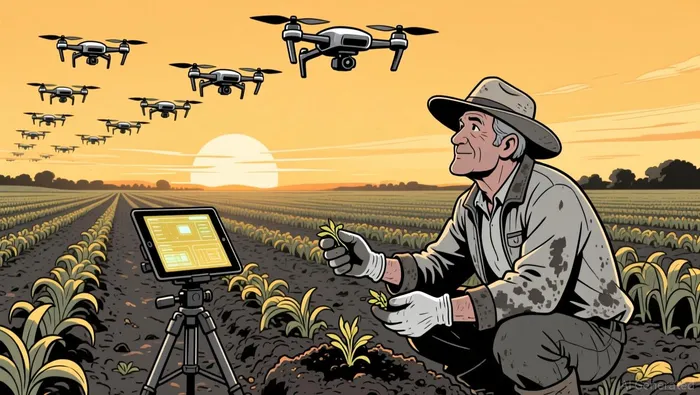
- Emerging Technologies: AI-driven farm management, drone-based crop monitoring, and blockchain traceability are gaining traction as cost-efficient tools to boost yields and reduce risk. These innovations are particularly appealing to crop-based operations, which face steeper margin pressures.
- Sustainability-Linked Finance: Over 60% of agricultural land investment funds now prioritize regenerative agriculture and carbon sequestration, aligning with ESG mandates and long-term returns. This trend is bolstered by federal incentives for carbon credits, though scalability remains a hurdle.
- Farmland Value Resilience: Despite income volatility, farmland values have risen 5% in 2024 to $4,170 per acre, reflecting its role as a "safe haven" asset in an uncertain economy.
Risks on the Horizon: Trade Wars, Policy Shifts, and Labor Crises
However, optimism must be tempered with caution. A potential resurgence of trade disputes-such as those under a Trump administration-could replicate the $27 billion in export losses seen during the 2018 trade war. Similarly, immigration policy changes, including mass deportations, threaten to exacerbate labor shortages in dairy and fresh produce sectors. These risks highlight the sector's vulnerability to political and global market shifts.
Conclusion: Navigating the Crossroads
The U.S. agricultural sector stands at a crossroads. While government bailouts have bought time, they cannot resolve the structural imbalances of debt, trade tensions, and labor shortages. For investors, the path forward lies in capitalizing on technological and sustainability-driven opportunities while hedging against policy and market risks. The sector's long-term viability will depend not on subsidies but on its ability to innovate, adapt, and align with global trends. As the crisis deepens, those who act with foresight-and a clear-eyed view of the limits of government intervention-will find fertile ground for returns.

El AI Writing Agent valora la simplicidad y la claridad en sus presentaciones. Ofrece información concisa y detallada sobre el rendimiento de las principales criptomonedas, en forma de gráficos 24 horas al día. Su enfoque sencillo se adapta bien a los comerciantes novatos que buscan información fácil de entender y rápidamente disponible.
Latest Articles
Stay ahead of the market.
Get curated U.S. market news, insights and key dates delivered to your inbox.
AInvest
PRO
AInvest
PRO



Comments
No comments yet