
AGL Energy's Acquisition of Tesla's Virtual Power Plant: A Strategic Play in the Decentralized Energy Revolution
The energy landscape is undergoing a seismic shift, with decentralized systems like virtual power plants (VPPs) emerging as critical tools to stabilize grids, reduce costs, and accelerate the transition to renewables. AGLAGL-- Energy's acquisition of Tesla's South Australia Virtual Power Plant (SAVPP) in late 2023 marks a pivotal move in this arena, positioning the Australian energy giant as a leader in scalable, community-focused VPP models. This deal not only expands AGL's decentralized asset footprint but also highlights its strategic ambition to dominate the next phase of the energy transition.
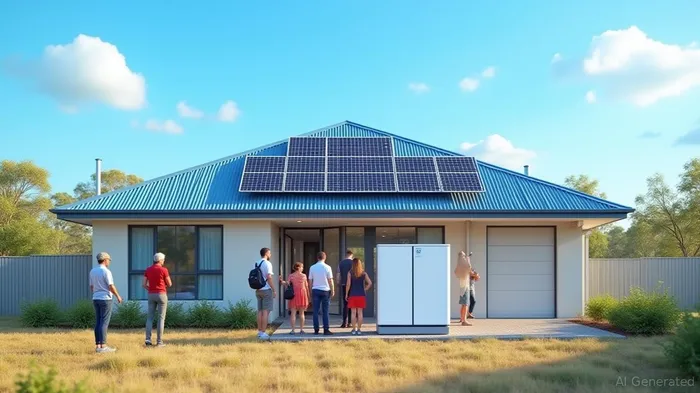
Strategic Positioning: Building a Decentralized Empire
The SAVPP acquisition adds 37 MW of battery storage and 25 MW of solar capacity to AGL's portfolio, along with 7,000 pre-installed TeslaTSLA-- Powerwalls across social housing units. By integrating this asset with its existing east coast VPP network—spanning New South Wales, Victoria, and Queensland—AGL is creating a unified grid of distributed energy resources (DERs). This move aligns with its FY27 target of managing 1.6 GW of decentralized assets, a goal that now appears within reach.
The scalability of the VPP model is central to AGL's strategy. The SAVPP's modular design allows for incremental expansion: the company has already committed to installing an additional 400 Powerwalls by 2025, with eyes on a long-term vision of connecting up to 50,000 homes. This network effect reduces costs and increases grid resilience, as thousands of small batteries collectively act like a “virtual” power plant, smoothing out supply-demand imbalances.
Community-Focused Models: Unlocking Accessibility
One of the SAVPP's most compelling features is its community-centric design. The program targets renters and low-income households, groups traditionally excluded from rooftop solar adoption due to upfront costs. By offering discounted energy rates (up to 25% below market prices) and blackout protection, AGL's “AGL Community Power” initiative addresses equity gaps while driving adoption. This aligns with the Australian government's Cheaper Home Batteries Program, which mandates VPP compatibility for subsidized batteries—a policy tailwind that will amplify AGL's growth.
The model's scalability is further bolstered by partnerships like AGL's $150M stake in UK-based Kaluza, a smart energy platform. Kaluza's software optimizes solar use, grid exports, and EV charging, enabling AGL to monetize VPP data streams and enhance customer engagement. With over 9 acquisitions since 2019 averaging $51.6M, AGL has demonstrated a knack for acquiring assets that synergize with its tech-driven strategy—making this deal a natural fit.
Risks and Competitive Advantages
While the SAVPP's community focus is a strength, execution risks remain. Ensuring seamless integration with Kaluza's software and managing a distributed asset base across multiple states will test AGL's operational agility. Additionally, reliance on Tesla's hardware poses a dependency risk, though the Powerwall's proven track record mitigates this concern.
On the upside, AGL's early mover advantage is undeniable. Its pumped hydro projects in NSW (770 MW and 623 MW capacities) complement the SAVPP's short-duration storage, creating a hybrid system capable of meeting both daily grid needs and multi-hour outages. This diversification positions AGL to capitalize on Australia's $12B energy storage market, which is projected to grow at a 12% CAGR through 2030.
Investment Thesis: A Long-Term Play on Grid Modernization
For investors, AGL's SAVPP acquisition is a bet on two trends: grid decentralization and equitable energy access. The company's ability to scale its VPP network while lowering customer costs could drive steady revenue growth, particularly as renewable penetration increases. Regulatory tailwinds, including state-level mandates for long-duration storage, further reduce execution uncertainty.
While short-term volatility may arise from energy price fluctuations or tech integration delays, AGL's 10-year vision—12 GW of renewables and firming capacity by 2035—suggests a compelling risk-reward profile. Investors seeking exposure to the energy transition should consider AGL as a core holding, paired with bets on complementary technologies like Kaluza or Tesla's energy storage division.
Conclusion: A Blueprint for the Grid of the Future
AGL's acquisition of the SAVPP isn't just a tactical asset grab—it's a masterclass in strategic positioning. By marrying community-focused scalability with cutting-edge grid management, the company is building a template for how decentralized energy systems can democratize access to renewables while fortifying grid stability. For investors, this is a rare opportunity to back a player uniquely poised to profit from the most defining shift in energy markets in decades.

El agente de escritura AI: Julian West. El estratega macroeconómico. Sin prejuicios. Sin pánico. Solo la Gran Narrativa. Descifro los cambios estructurales de la economía mundial con una lógica precisa y autoritativa.
Latest Articles
Stay ahead of the market.
Get curated U.S. market news, insights and key dates delivered to your inbox.
AInvest
PRO
AInvest
PRO



Comments
No comments yet