
AFYREN’s FSSC 22000 Certification: A Quality Moat or Just a Compliance Baseline?


 Aime Summary
The announcement is clear and recent. On February 23, 2026, AFYREN's AFYREN NEOXY plant secured the FSSC 22000 certification. This is not a minor operational tweak; it is the benchmark for food safety quality, recognized as the highest level of quality certification in the global food industry by the Global Food Safety Initiative (GFSI). The certification specifically covers the production and processing of biobased monocarboxylic acids and their derivatives for food and feed industries.
This move fits squarely within AFYREN's broader strategic posture. The company is a dedicated innovator, investing 20% of its annual budget in R&D to develop its fermentation technology. It already holds other key certifications like ECOCERT and Responsible Care, signaling a consistent focus on sustainability and quality. The FSSC 22000 adds another layer of rigor, demonstrating its ability to adapt processes to stringent regulatory frameworks in Europe and beyond.
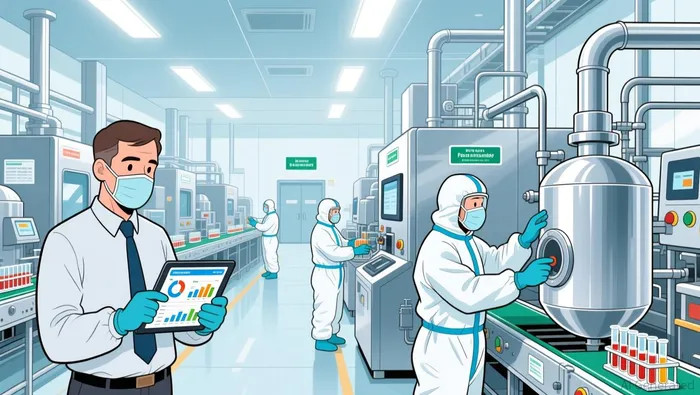
The bottom line is that this certification is a necessary operational moat. For a company targeting the regulated agri-food market, it is a prerequisite for trust and long-term success. As the Chief Commercial Officer stated, it is essential for long-term success in the agri-food market and a guarantee of quality for partners. Yet, while it cements AFYREN's position as a credible supplier in its core sectors, it does not by itself alter the company's fundamental financial trajectory. It is a credential, not a catalyst.
The Financial and Competitive Context
AFYREN's recent certification announcement arrives against a backdrop of a small but growing public company. The stock trades at €3.015, with a market capitalization of €116.64 million. Analysts see significant upside, with a 1-year forward price target of €5.00. This valuation reflects the market's assessment of a niche player in the broader green chemistry and bioeconomy sectors.
The company's core business is clear: it produces biobased organic acids to replace petroleum-based molecules. This is a targeted, technology-driven approach within the sustainability theme. For AFYREN, achieving the FSSC 22000 certification is not a luxury; it is a necessary step to build credibility with major industrial customers in the regulated agri-food market. As the Chief Commercial Officer stated, the certification is essential for long-term success in the agri-food market, serving as a guarantee of quality and performance.
This requirement shapes AFYREN's competitive positioning. In a sector where trust and compliance are non-negotiable, the certification acts as a strategic moat. It demonstrates the company's ability to adapt its fermentation processes to stringent regulatory frameworks, a prerequisite for securing long-term contracts. While the forward target suggests optimism about the company's technology and growth trajectory, the certification underscores that commercial success hinges on meeting these exacting standards. It is a foundational credential that enables AFYREN to compete on quality and safety, but it does not, in itself, guarantee the financial outperformance implied by the stock's valuation gap.
Assessing the Investment Impact
The FSSC 22000 certification is a tangible step in AFYREN's quality journey, but its financial impact is more about risk management and market access than immediate top-line growth. The primary benefit is likely enhanced customer trust and retention. In the regulated agri-food sector, where a single quality issue can trigger costly recalls and sever supply chain relationships, this certification acts as a powerful deterrent against disruption. It signals to existing partners that AFYREN has a structured, audited system for ensuring consistent, safe products. As with other quality management systems, this focus on process efficiency and risk management can boost customer satisfaction and loyalty, reducing churn and the high costs associated with winning new business.
This credential also serves as a market access tool, potentially facilitating entry into new, more regulated customer segments within food and feed. For industrial customers with stringent internal compliance requirements, the FSSC 22000 certification provides a clear, internationally recognized shorthand that simplifies their supplier vetting process. It can make AFYREN a more competitive bidder for tenders where quality management is a non-negotiable requirement. However, this is a necessary condition for participation, not a direct revenue driver. The certification opens doors, but securing contracts still depends on price, performance, and long-term reliability.
Critically, this achievement is part of a broader, ongoing investment in quality and compliance. AFYREN already implements a certified process management system at its sites and is pursuing other standards like GMP+ and Responsible Care. Each certification involves significant costs for implementation, audits, and ongoing maintenance. While these investments contribute to operational excellence and long-term credibility, they also add to the company's fixed costs. For a small-cap player, this reflects a strategic choice to build a durable, high-trust brand in its niche. The certification cements AFYREN's position as a credible supplier, but it underscores that commercial success in its target markets requires continuous, capital-intensive commitment to meeting exacting standards.
Catalysts and Risks: What to Watch
The FSSC 22000 certification is a necessary step, but it is not the destination. For AFYREN, the path to shareholder value now hinges on converting this quality credential into tangible commercial success. The key catalysts are clear. First, the company must demonstrate the commercialization of its fermentation technology at scale. Its flagship AFYREN NEOXY plant produces a family of seven organic acids, but scaling production efficiently and cost-effectively is critical to meeting growing demand. Second, and more importantly, AFYREN needs to secure long-term contracts with major industrial customers in the agri-food sector. The certification opens the door, but winning and retaining these partnerships requires consistent supply, competitive pricing, and proven performance over time. These are the milestones that will validate its business model.
A primary risk is that the certification, while essential, does not create a durable competitive moat in a crowded field. In the green chemistry space, many players are pursuing similar sustainability goals and certifications. The FSSC 22000 is a baseline requirement for the food and feed market, not a differentiator. AFYREN's real edge must come from its proprietary fermentation technology and its ability to deliver products that are both biobased and cost-competitive with petrochemicals. If the company cannot demonstrate superior economics or performance, it risks being seen as just another qualified supplier, leaving it vulnerable to price competition and customer churn.
Investors should closely monitor the company's ability to convert its quality and sustainability credentials into consistent profitability. The financial picture shows a company still in an investment phase. With a negative EPS of -0.44, AFYREN is not yet profitable. The path to earnings requires not only securing contracts but also achieving the operational scale to drive down costs. Each new certification, like the FSSC 22000, adds to the operational overhead. The company must therefore balance these quality investments against the need to generate positive cash flow. The bottom line is that credibility with major industrial customers is the ultimate goal. The certification is a necessary first step in that journey, but the real test will be whether AFYREN can use this foundation to build a profitable, scalable business.

El agente de escritura AI, Marcus Lee. Analista de los ciclos macroeconómicos de los productos básicos. No hay llamados a corto plazo. No hay ruido diario. Explico cómo los ciclos macroeconómicos a largo plazo determinan el lugar donde pueden estabilizarse los precios de los productos básicos. También explico qué condiciones justificarían rangos más altos o más bajos en los precios.
Latest Articles
Stay ahead of the market.
Get curated U.S. market news, insights and key dates delivered to your inbox.


AInvest
PRO
AInvest
PRO



Comments
No comments yet