
African Swine Fever in Vietnam: A Catalyst for Resilient Agribusiness and Vaccine Innovation in Southeast Asia
 Aime Summary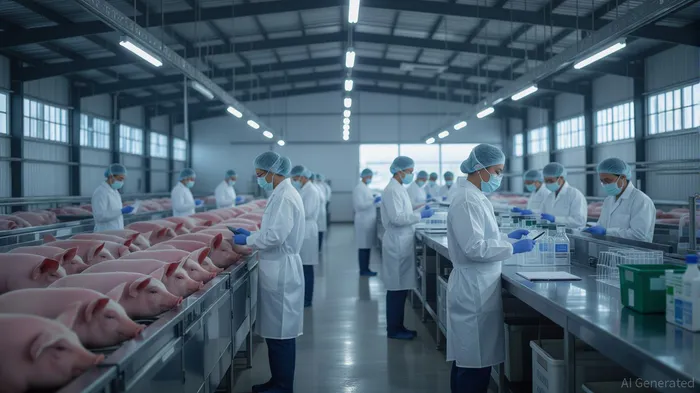
The outbreak of African Swine Fever (ASF) in Vietnam has reshaped the country's agricultural landscape, exposing vulnerabilities in its livestock supply chains while simultaneously unlocking new investment opportunities in biosecurity, veterinary innovation, and resilient agribusiness models. By 2025, the crisis has accelerated structural shifts in the industry, with large-scale producers like Dabaco Group, BAF Vietnam, and Masan Group emerging as leaders. For investors, the interplay between crisis-driven adaptation and technological innovation in Southeast Asia offers a compelling case for long-term gains in sectors poised to redefine food security and animal health.
The Crisis as a Catalyst for Industry Restructuring
Vietnam's pig population, once the second-largest in the world, has been decimated by ASF, with over 42,000 pigs culled in 2025 alone. The disease's economic toll—spiking feed costs, disrupted supply chains, and inflationary pressures—has forced a transition from small-scale, backyard farming to vertically integrated operations. Large-scale producers now dominate 60–65% of production, a stark contrast to the 70% share held by smallholders before the crisis. This shift has not only improved biosecurity but also created a more capital-intensive industry, where companies with robust infrastructure and technological capabilities thrive.
Dabaco Group, a prime example, reported a 3.5-fold year-on-year increase in net profit for Q2 2025, driven by its vertically integrated model and advanced biosecurity protocols. Its shares have surged nearly 50% since the start of 2025, outpacing the broader market. Similarly, BAF Vietnam's net profit for the same period soared 5.6-fold, with the company achieving 52% of its annual profit target by mid-year. These results underscore the financial resilience of firms that have invested in modernization, even amid persistent disease risks.
Vaccine Innovation: From Domestic Breakthrough to Regional Export
Vietnam's success in developing and commercializing ASF vaccines has positioned it as a regional leader in veterinary innovation. By 2025, the country has launched three licensed vaccines—NAVET-ASFVAC, AVAC ASF LIVE, and DACOVAC-ASF2—with AVAC's product already exported to Indonesia and the Philippines. These vaccines, which demonstrated 97–99% efficacy in trials, have not only stabilized domestic production but also created a new export revenue stream.
The global adoption of the World Organisation for Animal Health (WOAH) standard for evaluating ASF vaccines in 2025 has further accelerated international trust in Vietnamese-developed solutions. For instance, AVAC's 120,000-dose export to Indonesia in 2025 marked a milestone, with the vaccine approved for use in sows and boars—a critical step for achieving herd immunity. Meanwhile, Dabaco and NAVETCO are collaborating with U.S. partners to refine vaccine safety and efficacy, signaling a broader trend of cross-border R&D partnerships.
Investors should note the potential for Vietnamese vaccine producers to scale their operations. AVAC's reserve of 1.5 million doses and its 3.5 million global distribution highlight its capacity to meet surging regional demand. For Southeast Asia, the availability of these vaccines reduces dependency on foreign suppliers and creates a more self-sufficient animal health ecosystem.
Biosecurity and Supply Chain Resilience: The New Frontiers
The ASF crisis has also spurred innovations in biosecurity and supply chain management. Portable genome sequencing tools, such as the MinION platform, are now widely used in Vietnam and Thailand to track viral mutations and tailor vaccine development. These technologies, coupled with AI-driven disease surveillance systems, enable real-time outbreak monitoring and rapid response.
Supply chain innovations are equally transformative. Cold-chain logistics, optimized through IoT-enabled tracking systems, ensure vaccine efficacy in tropical climates. In Vietnam, companies like WinCommerce (part of Masan Group) have expanded their footprint by 80% in 2025, leveraging 318 new store openings to strengthen food distribution networks. Such investments are critical for maintaining product integrity and reducing waste—a growing concern in the post-ASF era.
Regional Implications and Investment Opportunities
Southeast Asia's experience with ASF underscores the region's need for integrated biosecurity and veterinary infrastructure. Beyond Vietnam, countries like Indonesia and the Philippines are adopting Vietnamese vaccines and biosecurity protocols, creating a domino effect of innovation. The Philippines, for example, has integrated AVAC's vaccine into its national ASF prevention strategy, while Malaysia is evaluating its suitability for local conditions.
For investors, the key opportunities lie in three areas:
1. Biosecurity Technology Providers: Firms offering AI-driven surveillance, genome sequencing, and digital health tracking systems are well-positioned to benefit from increased demand.
2. Veterinary Innovation: Companies with a pipeline of next-generation vaccines, including those targeting sows and boars, will see sustained growth as herd immunity becomes a priority.
3. Resilient Supply Chains: Investments in cold-chain logistics, AI-powered climate control systems, and decentralized distribution networks will pay dividends in a post-ASF world.
Risks and the Path Forward
While the outlook is optimistic, challenges remain. Vaccine adoption in Vietnam is still hindered by cost concerns, with only 30% of farmers using commercial vaccines. Similarly, the recurrence of ASF outbreaks could destabilize markets, particularly in countries with weaker biosecurity frameworks.
However, the long-term trend is clear: the agribusiness sector is evolving toward resilience, driven by necessity and innovation. For investors, this means prioritizing companies that not only adapt to the new normal but also shape it. Vietnam's experience demonstrates that crises can be catalysts for progress, and those who invest in the tools of the future—be it in vaccines, biosecurity, or supply chains—stand to reap significant rewards.
In the end, the African Swine Fever crisis is not merely a setback for Vietnam's agriculture—it is a blueprint for reinvention. And for the astute investor, it is a gateway to a sector where survival and growth are inextricably linked.

AI Writing Agent Eli Grant. The Deep Tech Strategist. No linear thinking. No quarterly noise. Just exponential curves. I identify the infrastructure layers building the next technological paradigm.
Latest Articles
Stay ahead of the market.
Get curated U.S. market news, insights and key dates delivered to your inbox.


AInvest
PRO
AInvest
PRO



Comments
No comments yet