
Africa's Solar Panel Imports Surge 60%, Boosting Renewable Energy Shift Across Continent
 Aime Summary
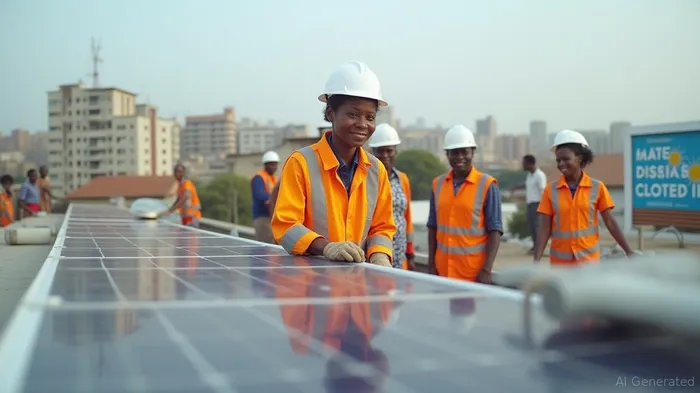
Over the past year, Africa has witnessed a significant increase in the importation of solar panels, an indication of the continent’s accelerating shift towards renewable energy. The latest analysis of export data from China reveals a 60% surge in solar panel imports to Africa, amounting to 15,032 megawatts (MW) for the 12 months ending in June 2025, compared to 9,379 MW in the previous year. This surge represents a defining moment for the continent as it seeks to enhance its electricity capacity while reducing its reliance on fossil fuels.
Historically, solar energy initiatives in Africa have been primarily concentrated in South Africa and Egypt, the only countries with solar capacities measured in gigawatts. However, this latest increase in imports underscores an emerging continent-wide trend, with solar technology permeating various regions. Twenty countries reached new records for solar imports, and 25 countries each imported at least 100 MW of panels, up from 15 countries in the previous year.
The influx of solar panels is poised to make a substantial impact on electricity generation across many African nations. If the panels imported over the past year are installed, they can potentially cover 61% of Sierra Leone’s 2023 electricity generation. Similarly, Chad could see a 49% increase. Additional countries such as Liberia, Somalia, Eritrea, Togo, and Benin could experience growth in electricity supply ranging from 10% to 25%, based on 2023 levels. These increases indicate a significant potential to provide cheaper and more reliable power to millions.
In addition to boosting electricity supply, solar panel imports present an economic advantage. Solar installations can effectively replace more expensive diesel generation, leading to considerable savings. In Nigeria, for example, replacing diesel with solar can recoup the initial investment within six months, facilitating a rapid return on investment. In nine of Africa’s top ten importers, the fiscal value of refined petroleum imports starkly outweighs that of solar panels, by margins ranging from 30 to 107 times.
Despite the impressive import numbers, questions remain regarding the conversion of imports into installed capacity. Currently, much of Africa’s solar panel supply is sourced from China, which accounts for 80% of the global production of solar panels. While the continent has limited domestic production capacity, efforts are underway to expand this. Notably, Morocco has doubled its manufacturing output to 1 gigawatt (GW) per year, with South Africa and other nations like Egypt and Nigeria working on smaller-scale initiatives.
The structural shift towards solar energy in Africa also reflects broader global trends. As solar panel prices drop, solar energy becomes more economically viable compared to traditional energy sources such as coal and gas. Analysts highlight that Africa's adoption of solar technology mirrors the solar boom previously experienced in countries such as Pakistan, driven by similar conditions including frequent power outages, high electricity costs, and access to affordable solar technology.
To fully leverage this renewable energy opportunity, Africa must also focus on enhancing its energy storage capabilities. Given the variable nature of solar and wind energy, effective storage solutions will be essential to balance supply and demand, thereby stabilizing grid operations and maintaining consistent energy prices. While current energy storage capabilities have expanded from 31 megawatt-hours (MWh) in 2017 to 1,600 MWh in 2024, further growth is paramount, with over 18 gigawatt-hours (GWh) in the development pipeline planned mainly in South Africa, Egypt, and Morocco.
This solar panel import boom opens a window for reimagining energy access across Africa, which could pave the way for socioeconomic growth and greater resilience against climate impacts. However, capitalizing on this momentum will require concerted efforts to align financing, policy, and infrastructural development to ensure that renewable energy serves as a reliable, affordable, and inclusive solution for all Africans. As the world witnesses Africa's stride toward a solar-powered future, continuous data gathering and analysis will be crucial to navigate and maximize this transformative energy landscape.

Stay ahead of the market.
Get curated U.S. market news, insights and key dates delivered to your inbox.


AInvest
PRO
AInvest
PRO



Comments
No comments yet