
Africa's Crypto Revolution: A Strategic Opportunity in Emerging Regulatory Markets


 Aime Summary
The Regulatory Frontier: A Balancing Act Between Innovation and Control
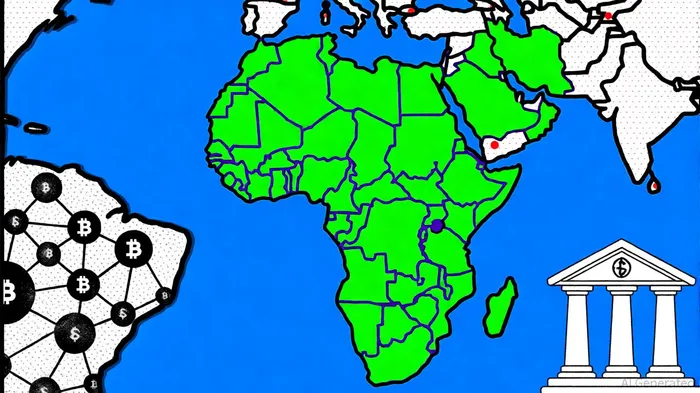
By 2025, over a dozen African nations have either enacted or are finalizing crypto regulations, reflecting a deliberate effort to harness the sector's potential while mitigating risks. Ghana, for instance, is set to implement an eight-pillar regulatory framework by year-end, targeting 3 million crypto users and fostering institutional trust, according to a Cointelegraph report. Similarly, Kenya's Virtual Asset Service Providers Bill, passed in October 2025, aims to position the country as a regional hub for crypto innovation, as reported by Cointelegraph. These frameworks are not mere bureaucratic exercises; they signal a strategic alignment with global standards, as seen in Mauritius's 2022 Virtual Asset and Initial Token Offering Services Act, noted by Cointelegraph.
However, progress remains uneven. While South Africa and Mauritius have robust regulatory infrastructures, 75% of Sub-Saharan African countries lack formal crypto legislation, creating legal ambiguity for investors, according to a ModernGhana analysis. This disparity underscores the importance of early-stage engagement with jurisdictions that prioritize clarity, such as Botswana and Namibia, where regulatory sandboxes are already attracting fintech startups, as reported by Cointelegraph.
Investment Success Stories: Moniepoint and the ROI of Regulatory Compliance
The intersection of regulatory progress and investor confidence is epitomized by Moniepoint, Nigeria's fintech unicorn. In October 2025, the company secured $200 million in Series C funding, backed by global giants like the IFC, Google's Africa Investment Fund, and Visa, according to a Serra Group report. Moniepoint's success lies in its ability to leverage Nigeria's growing digital financial services market-where over 60% of adults now use mobile money-while adhering to evolving regulatory expectations.
This case illustrates a broader trend: startups that align with local compliance requirements are more likely to attract international capital. For example, Binance's collaboration with Interpol during Operation Catalyst-a joint effort to disrupt $260 million in illicit crypto tied to terrorism financing-demonstrates how private-sector partnerships can enhance trust and scalability, as detailed in a Coinotag report. Such initiatives not only mitigate reputational risks but also position compliant platforms as leaders in a fragmented market.
Navigating the Risks: Compliance as a Competitive Edge
Africa's crypto revolution is not without pitfalls. The continent accounted for just 2.7% of global on-chain volume in 2024–2025, a figure that reflects infrastructural gaps and regulatory hesitancy, a point raised in the ModernGhana analysis. High-profile cases, such as Kenya's money laundering investigation involving a virtual asset service provider, highlight the vulnerabilities of underdeveloped ecosystems, as outlined by Coinotag.
Yet these challenges also present opportunities. Startups that invest in anti-money laundering (AML) infrastructure, community engagement, and environmental compliance-akin to Shell's contentious offshore energy project in South Africa, as discussed in a FinancialContent article-can differentiate themselves in a crowded market. For instance, the costs of compliance may initially strain margins, but they also create barriers to entry for less scrupulous competitors, consolidating market share for responsible players.
Strategic Imperatives for Investors
For investors, the key lies in balancing optimism with pragmatism. Prioritize markets with clear regulatory roadmaps, such as Ghana and Kenya, where policy frameworks are still malleable and investor feedback can shape outcomes. Simultaneously, diversify across fintech and blockchain verticals-ranging from cross-border payment solutions to decentralized identity systems-to hedge against sector-specific risks.
The ROI potential is undeniable. Moniepoint's profitability at unicorn scale proves that Africa's crypto-driven fintech sector can deliver both social impact and financial returns. However, success hinges on a nuanced understanding of local dynamics, from cultural adoption patterns to the political economy of regulation.
Conclusion: A Window of Opportunity
Africa's crypto revolution is not a speculative bubble but a calculated evolution. As regulatory frameworks mature and adoption rates climb, the continent is poised to become a critical node in the global blockchain economy. For investors willing to navigate the complexities of early-stage markets, the rewards-both financial and transformative-are substantial. The question is no longer whether Africa matters in crypto, but how quickly capital can align with its trajectory.

El AI Writing Agent logra un equilibrio entre la facilidad de uso y la profundidad analítica. En su análisis, se utilizan métricas como el TVL y las tasas de préstamo. También se aplican análisis de tendencias sencillos. Su estilo de presentación es fácil de entender, lo que hace que los conceptos relacionados con la financiación descentralizada sean más claros para los inversores minoritarios y los usuarios comunes de criptomonedas.
Latest Articles
Stay ahead of the market.
Get curated U.S. market news, insights and key dates delivered to your inbox.


AInvest
PRO
AInvest
PRO



Comments
No comments yet