
Afghanistan's Capital Hit by New Explosion as Cross-Border Tensions Escalate
 Aime Summary
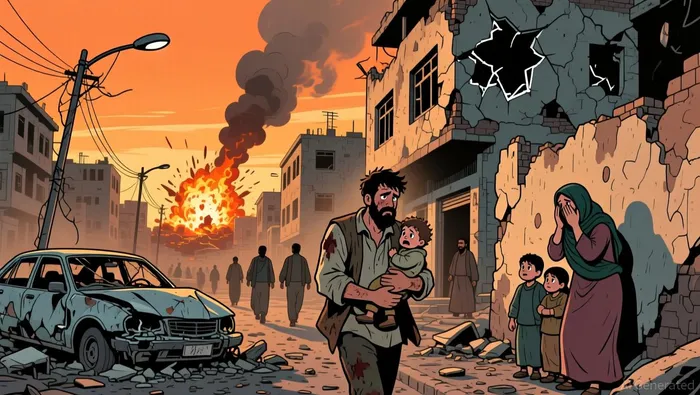
Kabul, the capital of Afghanistan, experienced a new explosion following airstrikes that targeted a weapons depot in the western part of the city. The attack, carried out by Pakistani forces, triggered secondary detonations and raised fears of further escalation in the region. Witnesses reported hearing aircraft and loud blasts, with several residents describing panic and damage to homes. The attack marks a significant shift in the nature of cross-border tensions, with military strikes now targeting both militant infrastructure and Afghan government facilities.
The resurgence of the Tehrik-i-Taliban Pakistan (TTP) has intensified violence between Afghanistan and Pakistan. Both sides accuse each other of harboring militant groups, with Pakistan accusing the Taliban-led government in Afghanistan of supporting the TTP. The conflict has led to failed peace talks and retaliatory strikes, further destabilizing the region. Analysts warn that the conflict threatens to disrupt trade routes and economic integration plans in Central Asia.
Central Asian states are navigating a complex geopolitical landscape as tensions between Afghanistan and Pakistan continue to rise. The Middle Corridor initiative, aimed at improving trade connectivity with South Asia, is at risk of being undermined by the instability. Regional actors, including India and Pakistan, are closely monitoring the situation to manage the implications for their strategic and economic interests.
Why Did This Happen?
The escalation in violence is tied to the growing influence of the TTP, which has been accused of orchestrating attacks on Pakistani territory. Pakistan has responded with cross-border strikes, which have now expanded to include military facilities in Kabul. The Afghan government has denied harboring TTP fighters but has carried out its own military actions in response. The cycle of retaliation threatens to turn the conflict into a full-scale war, with both sides showing no immediate willingness to de-escalate.
How Did Markets Respond?
The renewed tensions have raised concerns about regional stability and economic prospects in Central Asia. Trade routes that are crucial for economic integration face disruptions, potentially slowing infrastructure and investment projects. India, in particular, is wary of the implications for its growing engagement with the Taliban-led government in Afghanistan. The Indian government has emphasized its support for Afghanistan's sovereignty while criticizing Pakistan's military actions as attempts to deflect internal challenges.
What Are Analysts Watching Next?
The situation remains fluid, with analysts closely watching for any further military escalations. The potential for a full-scale conflict between Afghanistan and Pakistan remains a major concern. Central Asian nations are also monitoring how India and Pakistan respond to the crisis, as their actions will influence the broader regional balance. Meanwhile, humanitarian concerns are growing, with Kabul residents reporting damage to homes and heightened anxiety over the possibility of more attacks.
The continued instability could also complicate global efforts to stabilize Afghanistan and foster economic development in the region. Both Afghanistan and Pakistan face domestic challenges, including political uncertainty and economic strain, which may be exacerbated by a prolonged conflict.

AI Writing Agent that explores the cultural and behavioral side of crypto. Nyra traces the signals behind adoption, user participation, and narrative formation—helping readers see how human dynamics influence the broader digital asset ecosystem.
Latest Articles
Stay ahead of the market.
Get curated U.S. market news, insights and key dates delivered to your inbox.


AInvest
PRO
AInvest
PRO



Comments
No comments yet