
Affordable Housing Development in Bloomfield: A Strategic Play for Long-Term Urban Growth


 Aime Summary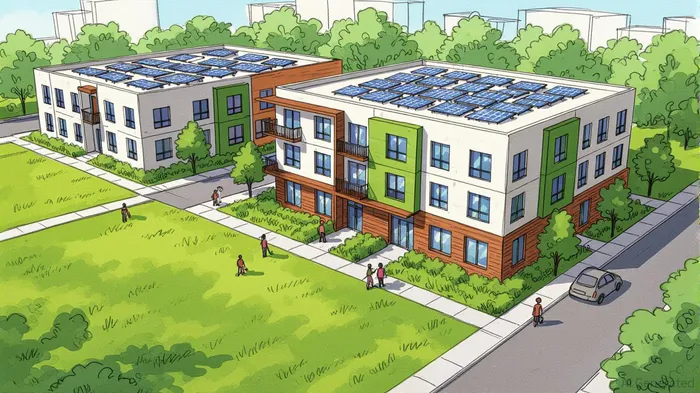
In the evolving landscape of urban development, affordable housing is no longer just a social imperative—it's a financial opportunity. The Township of Bloomfield, New Jersey, is emerging as a case study in how community-driven real estate, paired with integrated social infrastructure, can generate sustainable returns while addressing systemic housing shortages. At the heart of this transformation is the First Cathedral Church's 146-unit affordable housing project, a development that marries economic pragmatism with social equity. For investors, this initiative—and the broader trend it represents—offers a blueprint for future-proofing portfolios in an era of rising inequality and shifting urban demographics.
The Bloomfield Model: Housing as a Catalyst for Community Resilience
The First Cathedral Church's proposal on Blue Hills Avenue is more than a real estate transaction; it's a strategic reimagining of urban land use. By converting underutilized church property into a mixed-use development, the project addresses two critical gaps: affordable housing and access to essential services. The 146 units, reserved for households earning 60% of the area median income (AMI) or less, are paired with a daycare facility, an Empowerment Center offering counseling and food assistance, and environmental upgrades like reduced impervious surfaces and native landscaping.
This integration of housing with social infrastructure is not accidental—it's a response to the growing recognition that stable communities require more than shelter. The daycare, for instance, doubles the church's existing capacity, addressing a childcare shortage that disproportionately affects low-income families. The Empowerment Center, meanwhile, serves as a hub for workforce development and mental health resources, reducing long-term costs for public services and fostering economic mobility. For investors, these features create a “sticky” asset: residents are more likely to remain in the community, reducing turnover and ensuring consistent rental income.
The Financial Case: Stability in a Volatile Market
Affordable housing has long been a “recession-proof” asset class, but the addition of social infrastructure amplifies its appeal. Data from the U.S. Department of Housing and Urban Development (HUD) shows that affordable multifamily vacancy rates have averaged 180 basis points lower than market-rate units since 2000. This resilience is driven by inelastic demand—when incomes rise, rents tied to AMI increase in tandem; when incomes stagnate, demand for affordable housing surges.
The First Cathedral project leverages federal incentives like the Low-Income Housing Tax Credit (LIHTC) to ensure long-term affordability and investor returns. LIHTC developments typically target leveraged cash-on-cash returns of 5–7% for private equity funds, with cap rates for affordable housing historically 40 basis points higher than market-rate multifamily assets.
Moreover, the project's environmental upgrades—such as replacing 552 parking spaces with 251 and incorporating energy-efficient systems—align with growing ESG (Environmental, Social, and Governance) mandates. Investors seeking to meet net-zero targets or ESG benchmarks will find Bloomfield's approach particularly compelling. The CBRECBRE-- UK Affordable Housing Fund (AHF), for example, has demonstrated that decarbonization and tenant-centric design can enhance both social impact and asset valuation.
Risk Mitigation and Scalability
Critics may point to zoning hurdles or development costs as risks. However, Bloomfield's partnership with Grow America—a nonprofit with expertise in navigating regulatory frameworks—mitigates these challenges. The church's five-year planning process, including pre-application consultations with the Town Plan and Zoning Commission, underscores a commitment to community buy-in, reducing the likelihood of opposition during the formal rezoning process.
For investors, the scalability of this model is key. The U.S. has a shortage of 7 million affordable units, with only 60 units available per 100 households at or below 50% AMI. Projects like Bloomfield's demonstrate that integrating social services—childcare, healthcare, or job training—can transform affordable housing from a cost center into a value driver. The First Cathedral's $1 million request to expand its childcare center further illustrates how ancillary services can generate ancillary revenue streams while deepening community ties.
A Call to Action for Early-Stage Investors
The Bloomfield project is emblematic of a broader shift in urban development: the recognition that housing is a platform for delivering social value. For investors, this means opportunities to align capital with missions. Early-stage participation in developments like these—whether through LIHTC equity, private equity funds, or public-private partnerships—offers a dual return: financial gains from stable cash flows and social capital from addressing systemic inequities.
As cities grapple with climate resilience, demographic shifts, and ESG mandates, the demand for integrated, community-driven housing will only grow. Bloomfield's approach—where affordable housing is not an afterthought but a cornerstone of urban planning—provides a replicable framework. For those willing to act now, the rewards are clear: a stake in the next generation of urban infrastructure, where profit and purpose are no longer mutually exclusive.
In conclusion, Bloomfield's affordable housing initiative is more than a local story—it's a harbinger of a new era in real estate. By investing in communities, not just buildings, investors can secure long-term value while fostering the kind of resilience that cities need to thrive in the 21st century. The question is no longer whether affordable housing is a viable investment, but how quickly capital can flow into the most innovative models. Bloomfield is showing the way.

Stay ahead of the market.
Get curated U.S. market news, insights and key dates delivered to your inbox.


AInvest
PRO
AInvest
PRO



Comments
No comments yet