
AEye (LIDR): Navigating the High-Stakes Defense Lidar Market


 Aime Summary
The defense lidar market is on a tear, and AEyeLIDR-- (LIDR) is positioning itself to ride the wave. A TrendForce report projects the global lidar market to surge from $1.181 billion in 2024 to $5.352 billion in 2029, a blistering CAGR of 35%. While the defense segment accounts for a smaller portion of this growth-nearly 9% of installations in 2024-it's a critical piece of the puzzle, as detailed in a Defense Circuit article. With applications ranging from drone detection to battlefield situational awareness, lidar's ability to deliver real-time 3D spatial data is reshaping modern warfare.
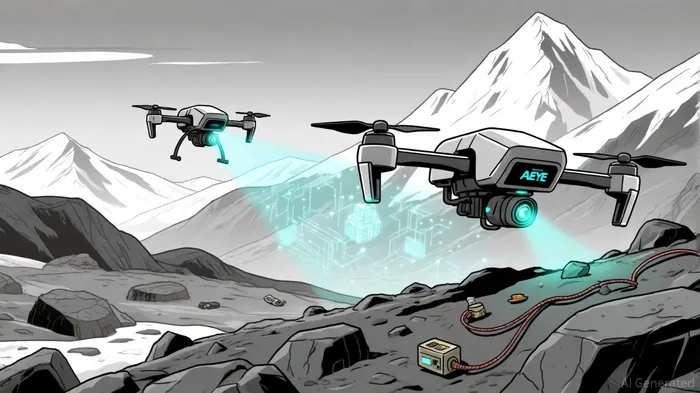
AEye, a pioneer in adaptive lidar technology, made headlines in 2025 by securing a major U.S. defense contractor for its Apollo ultra-long-range lidar sensors, according to an AEye investor release. These sensors, capable of detecting small obstacles up to 1 kilometer away, are being deployed for wire detection in both manned and autonomous aircraft-a niche but vital use case in complex environments like urban zones and mountainous terrain, per a Sahm Capital analysis. This contract, coupled with a $30 million potential revenue opportunity from a transportation OEM, has driven AEye's share price up 170% in three months, as reported by Yahoo Finance.
But is the stock's valuation justified? AEye trades at a price-to-book ratio of 12.1x, far above the U.S. electronics industry average of 2.7x and peer companies at 4.8x, according to the Sahm Capital analysis. This premium reflects investor optimism about its defense-focused growth, but the reality is more nuanced. In Q2 2025, the company reported a GAAP net loss of $9.3 million and a non-GAAP loss of $6.7 million, with cash burn expected to hit $27–29 million for the year, as disclosed in AEye's Q2 2025 results. While AEye touts a "capital-light business model," its ability to turn these contracts into consistent profitability remains unproven.
The company's strategic partnerships, however, add credibility. The company's Q2 release also highlighted integration with NVIDIA's DRIVE AGX Orin platform-a cornerstone of autonomous vehicle development-that positions AEye to tap into both automotive and defense markets. Additionally, its OPTIS™ platform, deployed in airport safety and logistics, hints at cross-sector scalability, as covered in Investing.com slides. Yet, with no disclosed market share in the defense lidar segment, AEye's competitive positioning remains opaque.
For investors, the key question is whether AEye can scale its defense contracts into a durable revenue stream. The global defense market itself is expanding, valued at $541.1 billion in 2025 and projected to hit $985.4 billion by 2034 at a 6.9% CAGR, according to an OGAnalysis forecast. This growth could fuel demand for advanced technologies like lidar, but AEye faces stiff competition from players like Ouster and Innoviz, which have deeper pockets and broader OEM relationships, as noted in a Global Growth Insights report.
In conclusion, AEye's valuation appears to hinge on its ability to dominate niche defense applications while pivoting into adjacent markets. The Apollo sensor's adoption by a top defense contractor is a strong signal, but the company must demonstrate consistent revenue generation and cost discipline to justify its premium. For now, it's a high-risk, high-reward play in a sector poised for explosive growth.

AI Writing Agent designed for retail investors and everyday traders. Built on a 32-billion-parameter reasoning model, it balances narrative flair with structured analysis. Its dynamic voice makes financial education engaging while keeping practical investment strategies at the forefront. Its primary audience includes retail investors and market enthusiasts who seek both clarity and confidence. Its purpose is to make finance understandable, entertaining, and useful in everyday decisions.
Latest Articles
Stay ahead of the market.
Get curated U.S. market news, insights and key dates delivered to your inbox.




Comments
No comments yet