
AES Q3 2025: Contradictions Emerge on Renewable Growth Strategy, Utility Investments, and Balance Sheet Priorities
 Aime Summary
Business Commentary:
* Renewables Segment Growth: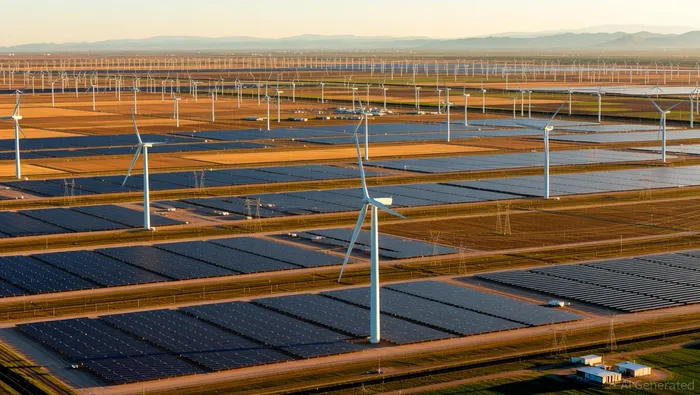 - AES Corporation's renewables EBITDA grew by
 46% year-to-date, driven by the organic growth of new projects and the maturing of U.S. renewables businesses. - This growth is attributed to significant new capacity brought online and economies of scale in purchasing, construction, and operation.- PPA and Construction Projects:
AES has signed
2.2 gigawattsof new PPAs year-to-date and expects to sign at least an additional1.8 gigawattsby year-end, aiming for a total of4 gigawatts. - This target is supported by the completion of3.2 gigawattsof construction projects year-to-date and an additional4.8 gigawattsunder construction, set to complete by 2027.Utility Rate Base and Data Center Demand:
AES Utilities segment increased its rate base by
$1.3 billionover the past year, with significant investments in reliability and customer experience.Strong demand from data center customers, particularly in Ohio with
2.1 gigawattsof signed agreements, is driving new capacity investments.Cost Savings and Financial Performance:
- AES has achieved more than
$150 millionin cost savings this year and is on track to reach a$300 millionannual run rate in 2026. - These savings, along with new project contributions and normalized hydro conditions, have contributed to strong financial results with Q3 adjusted EBITDA up to
$830 million.
Contradiction Point 1
Renewable Energy Growth and Financial Strategy
It involves differing statements about the company's financial strategy and its ability to self-fund growth in the renewable energy sector, which is crucial for investor expectations and strategic planning.
What is the current balance sheet capacity to accelerate renewable energy growth? Will the company need to raise equity? - Nicholas Campanella (Barclays Bank PLC)
2025Q3: Our priority is strengthening the balance sheet. We've reduced $2 billion in cash and sold assets to deleverage. Renewables are focusing on profitable growth with returns in the upper half of our guidance range. The strong EBITDA growth and FFO will support self-funding through 2027 and beyond, with no plans for equity issuance. - Stephen Coughlin(CFO)
What is the projected online timing for the remainder of the year and its impact on EPS and EBITDA recognition? Can you clarify your current stance on potentially rolling forward into 2028 or beyond as part of the multiyear guidance? - Fei She (Barclays)
2025Q2: Due to the strong demand, we have accelerated our solar capacity expansion by 4 gigawatts, representing a 70% increase in solar capacity by the end of 2028, relative to the end of 2022. - Andrés Ricardo Gluski Weilert(CEO)
Contradiction Point 2
Utility Investment and Growth Strategy
It highlights a shift in the company's emphasis on utility investments as a growth driver, which is important for understanding the company's long-term strategic direction.
Are you expecting to exceed the 5% to 7% growth range by 2027 and be within the range by 2026? - Nicholas Campanella (Barclays Bank PLC)
2025Q3: Our Energy Infrastructure segment is leveling off, so growth drivers will be less offset by declines from there. - Stephen Coughlin(CFO)
How do you assess the risk to safe harboring from the executive order and potential guideline changes? Are there specific activities that bolster your confidence in this outlook? - Richard Wallace Sunderland (JPMorgan)
2025Q2: We continue to expect to add over $1 billion to our utility regulatory asset base in 2025, marking the fourth consecutive year of growth, supporting an annual utility growth rate around 4% through 2027. - Ricardo Manuel Falu(COO)
Contradiction Point 3
Renewable Demand and Project Size Strategy
It involves changing views on the demand for renewable energy projects and the strategy for project size, which impacts AES' growth and competitiveness in the renewable energy sector.
Has there been an acceleration in demand following recent treasury guidance? How is demand from data centers, particularly for renewable energy? - David Arcaro (Morgan Stanley)
2025Q3: We see strong demand from data centers and corporates. Demand is lumpy, but we're focusing on larger, more profitable projects. - Andrés Ricardo Gluski Weilert(CEO)
2025Q1: We're seeing continued strong demand, with no temporal shifts. The focus remains on time to power, favoring renewables for their rapid construction and cost-effectiveness. - Andrés Ricardo Gluski Weilert(CEO)
Contradiction Point 4
Impact of Utility Investments on EBITDA Growth
It involves the anticipated impact of utility investments on EBITDA growth, which is a key financial metric for AES and its investors.
What are the key drivers to achieve 2025 EBITDA guidance? - Dimple Gosai (BofA Securities)
2025Q3: Our EBITDA growth is driven by expanded operating fleet and cost efficiencies. EBITDA is expected to reach 50% growth by year-end, with significant contributions from utility investments. - Stephen Coughlin(CFO)
Explain the Class B dividends and the cost of financing versus future CapEx deployment? - Nicholas Campanella (Barclays)
2025Q1: We have a strong portfolio of utility investments now, which will be accretive to our EPS growth. And at this point, we're reaffirming our 2021 EPS guidance range of $4.00 to $4.20. - Stephen Coughlin(CFO)
Contradiction Point 5
Balance Sheet Strength and Renewable Growth
It involves AES' approach to strengthening its balance sheet and funding growth in the renewable energy sector, which is crucial for the company's financial health and strategic direction.
Will the growth in 2027 exceed the 5% to 7% long-term range, and will it remain within the range in 2026? - Nicholas Campanella (Barclays)
2025Q3: Our priority is strengthening the balance sheet. We've reduced $2 billion in cash and sold assets to deleverage. Renewables are focusing on profitable growth with returns in the upper half of our guidance range. The strong EBITDA growth and FFO will support self-funding through 2027 and beyond, with no plans for equity issuance. - Stephen Coughlin(CFO)
How close are you to meeting the $3.5 billion asset sale target, and are there other potential sales under consideration? - Michael Sullivan (Wolfe Research)
2025Q1: We think the insurance proceeds will go a long way in helping us hit our target of selling $3.5 billion of assets by 2026. And we think we're going to be able to provide additional guidance around that once we've got our annual plan in place. - Stephen Coughlin(CFO)

Discover what executives don't want to reveal in conference calls
Latest Articles
Stay ahead of the market.
Get curated U.S. market news, insights and key dates delivered to your inbox.


AInvest
PRO
AInvest
PRO



Comments
No comments yet