
AES Corp's Renewable Energy Push and Takeover Buzz: A Tactical Entry or Risky Gamble?
AES Corp (AES) is at a crossroads. The utility giant is accelerating its pivot to renewables, with a robust pipeline of solar, wind, and storage projects, while whispers of a potential takeover have sent its shares soaring. For investors, the question is clear: Does this strategic shift and the buzz around acquisition activity justify buying now—or are the risks too great?
Let's dissect the data.
Renewables: A Growing Engine, but Valuation Lags
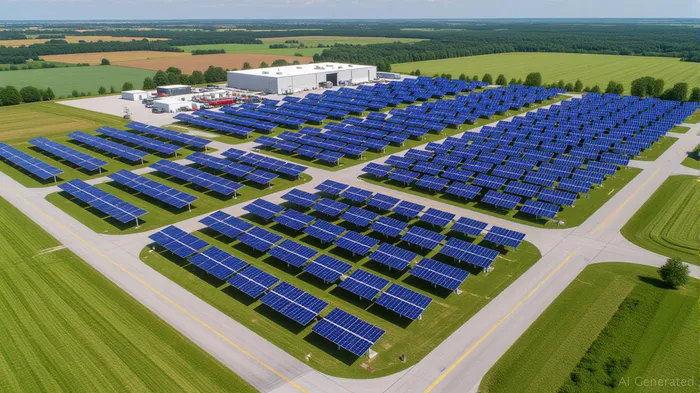
AES's renewable energy portfolio is its crown jewel. As of mid-2025, it boasts 16 GW of wind, solar, hydro, and storage capacity, accounting for half its total generation. The company's 11.7 GW project backlog—with 5.3 GW under construction—suggests strong momentum. By year-end 2025, AESAES-- aims to add 3.2 GW of new projects, including the recently approved 170 MW Crossvine solar-plus-storage facility in Indiana, which will come online by 2027.
The financials back this growth. Its Renewables SBU revenue rose to $666 million in Q1 2025, up from $643 million a year earlier. Yet, the market isn't pricing in this value. Analysts estimate AES's intrinsic value at $20.38 per share, nearly double its July 2025 stock price of $11.07. This undervaluation stems from concerns about its $40.68 billion enterprise value and 351% debt-to-equity ratio, which deter investors.
Why the Takeover Talk?
AES's stock surged 13% in early July 2025 amid rumors it was exploring a sale. The catalyst? Its $31.1 billion renewable assets—underpriced by 64%—are a prime target for infrastructure investors. BlackRock's 5.9% stake (down from 7.1% in late 2024) hints at institutional interest, while subsidiaries like BlackRock Global Infrastructure Partners are reportedly circling.
The math for a buyer looks tempting. A leveraged buyout (LBO) could refinance AES's debt with low-cost green bonds or tax equity partnerships, leveraging the Inflation Reduction Act's (IRA) tax credits, which cut project costs by 15-20%. Competitors like Brookfield Asset Management or private equity firms targeting discounted renewables assets—often trading at 20-30% below net asset value—could snap up AES at a bargain.
Risks: Debt, Volatility, and Policy Headwinds
AES isn't without pitfalls. Its Q1 2025 net loss of $73 million—driven by restructuring costs and tax timing—highlights earnings volatility. While adjusted EBITDA of $591 million remains stable, the company's $1.75 billion cash reserves and asset sales (like its $450M AGIC stake) provide a buffer.
Regulatory hurdles also loom. Projects like Crossvine require approvals that could delay timelines, while anti-renewable policies in some states threaten long-term growth. Meanwhile, AES's debt-heavy balance sheet poses refinancing risks, especially if rates rise.
Investment Thesis: Buy the Dip, but Hedge the Risk
AES's 6.6% dividend yield and $13.67 average analyst price target suggest upside potential. However, the stock's 38% decline over 12 months before the July rally underscores volatility.
For aggressive investors, buying AES now at $11.07 offers asymmetric upside if a takeover materializes or its renewables pipeline delivers. Pairing shares with a put option could limit downside risk. Alternatively, consider ETFs like RUTY (utilities) or ICLN (clean energy) for diversified exposure to AES's peers.
Final Take
AES's shift to renewables is credible, backed by execution on projects and rising SBU revenue. Yet, its valuation discount and debt weigh heavily. The takeover speculation adds a wildcard—investors willing to bet on strategic buyers unlocking value could profit, but patience is key. For now, AES is a high-risk, high-reward play best suited for those comfortable with volatility. Monitor debt refinancing plans and M&A chatter closely.
Bottom Line: The renewable tailwinds are real, but the stock's valuation and risks mean investors should proceed with caution—and a hedging strategy.

Stay ahead of the market.
Get curated U.S. market news, insights and key dates delivered to your inbox.




Comments
No comments yet