
Aerospace Sector Volatility: Risk Assessment and Supply Chain Resilience Amid the Airbus A320 Grounding


 Aime Summary
The aerospace sector is grappling with unprecedented volatility following the 2025 grounding of the Airbus A320 family of aircraft, a crisis triggered by a critical software vulnerability linked to solar radiation-induced data corruption. This event has exposed systemic risks in commercial aviation, from operational disruptions to financial instability, while testing the resilience of global supply chains. For investors, the incident underscores the fragility of an industry already reeling from post-pandemic recovery challenges and geopolitical supply chain bottlenecks.
Risk Assessment: Operational and Financial Fallout
The grounding of 6,000 A320-family aircraft-spanning A319, A320, and A321 variants-has created immediate operational chaos. Airlines such as American AirlinesAAL--, Avianca, and DeltaDAL-- have
reported widespread flight cancellations and delays, . The (EASA)
mandated an emergency airworthiness directive, compelling airlines to either revert to older software versions or install new hardware, depending on the aircraft. These fixes, while critical for safety,
have disrupted schedules during the peak Thanksgiving travel period, affecting millions of passengers.
Financially, Airbus faces a dual threat. The grounding
exacerbates pre-existing supply chain challenges . Airbus's stock price has
, reflecting investor concerns over production delays and reputational damage. , a trend
likely to worsen as the grounding prolongs delivery bottlenecks. For context,
according to Airbus's Global Market Forecast, making the grounding a direct threat to its market dominance. 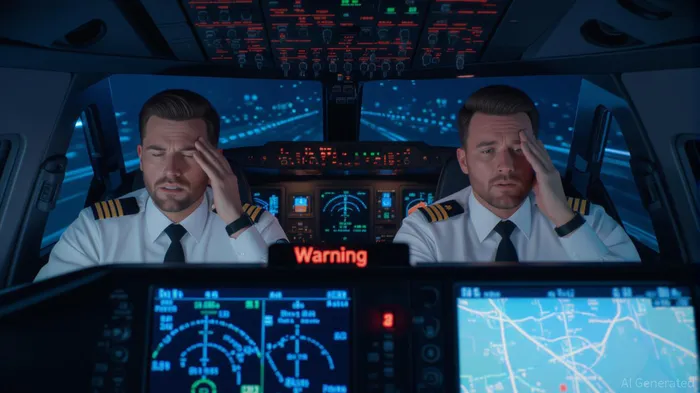
Supply Chain Resilience: Strategies and Limitations
Airbus's response to the crisis highlights both the company's preparedness and the limitations of its supply chain. The grounding required urgent hardware and software modifications, with airlines needing to replace the (ELAC B L104) with a serviceable version (L103 or higher)
according to Aerotime's analysis. While Airbus has emphasized collaboration with operators to minimize disruptions,
the scale of the recall reveals logistical strain .
The incident also underscores broader industry-wide supply chain vulnerabilities.
, coupled with geopolitical instability and raw material shortages, has forced airlines to extend the life of older fleets. Airbus's resilience strategies - such as enhancing supply chain visibility, , and expanding repair capacity - are critical but
face execution risks. For instance,
the grounding has already delayed the A220's production rate, .
Investor Implications and Sector Outlook
For investors, the Airbus A320 grounding serves as a cautionary tale about the interconnectedness of technological, operational, and financial risks in aerospace. While
Airbus's , the company's ability to navigate this crisis will hinge on its capacity to innovate in supply chain management.
The sector's growth trajectory, however, remains intact.
Airbus's Global Market Forecast , driven by urbanization and economic expansion. Yet, the grounding highlights the need for robust risk mitigation frameworks. Airlines and OEMs must
prioritize diversifying supplier networks, investing in redundant systems, and leveraging data analytics to preempt disruptions.
Conclusion
The Airbus A320 grounding is a microcosm of the aerospace sector's evolving risks. While the immediate financial and operational impacts are severe, the crisis also offers a blueprint for resilience. For investors, the key takeaway is clear: diversification and supply chain agility will be paramount in an industry increasingly vulnerable to technological and environmental shocks. As Airbus and its peers navigate this turbulence, the sector's ability to adapt will determine whether it emerges stronger-or succumbs to the pressures of an unpredictable future.

Stay ahead of the market.
Get curated U.S. market news, insights and key dates delivered to your inbox.
AInvest
PRO
AInvest
PRO



Comments
No comments yet