
Aerodrome Finance (AERO) Slides Amid Regulatory Uncertainty and Technical Pressure
 Aime Summary
- AERO faces regulatory uncertainty and technical headwinds despite $100M annual revenue.
- The token remains unlisted on major exchanges, creating structural mispricing.
- Upcoming AER/REV upgrades target sustainability through revenue-backed buybacks.
- Governance complexity and infrastructure risks hinder institutional adoption.
Aerodrome Finance's AERO token has jumped over 16% recently yet remains under bearish pressure. The protocol generates ~$100M annual revenue through its decentralized exchange on Base Network but isn't listed on Binance or Coinbase. Regulatory ambiguity and governance complexity continue limiting institutional participation despite high fee redistribution to locked holders. A 2025 DNS hijacking incident further highlights infrastructure vulnerabilities that deter capital.
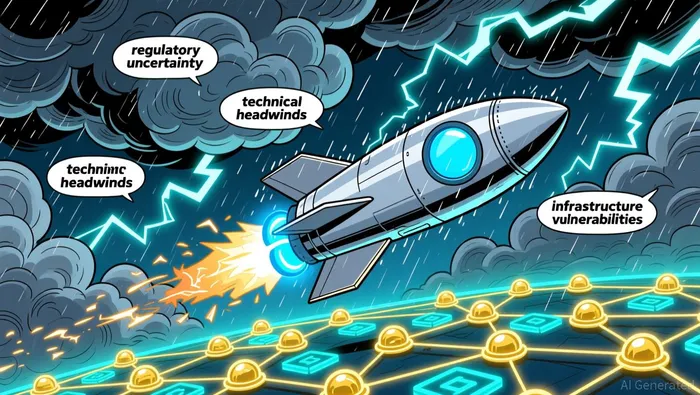
Why Is Aerodrome Finance (AERO) Under Bearish Pressure?
AERO trades below key long-term moving averages despite recent gains. Technical indicators show weak momentum signals and divergence patterns suggesting possible consolidation. Regulatory uncertainty around decentralized exchanges compounds the bearish outlook. Exchange listing barriers prevent access to mainstream liquidity pools and amplify volatility.
The protocol's $424M TVL hasn't shielded it from mispricing relative to revenue potential. Concentrated economic rights within the ecosystem create governance risks that spook investors. Infrastructure exposure was highlighted by a DNS hijacking attack last year affecting DeFi security. This combination fuels persistent downward pressure despite strong fee generation.
How Could the Upcoming AER/REV Upgrades Improve Tokenomics?
The AER/REV proposals aim to enhance token sustainability through revenue-backed buybacks. Adaptive emission adjustments would better align incentives between fee generation and token valuation. These changes target reduced sell pressure by linking token economics directly to protocol performance. Simplified governance mechanisms could improve participation rates.
Current ve(3,3) mechanics merge vote-escrow governance with OlympusDAO-style incentives but require complexity reduction. Permissioned liquidity solutions may emerge to bridge institutional requirements. Tokenomics upgrades must complement ongoing infrastructure hardening against exploits. Success requires balancing decentralization principles with investor accessibility needs.
What Are the Barriers to Institutional Adoption for AERO?
Governance complexity presents the foremost institutional adoption hurdle. Multi-year token lockups for veAERO governance rights conflict with traditional portfolio management. Legal enforceability remains absent in DeFi governance systems despite strong revenue streams. Hybrid infrastructure vulnerabilities like DNS hijacking deter institutional risk teams.
Institutions require compliant frameworks nonexistent in Aerodrome's current design. Traditional finance players need permissioned liquidity mechanisms unavailable on-chain. This explains why the protocol's 30% Base Network dominance hasn't translated into institutional flows. Until regulatory clarity emerges and infrastructure resilience improves, mispricing will persist. Protocol upgrades must address these specific gaps to unlock capital.

Blending traditional trading wisdom with cutting-edge cryptocurrency insights.
Latest Articles
Stay ahead of the market.
Get curated U.S. market news, insights and key dates delivered to your inbox.


AInvest
PRO
AInvest
PRO



Comments
No comments yet