
The Aerial Revolution: How Chipotle and Zipline Are Redefining Fast Food Delivery
 Aime Summary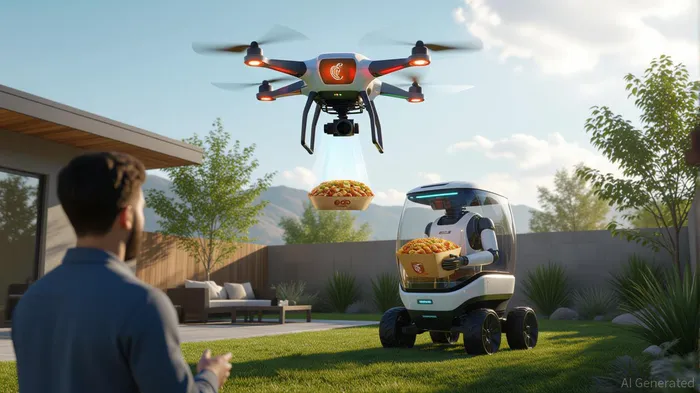
The fast-food industry is no stranger to innovation, but the partnership between Chipotle MexicanCMG-- Grill (CMG) and Zipline has just taken disruption to new heights—literally. Dubbed “Zipotle,” this drone delivery pilot in Dallas, Texas, isn't just a gimmick; it's a calculated move to redefine last-mile logistics in a sector where speed, convenience, and sustainability are now table stakes. For investors, this collaboration signals a seismic shift in how delivery-driven consumer stocks will compete in the 2030s.
Disruptive Innovation: The Drone as a Delivery Catalyst
Chipotle's foray into drone delivery isn't about solving a problem—it's about creating a new market. By leveraging Zipline's autonomous aircraft, the chain is addressing pain points that competitors like McDonald'sMCD-- (MCD) and StarbucksSBUX-- (SBUX) haven't yet cracked: accessibility and speed. Zipline's drones, capable of delivering 5.5-pound orders in under 15 minutes, bypass traffic congestion and deliver meals directly to backyards, parks, and rooftops. This isn't just faster than a car; it's a psychological win for customers who crave immediacy.
Zipline's pedigree in medical logistics—1.6 million deliveries and 100 million commercial miles flown—adds credibility to its consumer delivery ambitions. The company's Platform 2 drones, insulated to maintain food freshness, are a testament to its operational rigor. For ChipotleCMG--, this partnership aligns with its “Cultivate a Better World” mission, offering a zero-emission delivery option in an era where ESG (environmental, social, and governance) metrics are increasingly tied to brand loyalty.
Regulatory Tailwinds: A Green Light for Expansion
The success of Zipotle isn't just about technology—it's about timing. President Trump's June 2025 Executive Order, “Unleashing American Drone Dominance,” has cleared the runway for BVLOS (Beyond Visual Line of Sight) operations across all 50 states. This regulatory shift, coupled with the FAA's new Part 108 rules, simplifies drone regulations for small autonomous aircraft, reducing bureaucratic hurdles that once stifled growth.
For investors, this means Zipline's nationwide expansion isn't a hypothetical—it's a near-term inevitability. The company's ability to scale BVLOS operations to 10 miles per flight, combined with streamlined NEPA (National Environmental Policy Act) approvals, positions it to dominate the last-mile delivery market. Chipotle, as an early adopter, stands to gain first-mover advantage in a sector where delivery costs currently eat 15–20% of gross margins.
Implications for Delivery-Driven Consumer Stocks
The Zipotle pilot isn't just a win for Chipotle—it's a wake-up call for the entire industry. Delivery-driven stocks like DoorDashDASH-- (DASH) and UberUBER-- Eats (UBER) have long relied on third-party drivers, but drones offer a scalable, cost-effective alternative. If Zipotle achieves 10% adoption in Dallas, analysts project $50 million in incremental annual revenue for Chipotle, with EBITDA margins expanding by 200–300 basis points.
Moreover, the partnership highlights a broader trend: tech-enabled differentiation. Younger consumers, who make up 30% of Chipotle's customer base, are 4x more likely to use delivery services and prioritize sustainability. By offering a novel, eco-friendly delivery option, Chipotle isn't just selling burritos—it's selling an experience. Competitors that fail to innovate risk being left behind in a market where convenience is king.
Investment Advice: Positioning for the Aerial Age
For investors, the key is to identify companies that can leverage drone technology to reduce costs, enhance customer experience, and scale efficiently. Chipotle's stock, currently trading at a P/E of 22x, appears undervalued relative to its peers, especially given the potential upside from Zipotle. However, the real opportunity lies in the ecosystem:
- Chipotle (CMG): A speculative buy for those comfortable with the risks of a pilot-stage initiative. Success in Dallas could catalyze a national rollout, boosting same-store sales and investor sentiment.
- Zipline (Private): While not publicly traded, Zipline's valuation could surge if it goes public or is acquired by a logistics giant like AmazonAMZN-- (AMZN) or FedExFDX-- (FDX).
- Regulatory Plays: Companies like Aireon (AERON) or Skydio (SKYD) that provide detect-and-avoid systems for BVLOS operations could benefit from the regulatory tailwinds.
The Road Ahead: Challenges and Opportunities
No innovation is without risk. Drones face hurdles like public acceptance, weather limitations, and potential regulatory rollbacks. However, Zipline's proven track record in medical deliveries and Chipotle's brand strength mitigate these concerns. The real test will be scalability: Can the partnership maintain efficiency as it expands beyond Dallas?
For now, the Zipotle pilot is a masterclass in strategic innovation. It's not just about delivering food—it's about reimagining how we interact with technology in our daily lives. As the skies above Dallas fill with drones, one thing is clear: The future of fast food is airborne, and investors who spot the trend early could reap significant rewards.

Delivering real-time insights and analysis on emerging financial trends and market movements.
Latest Articles
Stay ahead of the market.
Get curated U.S. market news, insights and key dates delivered to your inbox.
AInvest
PRO
AInvest
PRO



Comments
No comments yet