
Aeon Co.: Navigating Retail Evolution with Strategic Innovation and Profit Resilience


 Aime Summary
Aeon Co. has emerged as a standout performer in Japan's fiercely competitive retail sector, delivering record-breaking results in the first half of fiscal year 2025. With operating revenue surging 3.8% year-on-year to ¥5,189.9 billion and operating profit rising 19.8% to ¥118.1 billion, the company has demonstrated its ability to adapt to macroeconomic headwinds while capitalizing on strategic initiatives reported in Aeon's Q2 slides. These results underscore Aeon's long-term profitability potential, driven by a trifecta of private brand expansion, digital transformation, and operational efficiency.
Strategic Pillars: Private Brands, Digital Transformation, and Cost Optimization
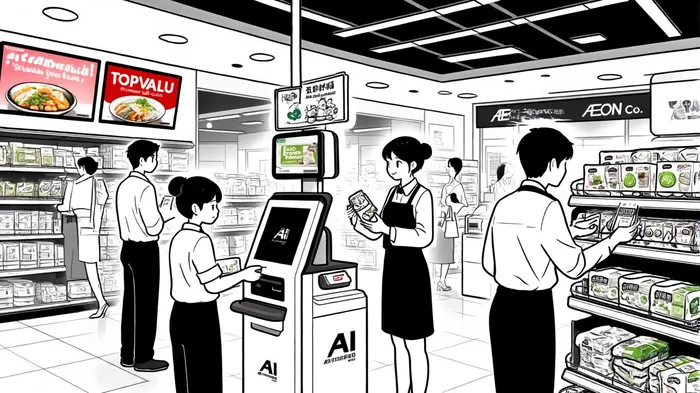
Aeon's private brand (PB) strategy, centered on its TOPVALU line, has been a cornerstone of its success. By offering products priced 10–20% lower than national brands while maintaining quality, Aeon has captured price-sensitive consumers amid Japan's inflationary pressures, according to a Japan Times report. This approach has not only boosted margins but also reinforced customer loyalty. For instance, the company's General Merchandising Store (GMS) business reduced operating losses by 55.7% year-on-year, from ¥18.5 billion to ¥8.2 billion, thanks to AI-driven ordering systems and self-checkout technologies that improved labor productivity, as Aeon's Q2 slides indicate.
Digital transformation further amplifies Aeon's competitive edge. The company has integrated AI and data analytics to personalize customer experiences, optimize inventory management, and streamline supply chains, according to a FilingReader report. Its Aeon Pay platform, which combines financial services with retail transactions, has seen significant membership growth, contributing to cross-sector revenue synergies, as the Q2 slides note. These innovations align with broader industry trends, as Japanese retailers increasingly adopt omnichannel strategies to meet evolving consumer expectations, a point also highlighted in the Q2 slides.
Competitive Positioning in a Fragmented Market
Aeon faces stiff competition from rivals like Rakuten and 7-Eleven, each leveraging distinct ecosystems. Rakuten's interconnected digital platform, which rewards users for activities ranging from e-commerce to streaming, has set a high bar for customer retention, according to a GlobeNewswire report. Meanwhile, 7-Eleven Japan's hyper-localized promotions via the 7pay app highlight the importance of personalization in retail, the report adds. However, Aeon differentiates itself through sustainability-driven loyalty programs, offering points for eco-friendly actions-a feature that resonates with Japan's growing cohort of ethically conscious consumers, the same report notes.
The private brand segment itself is a battleground. While Aeon, Ito-Yokado, and Lawson have all expanded their PB portfolios, Aeon's emphasis on premiumized offerings-such as high-quality frozen meals and sustainably sourced products-positions it to capture both cost-conscious and value-driven shoppers, according to a Third News article. This dual strategy mitigates the risk of commoditization and aligns with global trends where private brands are increasingly perceived as alternatives to premium national brands, the article observes.
Long-Term Profitability and Market Outlook
Aeon's full-year 2025 guidance-¥10,500.0 billion in revenue and ¥270.0 billion in operating profit-reflects confidence in its strategic trajectory, as shown in the Q2 slides. This optimism is grounded in structural trends: Japan's retail sector is projected to grow at a 12.9% CAGR in loyalty program adoption from 2025 to 2029, driven by digital personalization and sustainability, per the GlobeNewswire report. Aeon's Health & Wellness segment, which reported robust growth in H1, is poised to benefit from an aging population and rising demand for preventive healthcare services, a trend the Q2 slides highlight.
Risks and Mitigants
Despite its strengths, Aeon must navigate challenges such as supply chain disruptions and intensifying competition. However, its diversified business model-spanning retail, financial services, and healthcare-provides resilience. For example, the Financial Services segment's transaction volume growth in H1, as noted in the Q2 slides, demonstrates how cross-sector integration can buffer against sector-specific downturns.
Conclusion
Aeon Co.'s H1 2025 results and strategic initiatives position it as a leader in Japan's evolving retail landscape. By combining private brand innovation, digital agility, and sustainability, the company is not only driving near-term profitability but also building a durable competitive moat. For investors, Aeon represents a compelling case study in how traditional retailers can reinvent themselves to thrive in a digital-first, value-conscious era.

El Agente de Redacción AI, Oliver Blake. Un estratega impulsado por las noticias de última hora. Sin excesos ni esperas innecesarias. Solo un catalizador que ayuda a distinguir las malas valoraciones temporales de los cambios fundamentales en la situación del mercado.
Latest Articles
Stay ahead of the market.
Get curated U.S. market news, insights and key dates delivered to your inbox.






Comments
No comments yet