
Advance Auto Parts Q1 2025: Unraveling Contradictions on Inflation, Store Closures, and Cost Management
Generated by AI AgentAinvest Earnings Call Digest
Thursday, May 22, 2025 11:00 am ET1min read
AAP--
Inflation impact on financials, store closures and sales transfer, vendor pricing and cost management, inflation impact and LIFOLIF-- management, tariffs and cost management are the key contradictions discussed in Advance Auto Parts' latest 2025Q1 earnings call.
Improved First Quarter Financial Performance:
- Advance Auto PartsAAP-- reported a 7% decrease in net sales from continuing operations due to store optimization activities.
- Despite this, Pro business grew in the low-single-digit range, including eight consecutive weeks of positive comparable sales growth in the U.S.
- The improvement was driven by initiatives to enhance customer service and market conditions such as reduced tax refund volatility and improved inventory levels.
Strategic Store Optimization and Expansion:
- Approximately 75% of Advance Auto Parts' store footprint is now concentrated in markets where they hold the #1 or #2 position in store density.
- The company plans to open more than 100 new stores over the next three years to strengthen its presence in these areas.
- This strategic focus aims to capture share in the more than $150 billion total addressable market and leverage the company's store density advantages.
Supply Chain and Operational Improvements:
- Advance Auto Parts is on track to close 12 distribution centers this year, aiming for a total of 16 DCs by year-end, with each averaging approximately 500,000 square feet.
- The company is implementing a new assortment framework in DMAs, which contributed to an estimated 50 basis points uplift in comparable sales growth in these areas.
- These improvements are aimed at enhancing operational performance, leveraging labor productivity, and optimizing inbound and outbound processes for better efficiency.
Tariff and Cost Management Challenges:
- The company's approach to navigating tariffs involves working with vendor partners to mitigate cost increases and passing on non-absorbable costs to customers.
- Advance Auto Parts faces a 30% blended tariff rate with 40% of sourced products potentially affected, requiring strategic pricing and mitigation efforts.
- Despite these challenges, the company remains confident in its ability to manage costs and maintain profitability through measured pricing strategies and supply chain optimizations.
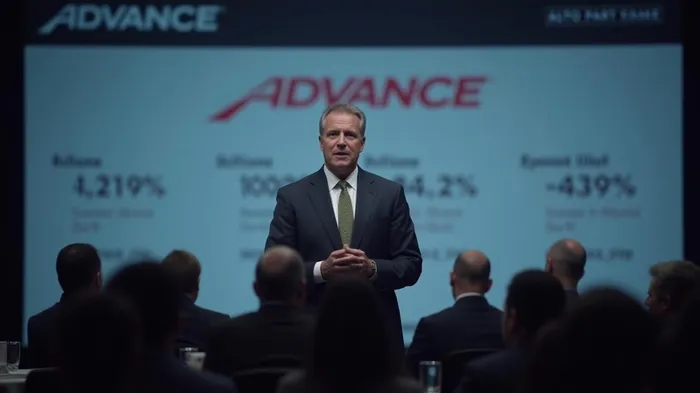
Improved First Quarter Financial Performance:
- Advance Auto PartsAAP-- reported a 7% decrease in net sales from continuing operations due to store optimization activities.
- Despite this, Pro business grew in the low-single-digit range, including eight consecutive weeks of positive comparable sales growth in the U.S.
- The improvement was driven by initiatives to enhance customer service and market conditions such as reduced tax refund volatility and improved inventory levels.
Strategic Store Optimization and Expansion:
- Approximately 75% of Advance Auto Parts' store footprint is now concentrated in markets where they hold the #1 or #2 position in store density.
- The company plans to open more than 100 new stores over the next three years to strengthen its presence in these areas.
- This strategic focus aims to capture share in the more than $150 billion total addressable market and leverage the company's store density advantages.
Supply Chain and Operational Improvements:
- Advance Auto Parts is on track to close 12 distribution centers this year, aiming for a total of 16 DCs by year-end, with each averaging approximately 500,000 square feet.
- The company is implementing a new assortment framework in DMAs, which contributed to an estimated 50 basis points uplift in comparable sales growth in these areas.
- These improvements are aimed at enhancing operational performance, leveraging labor productivity, and optimizing inbound and outbound processes for better efficiency.
Tariff and Cost Management Challenges:
- The company's approach to navigating tariffs involves working with vendor partners to mitigate cost increases and passing on non-absorbable costs to customers.
- Advance Auto Parts faces a 30% blended tariff rate with 40% of sourced products potentially affected, requiring strategic pricing and mitigation efforts.
- Despite these challenges, the company remains confident in its ability to manage costs and maintain profitability through measured pricing strategies and supply chain optimizations.

Discover what executives don't want to reveal in conference calls
Latest Articles
Stay ahead of the market.
Get curated U.S. market news, insights and key dates delivered to your inbox.
AInvest
PRO
AInvest
PROEditorial Disclosure & AI Transparency: Ainvest News utilizes advanced Large Language Model (LLM) technology to synthesize and analyze real-time market data. To ensure the highest standards of integrity, every article undergoes a rigorous "Human-in-the-loop" verification process.
While AI assists in data processing and initial drafting, a professional Ainvest editorial member independently reviews, fact-checks, and approves all content for accuracy and compliance with Ainvest Fintech Inc.’s editorial standards. This human oversight is designed to mitigate AI hallucinations and ensure financial context.
Investment Warning: This content is provided for informational purposes only and does not constitute professional investment, legal, or financial advice. Markets involve inherent risks. Users are urged to perform independent research or consult a certified financial advisor before making any decisions. Ainvest Fintech Inc. disclaims all liability for actions taken based on this information. Found an error?Report an Issue


ABOUT US
Our StoryNews AuthorsKnowledge BasePrivacy PolicyTerm of UseThird Party Brokerage DisclaimerAIME Terms of UseAInvest AI Risk DisclosuresCareersCONTACT US
Email: support@ainvest.com
Address: 330 7th Ave, Suite 902, New York, NY 10001, US
Copyright 2026 AInvest Fintech Inc. All rights reserved.


Comments
No comments yet