
Aduro Clean Technologies Tests Chemical Recycling Processes for Artificial Turf Waste
ByAinvest
Thursday, Jul 31, 2025 9:50 pm ET1min read
ADUR--
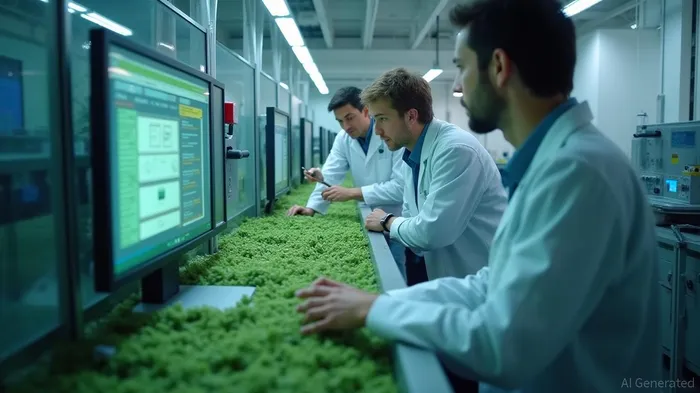
The company tested samples of synthetic turf waste commonly used in sports stadiums and landscaping applications. These samples featured the typical multilayer structure of modern synthetic turf systems, including polyethylene grass blades, polypropylene thatch and backing layers, residual infill materials like silica sand and crumb rubber, and polyurethane adhesives. Testing results showed that Aduro's chemical recycling process selectively converted the polyolefin components of the turf into shorter-chain hydrocarbon products suitable as potential feedstocks for steam cracking and new polymer production. The company achieved this without extensive preprocessing, demonstrating tolerance for mixed materials and contaminants typically present in aged turf systems [1].
The market opportunity for synthetic turf recycling appears significant. A single full-sized synthetic turf field can weigh between 200 and 300 tons, and in North America alone, more than 12,000 fields are expected to reach the end of their service life within the next five years. According to HTF Market Intelligence, the synthetic turf recycling market is projected to grow from $1.8 billion in 2025 to approximately $5.9 billion by 2032, with a compound annual growth rate (CAGR) of about 15.8% [1].
Aduro is continuing development work with industry stakeholders, including additional testing, output characterization, and evaluations related to process economics and scale-up potential. This work is part of the company's broader effort to assess the applicability of HCT to complex waste streams underserved by traditional recycling infrastructure. Beyond artificial turf, carpets represent a similarly complex waste stream that could benefit from this approach [1].
References:
[1] https://www.globenewswire.com/news-release/2025/07/31/3124840/0/en/Aduro-Clean-Technologies-Investigates-Chemical-Recycling-Pathway-for-Synthetic-Turf-Waste.html
Aduro Clean Technologies has successfully tested its Hydrochemolytic™-Technologie (HCT) on synthetic turf waste, converting polyolefin components into potential feedstocks for new polymers. This supports the company's strategy to address market segments with complex material compositions or limited processing capacities. The synthetic turf market is expected to grow at a CAGR of 15.8% from $1.8 bln in 2025 to $5.9 bln in 2032.
Aduro Clean Technologies Inc. has successfully completed initial testing of its proprietary Hydrochemolytic™ Technology (HCT) on synthetic turf waste, converting polyolefin components into potential feedstocks for new polymers. This development supports the company's strategy to address market segments with complex material compositions or limited processing capacities [1].The company tested samples of synthetic turf waste commonly used in sports stadiums and landscaping applications. These samples featured the typical multilayer structure of modern synthetic turf systems, including polyethylene grass blades, polypropylene thatch and backing layers, residual infill materials like silica sand and crumb rubber, and polyurethane adhesives. Testing results showed that Aduro's chemical recycling process selectively converted the polyolefin components of the turf into shorter-chain hydrocarbon products suitable as potential feedstocks for steam cracking and new polymer production. The company achieved this without extensive preprocessing, demonstrating tolerance for mixed materials and contaminants typically present in aged turf systems [1].
The market opportunity for synthetic turf recycling appears significant. A single full-sized synthetic turf field can weigh between 200 and 300 tons, and in North America alone, more than 12,000 fields are expected to reach the end of their service life within the next five years. According to HTF Market Intelligence, the synthetic turf recycling market is projected to grow from $1.8 billion in 2025 to approximately $5.9 billion by 2032, with a compound annual growth rate (CAGR) of about 15.8% [1].
Aduro is continuing development work with industry stakeholders, including additional testing, output characterization, and evaluations related to process economics and scale-up potential. This work is part of the company's broader effort to assess the applicability of HCT to complex waste streams underserved by traditional recycling infrastructure. Beyond artificial turf, carpets represent a similarly complex waste stream that could benefit from this approach [1].
References:
[1] https://www.globenewswire.com/news-release/2025/07/31/3124840/0/en/Aduro-Clean-Technologies-Investigates-Chemical-Recycling-Pathway-for-Synthetic-Turf-Waste.html
Stay ahead of the market.
Get curated U.S. market news, insights and key dates delivered to your inbox.
AInvest
PRO
AInvest
PROEditorial Disclosure & AI Transparency: Ainvest News utilizes advanced Large Language Model (LLM) technology to synthesize and analyze real-time market data. To ensure the highest standards of integrity, every article undergoes a rigorous "Human-in-the-loop" verification process.
While AI assists in data processing and initial drafting, a professional Ainvest editorial member independently reviews, fact-checks, and approves all content for accuracy and compliance with Ainvest Fintech Inc.’s editorial standards. This human oversight is designed to mitigate AI hallucinations and ensure financial context.
Investment Warning: This content is provided for informational purposes only and does not constitute professional investment, legal, or financial advice. Markets involve inherent risks. Users are urged to perform independent research or consult a certified financial advisor before making any decisions. Ainvest Fintech Inc. disclaims all liability for actions taken based on this information. Found an error?Report an Issue




Comments
No comments yet