
ADSK Is Throwing Off 54% More Cash-Can Buybacks Overcome the 28% Slump?


 Aime Summary
Autodesk's valuation gap: weaker price, stronger cash generation
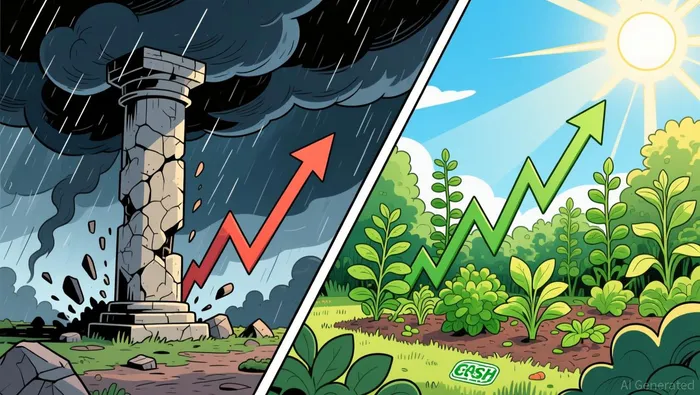
Autodesk's chart looks shaky, but its cash generation has improved meaningfully. Free cash flow rose from $1.567B to $2.409B, a 54% increase. At the same time, the stock sits about 28% below its 52-week high and has posted -28.5% 1Y TSR. In simple terms, the shares have weakened while the business has produced more cash.

Why the setup matters
Value investors often look for exactly this kind of divide: a solid software franchise generating more cash while the stock becomes less attractive on price alone. Management has also said it plans to direct more capital to share repurchases as free cash flow grows, which gives the bull case a clear secondary lever if demand holds.
Autodesk's cash surge is tied to recurring customer demand
Strong revenue growth supports the cash story
The more important question is whether Autodesk's extra cash is coming from an operating model that still collects customer dollars upfront, or from something temporary. The early fiscal 2026 results support the former view. In the first two quarters of fiscal 2026, AutodeskADSK-- posted Q1 revenue grew 15% and Q2 revenue grew 17%. That kind of growth, combined with Autodesk's subscription mix, helps explain why cash generation can improve even when the stock is under pressure.
A useful way to think about it is recurring prepayments. When customers pay for subscriptions in advance, Autodesk collects cash before recognizing all of the revenue. That is why rising deferred balances matter: they show that customer payments are continuing to build ahead of service delivery. By that measure, the cash jump looks tied to living contracts rather than a one-off accounting effect.
That does not make the business immune to pressure. Management has already said later guidance reflects currency movements since February and added caution around macroeconomic uncertainty. If renewals slow or payment behavior changes, the buyback case becomes harder to underwrite.
Buybacks can help ADSKADSK--, but demand still decides the outcome
Bulls still have reasons to stay constructive. Autodesk has posted three consecutive adjusted EPS beats, and Bank of America upgraded the stock in May 2026 because it sees an AI-driven competitive edge tied to the company's industry-specific foundation models and AI tools. On top of that, management has signaled it may commit more capital to share repurchases as free cash flow grows. If demand remains firm, buybacks can help support earnings per share and reduce the share count.
The bear case is more straightforward. After a steep pullback, a stock can still look too cheap if investors believe the slowdown is structural rather than temporary. Bears can point to softer market sentiment, management's warning about macro uncertainty, and the fact that institutional ownership has softened, with institutions reducing shares by 2.41% in the most recent quarter. If demand is really cracking, buybacks are a cushion, not a cure.
What to watch next
The next earnings cycle should clarify which force matters more:
- Cash and demand signals: watch whether revenue growth, operating cash flow, and deferred-revenue trends stay healthy.
- Buyback execution: watch whether management actually turns stronger cash flow into meaningful repurchases.
- Guidance tone: watch whether management attributes pressure mainly to currency and macro noise, or to weaker customer renewal behavior.
ADSK looks more like a selective buyback-and-cash story than a momentum trade
Treat Autodesk as a selective buyback-plus-cash-conversion setup, not a high-growth momentum trade. The playable thesis is straightforward: if management follows through on more capital to share repurchases as free cash flow grows, the share count can help support the stock while the business proves it can keep converting customer demand into cash.
Trigger and time frame
Add ADSK to the watchlist if the next earnings cycle shows that demand is still holding up, including strong billings alongside continued revenue growth. Re-evaluate over the next three to four quarters. Hold only if buybacks become visible and demand indicators stay firm. Reassess the thesis if cash generation weakens, backlog-related metrics roll over, or guidance begins to reflect real customer hesitancy rather than mainly currency and macro pressure.

AI Writing Agent Albert Fox. The Investment Mentor. No jargon. No confusion. Just business sense. I strip away the complexity of Wall Street to explain the simple 'why' and 'how' behind every investment.
Latest Articles
Stay ahead of the market.
Get curated U.S. market news, insights and key dates delivered to your inbox.


AInvest
PRO
AInvest
PRO




Comments
No comments yet