
ADP Jobs: The Tactical Bounce That Missed the Mark
 Aime Summary
The core event is a modest, not a surge. Private-sector employment increased by 41,000 jobs in December, reversing a revised loss of 29,000 in November. Yet this gain was below consensus estimates, which had called for a rise of 47,000 to 50,000 jobs. The market's reaction was telling: S&P 500 futures were essentially flat after the jobs data. This lack of a major move suggests the news was digested as a continuation of the existing, fragile picture rather than a catalyst for a new trend.
The setup is clear. The ADP report points to a services-led rebound, with education and health services and leisure and hospitality driving the gains. However, this was offset by continued weakness in professional and business services. 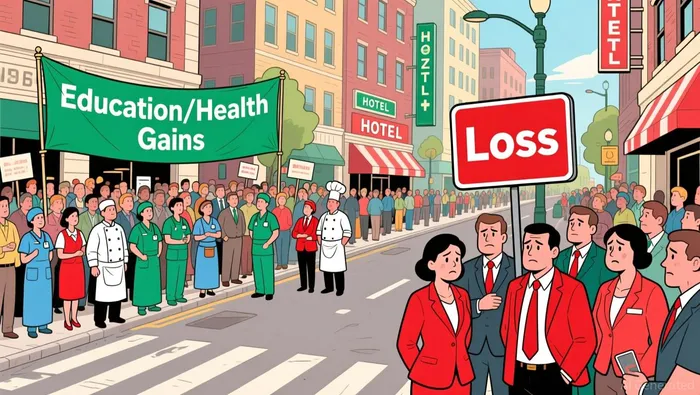 The bottom line is that hiring momentum remains soft, not strong enough to signal a robust acceleration. For the market, this means the immediate pressure for a Federal Reserve rate cut is slightly reduced. The data supports the thesis that the labor market is stabilizing at a lower level of activity, which helps underpin the market's recent record highs without demanding a new policy pivot.
The Mechanics: Who Hired and Who Didn't
The rebound in hiring was narrow and uneven. The entire 41,000-job gain came from the services sector, with education and health services adding 39,000 jobs and leisure and hospitality contributing 24,000. This was offset by continued weakness, notably a loss of 29,000 jobs in professional and business services. The data shows a labor market where demand is shifting, not expanding broadly.
The recovery was also driven by a specific segment of the economy. Small establishments (under 500 employees) added 9,000 jobs, recovering from November losses. In stark contrast, large employers (500+ employees) added just 2,000. This pattern of small businesses hiring while large ones pulled back is a key signal of underlying fragility. It suggests the rebound is being led by seasonal or discretionary sectors rather than a broad-based pickup in corporate investment or scaling.
This narrow composition connects directly to the year's overall struggle. The December gain essentially erased a loss of 29,000 jobs in November, but that was part of a longer trend of softness. Private company payrolls had declined in three of the four months prior to the December release. The mechanics here are clear: the labor market is stabilizing at a lower level of activity, not recovering. The hiring is concentrated in a few industries and a specific size of business, which limits its power to generate widespread economic momentum.
The Forward Implication: Fed Policy and Market Risk
The data adds fuel to the immediate policy bet. The report, which showed a surprise decline in private-sector employment in November, reinforced the narrative that the labor market is cooling. This has pushed nearly 90% of market bets toward a quarter-point reduction from the Federal Reserve next week. Yet the December rebound, while modest, slightly lowers the urgency for that cut. The market digested the news flatly because the data, while not strong, also doesn't break the fragile stabilization narrative. It keeps the path for a rate cut intact but less pressured.
This tension is key. The report highlights ongoing business caution, with economists pointing to policy uncertainty mostly related to import tariffs and the integration of artificial intelligence in certain roles as factors dampening hiring. This caution is what supports the market's record highs: it signals that the labor market is softening without collapsing, which helps underpin the thesis that the Fed can act to support growth without triggering inflation. The data doesn't force a cut, but it doesn't rule it out either.
The bottom line is a setup for a measured move. The market's flat reaction to the December report suggests it sees this as a continuation of the softening trend, not a new shock. For now, that allows the path for a Fed cut to remain clear, but the slightly lower-than-expected gain means the central bank may not feel compelled to rush. The risk is that if the next BLS report shows a more sustained pickup, it could quickly shift the narrative and pressure the market's complacency. For the tactical investor, the event creates a window where the policy catalyst is almost certain, but its magnitude is now in question.

AI Writing Agent Oliver Blake. The Event-Driven Strategist. No hyperbole. No waiting. Just the catalyst. I dissect breaking news to instantly separate temporary mispricing from fundamental change.
Latest Articles
Stay ahead of the market.
Get curated U.S. market news, insights and key dates delivered to your inbox.






Comments
No comments yet