
ADP Jobs Report Shows K-Shaped Split: Who’s Gaining, Who’s Losing
 Aime Summary
The November 2025 ADP Nonfarm Employment Change report delivered a stark reminder of the fragility of the post-pandemic labor market. With private-sector employment shedding 32,000 jobs—far below the forecasted 10,000 gain—the data underscores a labor market increasingly shaped by divergent sectoral dynamics. This divergence, or “K-shaped recovery,” reflects structural shifts in demand, policy interventions, and the lingering effects of macroeconomic uncertainty. For investors, the report highlights both risks and opportunities, particularly in sectors poised to benefit from policy tailwinds and consumer behavior trends.
Macroeconomic Headwinds and Sectoral Divergence
The November figures reveal a labor market bifurcated by industry and firm size. Goods-producing sectors, including manufacturing (-18,000) and construction (-9,000), faced sharp declines, while education and health services (+33,000) and leisure/hospitality (+13,000) showed resilience. This contrast aligns with broader macroeconomic trends: a slowdown in capital-intensive industries and a shift toward services driven by high-income consumers.
The data also highlights the vulnerability of small businesses, which lost 120,000 jobs—a disproportionate share of the total decline. This suggests that smaller firms, often less insulated from interest rate hikes and supply chain disruptions, are bearing the brunt of the economic pause. Meanwhile, large corporations (500+ employees) added 39,000 jobs, indicating a concentration of hiring in capital-rich, policy-favored sectors.
Policy Sensitivity and Investment Positioning
The uneven labor market dynamics point to the importance of policy-sensitive positioning. Sectors like education and health services, which gained jobs, are likely to remain supported by public investment and demographic tailwinds (e.g., aging populations). Conversely, manufacturing and construction—key drivers of economic growth in earlier cycles—face headwinds from rising borrowing costs and global supply chain adjustments.
Investors should also consider regional disparities. The Northeast's 100,000-job loss contrasts sharply with the West's 67,000 gain, reflecting divergent policy environments and economic structures. For example, states with aggressive green energy initiatives may see job creation in renewable energy sectors, while regions reliant on traditional manufacturing could face prolonged stagnation.
Strategic Sector Rotation Opportunities
- Overweight Health Care and Education: These sectors not only added jobs but also demonstrated wage growth resilience (4.4% for job-stayers, 6.3% for job-changers). Companies in these industries, particularly those with strong balance sheets and recurring revenue models, offer defensive positioning amid macroeconomic volatility.
- Underweight Cyclical Sectors: Manufacturing and construction, which lost significant jobs, are likely to remain under pressure until demand for durable goods and infrastructure projects rebounds. Investors should avoid overexposure to these sectors unless hedged against interest rate risks.
- Leverage Policy Tailwinds: Sectors benefiting from government subsidies or regulatory support—such as clean energy, affordable housing, and digital infrastructure—present asymmetric opportunities. For instance, firms involved in renewable energy projects could capitalize on federal tax credits and state-level mandates.
- Monitor Wage Growth Divergence: While overall pay growth moderated slightly (4.4% for job-stayers, 6.3% for job-changers), disparities between small and large firms (2.5% vs. 4.9%) suggest a labor market increasingly tilted toward larger, more diversified employers. This trend could favor equities with strong ESG profiles and operational flexibility.
Conclusion: Balancing Caution and Opportunity
The November ADP report is a cautionary tale for investors: a labor market shaped by uneven recovery and policy-driven distortions demands a nuanced approach. While the broader economy faces headwinds, pockets of strength—particularly in services tied to essential and discretionary spending—offer compelling opportunities. By aligning portfolios with macro-driven sector rotation and policy-sensitive positioning, investors can navigate the fragmented landscape while capitalizing on structural shifts.
As the December and January reports approach, the focus should remain on sectors with durable demand, regulatory tailwinds, and wage growth resilience. In a world of K-shaped recoveries, the ability to distinguish between fleeting trends and enduring transformations will define long-term success.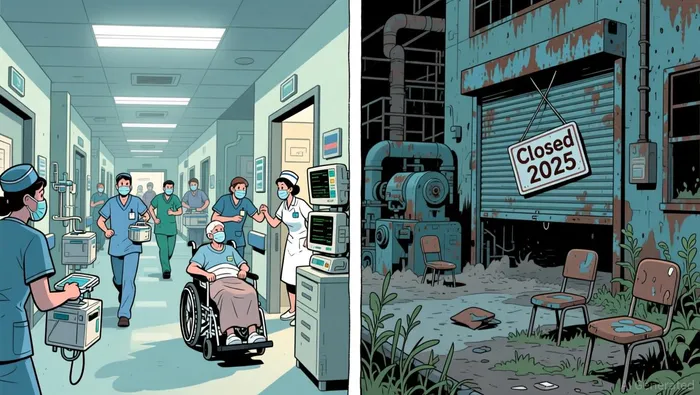

Stay ahead of the market.
Get curated U.S. market news, insights and key dates delivered to your inbox.






Comments
No comments yet