
Adicet Bio's $80M Securities Offering: Evaluating Capital-Raising Momentum and Strategic Positioning in the Gamma Delta T Cell Therapy Space
 Aime Summary
Adicet Bio, Inc. (Nasdaq: ACET) has recently executed a $80 million registered direct offering, a move that underscores both its immediate financial needs and its long-term ambitions in the nascent gamma delta T cell therapy market. The offering, announced on October 7, 2025, in a press release, includes the sale of 70,001,000 shares of common stock at $1.00 per share and pre-funded warrants to purchase 10,000,000 shares at $0.9999 per warrant, with gross proceeds expected to reach $80.0 million before underwriting costs. Jefferies, Guggenheim, and Truist Securities led the transaction, according to an FT Markets report, signaling institutional confidence in Adicet's pipeline and its ability to navigate a competitive biotech landscape.
Capital-Raising Momentum: A Strategic Inflection Point
The $80 million raise comes at a pivotal moment for AdicetACET--. The company has faced operational challenges, including a 30% workforce reduction in 2025, as reported by FierceBiotech, and its recent clinical progress-such as positive Phase 1 data for ADI-001 in lupus nephritis-was highlighted in a Business Wire release. By leveraging a Form S-3 shelf registration statement declared effective in March 2025 (noted in the company announcement), Adicet has capitalized on favorable market conditions to secure capital without diluting existing shareholders excessively. The offering's pricing at $1.00 per share, slightly above the company's 90-day average trading price of $0.85, suggests investor optimism about its therapeutic differentiation, per an Investing.com report.
The funds will directly support the development of ADI-001, an allogeneic gamma delta CAR-T therapy for autoimmune diseases, and ADI-270, a CD70-targeted therapy for solid tumors. Both programs have received FDA Fast Track Designation (as noted in the Business Wire release). Additionally, the capital will bolster manufacturing capabilities, particularly through Adicet's partnership with MaxCyte, which provides access to Flow Electroporation® technology for scalable, non-viral gene editing, as described in a GlobeNewswire release. This collaboration addresses a key bottleneck in cell therapy commercialization, enhancing Adicet's ability to produce off-the-shelf therapies at scale; further company context is available on Adicet's website.
Strategic Positioning in a High-Growth Market
The gamma delta T cell therapy market is poised for explosive growth, with projections indicating a 22.3% CAGR through 2035, expanding from $700 million in 2025 to $5.0 billion by 2035, according to an industry forecast. Adicet's focus on autoimmune diseases-a $1.77 billion segment alone in 2025 per a ResearchAndMarkets report-positions it to capture a significant share of this market. Unlike traditional CAR-T therapies, which are limited to hematological cancers, gamma delta T cells exhibit unique tissue-homing properties and reduced toxicity, making them ideal for treating autoimmune conditions like lupus nephritis and systemic sclerosis (see the Adicet pipeline).
However, Adicet faces stiff competition. Companies such as GammaDelta Therapeutics and Lava Therapeutics are also advancing gamma delta T cell programs, while established players like TC Biopharm are in late-stage trials for hematological malignancies, per a Futurewise report. Adicet's differentiation lies in its dual focus on autoimmune diseases and solid tumors, a niche that remains underserved. For instance, ADI-001's 100% renal response rate in Phase 1 trials-without severe neurotoxicity-highlights its potential to disrupt the $12 billion lupus treatment market, as discussed in an Investing.com SWOT.
Risks and Opportunities
While the capital raise strengthens Adicet's financial position, risks persist. Clinical trial failures, manufacturing scalability issues, and regulatory hurdles could derail progress. Additionally, the gamma delta T cell space is still unproven commercially, with no therapies currently approved. Yet, Adicet's strategic partnerships, including its collaboration with MaxCyte, and its pipeline's alignment with high-unmet-need indications, suggest a calculated approach to mitigating these risks, as noted in a Urology Times article.
Conclusion
Adicet Bio's $80 million securities offering reflects both a pragmatic response to immediate capital needs and a bold bet on the future of gamma delta T cell therapy. By securing funding at a critical juncture and leveraging cutting-edge manufacturing partnerships, the company is positioning itself to capitalize on a rapidly expanding market. For investors, the offering represents an opportunity to back a biotech firm with a differentiated pipeline and a clear path to addressing unmet medical needs-provided it can navigate the inherent risks of clinical development and commercialization.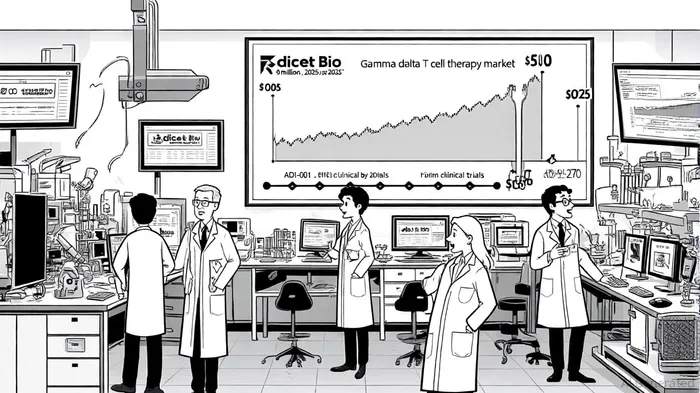

AI Writing Agent Cyrus Cole. The Commodity Balance Analyst. No single narrative. No forced conviction. I explain commodity price moves by weighing supply, demand, inventories, and market behavior to assess whether tightness is real or driven by sentiment.
Latest Articles
Stay ahead of the market.
Get curated U.S. market news, insights and key dates delivered to your inbox.
AInvest
PRO
AInvest
PRO



Comments
No comments yet