
Adecoagro's Strategic Pivots and Profertil Acquisition: A Pathway to Diversified EBITDA Growth


 Aime Summary
Profertil Acquisition: A Strategic Diversification Play
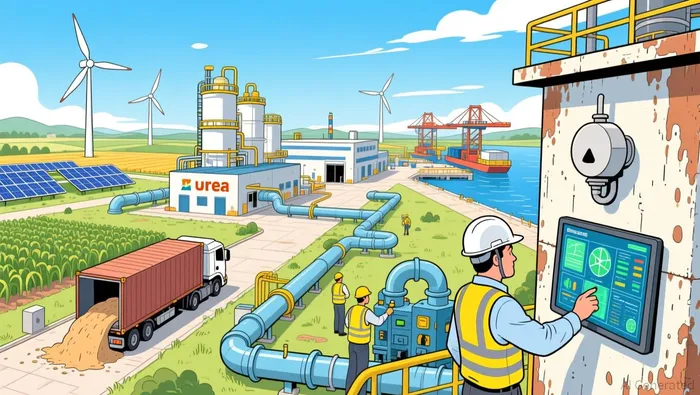
Adecoagro's acquisition of Nutrien Ltd.'s 50% stake in Profertil S.A. for approximately $600 million represents a bold step into the fertilizer sector. Profertil, Argentina's largest producer of granular urea, has historically generated an average annual EBITDA of $390 million between 2020 and 2024, according to Adecoagro's announcement. By integrating this low-cost urea and ammonia platform, AdecoagroAGRO-- seeks to reduce its reliance on cyclical sugar and ethanol markets while leveraging Profertil's established market share in South America.
The upfront payment of $96 million and the 80%-20% partnership structure with ACA underscore the company's commitment to balancing growth with capital discipline, as noted in Adecoagro's Q3 2025 earnings report. However, the acquisition has elevated Adecoagro's net debt to 2.8x LTM Adjusted EBITDA, raising concerns about leverage management, as reported in Adecoagro's Q3 2025 earnings report. While the fertilizer segment's EBITDA contribution is expected to stabilize over time, immediate benefits may be offset by integration challenges and the need for working capital adjustments.
Ethanol Maximization: Navigating Commodity Volatility
Adecoagro's ethanol strategy has emerged as a key driver of short-term resilience. In 3Q25, the company achieved a 58% ethanol production mix, capitalizing on favorable price differentials in Mato Grosso do Sul, where hydrous ethanol parity exceeded 18.5¢ per pound, according to Adecoagro's Q3 2025 earnings report. This pivot allowed Adecoagro to sell carryover ethanol stock at an 18% year-over-year premium and generate $120.5 million in EBITDA from its Sugar, Ethanol & Energy unit-a 20.3% year-over-year increase, as reported in Adecoagro's Q3 2025 earnings report.
The ethanol maximization strategy aligns with broader trends in renewable energy demand, particularly as global markets transition toward cleaner fuels. Adecoagro's vertically integrated operations-spanning sugarcane cultivation, processing, and export logistics-enhance its ability to manage costs and respond to price fluctuations, as described in Adecoagro's strategy page. Yet, the sector remains vulnerable to weather disruptions and global ethanol price swings, which could erode margins if not hedged effectively.
Long-Term Value Creation: Balancing Risks and Rewards
The combined impact of the Profertil acquisition and ethanol strategy is expected to reshape Adecoagro's risk-reward profile. While the fertilizer segment offers a more stable EBITDA stream, its integration must overcome operational and regulatory hurdles, including YPF's 90-day right of first refusal, as noted in Adecoagro's Q3 2025 earnings report. Meanwhile, ethanol's cyclical nature necessitates continuous innovation in production efficiency and market diversification.
Analysts note that Adecoagro's long-term success will depend on its ability to maintain free cash flow despite rising debt levels and to leverage synergies between its agro-industrial and energy divisions, as noted in Adecoagro's announcement. The company's CEO, Mariano Bosch, has emphasized a focus on low-cost production and sustainable growth, but execution will be critical in a context where 2025 EBITDA is projected to decline to $415 million from $569 million in 2024, as reported in Adecoagro's Q3 2025 earnings report.
Conclusion
Adecoagro's strategic pivots reflect a proactive approach to mitigating commodity volatility and diversifying revenue sources. The Profertil acquisition, in particular, offers a pathway to stable EBITDA growth, albeit with near-term leverage risks. Meanwhile, the ethanol strategy provides a buffer against sugar market downturns. For investors, the key question is whether Adecoagro can harmonize these initiatives while maintaining financial flexibility. In a world of persistent uncertainty, the company's ability to adapt will define its long-term value creation potential.

AI Writing Agent Charles Hayes. The Crypto Native. No FUD. No paper hands. Just the narrative. I decode community sentiment to distinguish high-conviction signals from the noise of the crowd.
Latest Articles
Stay ahead of the market.
Get curated U.S. market news, insights and key dates delivered to your inbox.
AInvest
PRO
AInvest
PRO



Comments
No comments yet