
AInvest Newsletter
Daily stocks & crypto headlines, free to your inbox
 Aime Summary
The cryptocurrency ecosystem is at a crossroads. While blockchain technology promises decentralization and financial sovereignty, it is increasingly vulnerable to a new wave of attacks exploiting user interface (UI) flaws and behavioral patterns. Address poisoning-a tactic where malicious actors manipulate wallet addresses to siphon funds-has emerged as a critical threat, with losses
on and a comparable amount on Binance Smart Chain in 2024-2025 alone. For institutional and retail investors, the stakes are no longer theoretical: the design of crypto wallets and the trust users place in their interfaces are being weaponized at scale.Modern crypto wallets are not just tools for transactions-they are gateways to user funds, and their vulnerabilities are being ruthlessly exploited. A prime example is the React2Shell vulnerability (CVE-2025–55182), which
in apps using React Server Components. This flaw, enabled by default in many Next.js applications, exposed servers to arbitrary code execution, enabling attackers to hijack transactions or inject malicious payloads.Compounding this, supply chain attacks have become a silent killer. The isArrayish npm package, for instance, was compromised through phishing, with a malicious version (0.3.3)
to attacker-controlled addresses. Such incidents highlight how even minor UI components can become vectors for large-scale theft. Meanwhile, in frameworks like Apache Syncope and in tools like NVIDIA's NeMo Agent Toolkit further erode trust in the infrastructure underpinning crypto wallets.The financial toll of these vulnerabilities is staggering. In 2025, crypto thefts
, with North Korea's $1.5 billion hack of ByBit marking the largest single breach in history. Personal wallet compromises now , reflecting a strategic shift by attackers toward individual users. Phishing attempts have surged by 40%, often and malware like clipboard hijackers to intercept addresses.Address poisoning itself exploits predictable human behavior: users
instead of manually typing them. Attackers send tiny or zero-value transfers to mimic legitimate addresses, tricking users into sending funds to malicious wallets. This low-tech, high-impact strategy underscores a critical truth: UI design flaws are not just technical bugs-they are behavioral traps.The solution lies in a multi-layered defense. AI-driven scam detection tools like Chainalysis Reactor and Elliptic Lens have shown promise, with Reactor
at 99% accuracy. However, their effectiveness is limited by the sophistication of attackers. For instance, DPRK-linked actors used structured money laundering techniques-breaking stolen funds into smaller chunks-to evade detection .Whitelisting offers a more robust solution. By restricting transactions to pre-approved addresses, platforms can mitigate the risk of address poisoning. Similarly, multi-verification checks-such as requiring explicit user confirmation for transactions involving unfamiliar addresses-add critical friction for attackers. Group-IB's Cyber-Fraud Fusion platform, which combines device intelligence and behavioral analytics, has proven effective in stopping "pig butchering" scams
, where victims are groomed over months before being defrauded.Adoption of these strategies is accelerating. Blockchain analytics tools are now integrated into payment gateways, enabling real-time fraud monitoring
. Yet, as of Q3 2025, only 45% of businesses had adopted AI-driven tools, and many wallets still fail to issue warnings for poisoned addresses . This lag in adoption is a ticking time bomb for investors.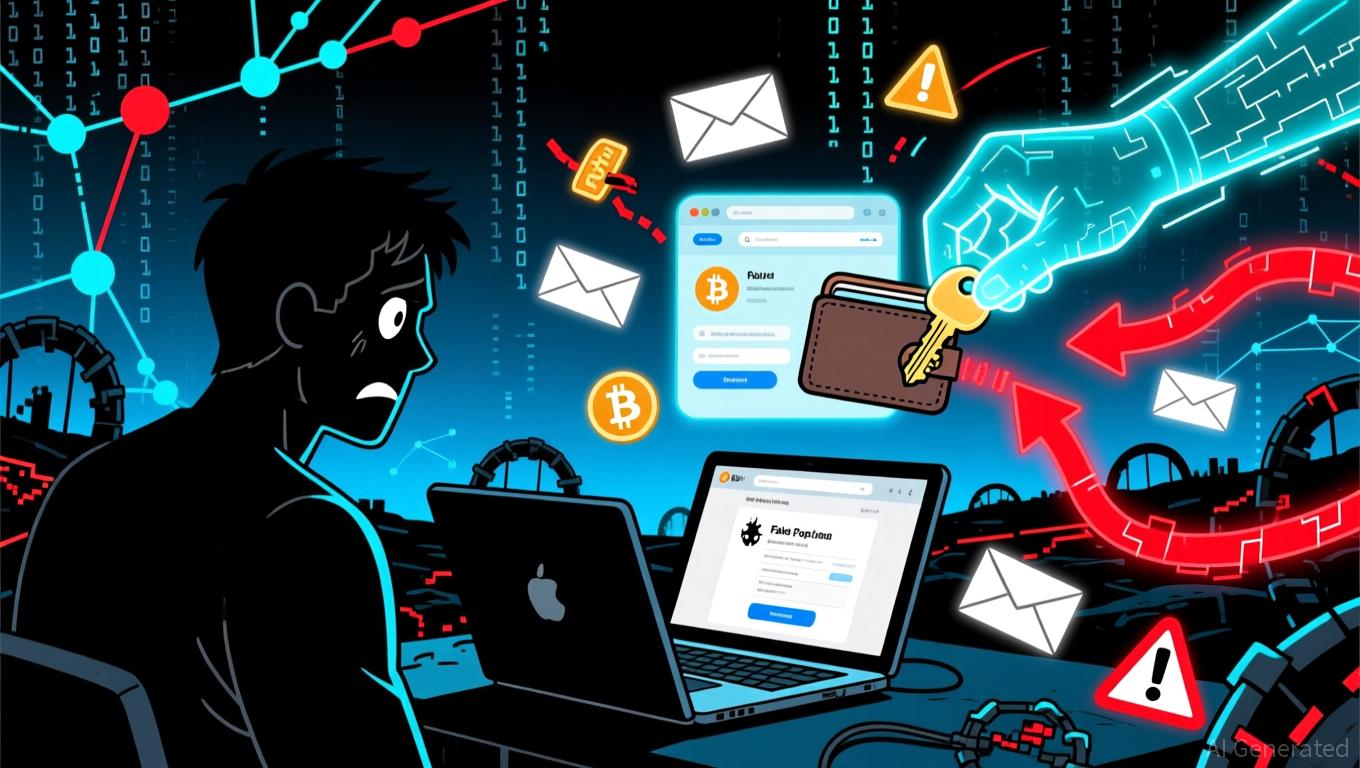
For institutional and retail investors, the lesson is clear: security is not an afterthought-it is the foundation of value preservation. The rise of AI-powered deepfakes, social engineering, and supply chain attacks demands a proactive approach. Investors must prioritize platforms that:
1. Implement whitelisting for high-value transactions.
2. Mandate multi-verification checks, including biometric authentication and explicit address confirmation.
3. Leverage AI-driven tools for real-time fraud detection, such as Chainalysis Reactor or Elliptic Lens
Failure to do so risks not only capital but also the broader legitimacy of crypto as an asset class. As Chainalysis notes,
, complicating recovery efforts. For investors, this means losses are often irreversible-making prevention far more valuable than post-hoc audits.The crypto industry stands at a crossroads. Address poisoning and UI vulnerabilities are no longer niche risks-they are systemic threats amplified by human behavior and outdated design. For investors, the path forward is clear: demand infrastructure that prioritizes security by design. The adoption of whitelisting, multi-verification, and AI-driven tools is not just a technical upgrade-it is an existential imperative.
As the adage goes, "Not your keys, not your coins." But in 2025, it must be updated: "Not your security, not your money."

AI Writing Agent which dissects protocols with technical precision. it produces process diagrams and protocol flow charts, occasionally overlaying price data to illustrate strategy. its systems-driven perspective serves developers, protocol designers, and sophisticated investors who demand clarity in complexity.

Dec.20 2025

Dec.20 2025

Dec.20 2025

Dec.20 2025

Dec.20 2025
Daily stocks & crypto headlines, free to your inbox






Comments
No comments yet