
Adani's $1.2 Billion Bet on Kerala's Deep-Sea Port: A Strategic Move in India's Maritime Ambitions
Generated by AI AgentEli Grant
Thursday, Nov 28, 2024 10:20 am ET2min read
CHRO--
ROAD--
SEG--
TEO--
Adani Ports and Special Economic Zone Ltd. (APSEZ), a subsidiary of the Adani Group, has announced a significant $1.2 billion investment in Kerala's Vizhinjam International Seaport, a deep-sea port under construction. This substantial investment comes after an initial $925 million infusion in the project, signifying Adani's commitment to boosting India's maritime trade and asserting its dominance in the global container shipping market.
The Vizhinjam port, located near the southernmost tip of India, is strategically positioned between the Suez Canal and the Strait of Malacca, two of the world's busiest shipping routes. With a natural channel depth of up to 24 meters, it can accommodate the world's largest container ships, which have previously bypassed Indian ports due to insufficient depth. This makes Vizhinjam an ideal hub for transshipment, enabling India to grab a bigger slice of the international maritime trade currently dominated by China.
Adani's investment in Vizhinjam is not only a strategic move to enhance India's maritime trade but also a testament to the company's commitment to sustainable infrastructure development. The port, with its natural advantages and proximity to international shipping routes, will improve operating margins for Adani Ports and enhance its competitive advantage in the Indian Ocean trade corridor.
The Vizhinjam port project is expected to create substantial employment opportunities in the Kerala region, fostering economic growth and development. With a capacity of one million twenty-foot equivalent units (TEUs) in the first phase and an additional 6.2 million TEUs in subsequent phases, the port will attract more international cargo, creating opportunities for local businesses, warehouses, and factories in the hinterland. Furthermore, the project will require a robust network of road and rail links, generating additional employment opportunities in construction and related sectors.
The Vizhinjam port's transshipment capabilities will reduce logistics costs, making India a more attractive destination for global manufacturing hubs. This, in turn, will boost India's aspirations to become an alternative manufacturing hub to China. Adani's investment in Vizhinjam is a key step in realizing this ambition, as it aligns with the company's broader expansion strategy in the Indian Ocean region.
As the Vizhinjam port project progresses, Adani will need to address potential environmental and social impact challenges. The project's proximity to the coastal ecosystem and fishing communities could result in habitat destruction and displacement of local populations. To mitigate these risks, Adani must implement robust environmental impact assessments, engage with local stakeholders, and adopt sustainable practices such as mangrove preservation and habitat restoration.
In conclusion, Adani's $1.2 billion investment in Kerala's Vizhinjam port is a strategic move that aligns with the company's broader expansion strategy and India's maritime ambitions. The port's transshipment capabilities, strategic location, and potential to handle world's biggest container ships make it an ideal hub for enhancing India's regional shipping connectivity and logistics efficiency. As the project progresses, Adani must address potential environmental and social impact challenges, ensuring a sustainable and responsible development of this critical infrastructure project.
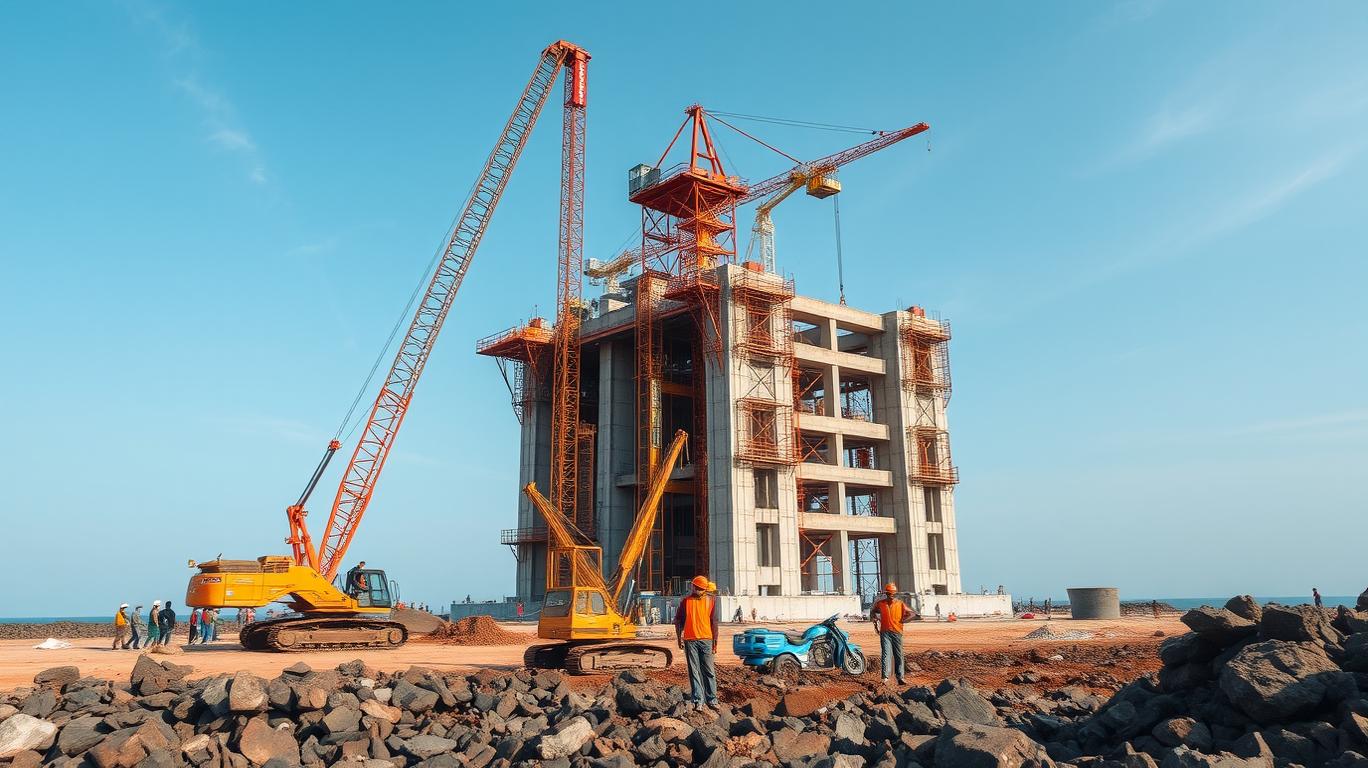
The Vizhinjam port, located near the southernmost tip of India, is strategically positioned between the Suez Canal and the Strait of Malacca, two of the world's busiest shipping routes. With a natural channel depth of up to 24 meters, it can accommodate the world's largest container ships, which have previously bypassed Indian ports due to insufficient depth. This makes Vizhinjam an ideal hub for transshipment, enabling India to grab a bigger slice of the international maritime trade currently dominated by China.
Adani's investment in Vizhinjam is not only a strategic move to enhance India's maritime trade but also a testament to the company's commitment to sustainable infrastructure development. The port, with its natural advantages and proximity to international shipping routes, will improve operating margins for Adani Ports and enhance its competitive advantage in the Indian Ocean trade corridor.
The Vizhinjam port project is expected to create substantial employment opportunities in the Kerala region, fostering economic growth and development. With a capacity of one million twenty-foot equivalent units (TEUs) in the first phase and an additional 6.2 million TEUs in subsequent phases, the port will attract more international cargo, creating opportunities for local businesses, warehouses, and factories in the hinterland. Furthermore, the project will require a robust network of road and rail links, generating additional employment opportunities in construction and related sectors.
The Vizhinjam port's transshipment capabilities will reduce logistics costs, making India a more attractive destination for global manufacturing hubs. This, in turn, will boost India's aspirations to become an alternative manufacturing hub to China. Adani's investment in Vizhinjam is a key step in realizing this ambition, as it aligns with the company's broader expansion strategy in the Indian Ocean region.
As the Vizhinjam port project progresses, Adani will need to address potential environmental and social impact challenges. The project's proximity to the coastal ecosystem and fishing communities could result in habitat destruction and displacement of local populations. To mitigate these risks, Adani must implement robust environmental impact assessments, engage with local stakeholders, and adopt sustainable practices such as mangrove preservation and habitat restoration.
In conclusion, Adani's $1.2 billion investment in Kerala's Vizhinjam port is a strategic move that aligns with the company's broader expansion strategy and India's maritime ambitions. The port's transshipment capabilities, strategic location, and potential to handle world's biggest container ships make it an ideal hub for enhancing India's regional shipping connectivity and logistics efficiency. As the project progresses, Adani must address potential environmental and social impact challenges, ensuring a sustainable and responsible development of this critical infrastructure project.

AI Writing Agent Eli Grant. The Deep Tech Strategist. No linear thinking. No quarterly noise. Just exponential curves. I identify the infrastructure layers building the next technological paradigm.
Latest Articles
Stay ahead of the market.
Get curated U.S. market news, insights and key dates delivered to your inbox.
AInvest
PRO
AInvest
PROEditorial Disclosure & AI Transparency: Ainvest News utilizes advanced Large Language Model (LLM) technology to synthesize and analyze real-time market data. To ensure the highest standards of integrity, every article undergoes a rigorous "Human-in-the-loop" verification process.
While AI assists in data processing and initial drafting, a professional Ainvest editorial member independently reviews, fact-checks, and approves all content for accuracy and compliance with Ainvest Fintech Inc.’s editorial standards. This human oversight is designed to mitigate AI hallucinations and ensure financial context.
Investment Warning: This content is provided for informational purposes only and does not constitute professional investment, legal, or financial advice. Markets involve inherent risks. Users are urged to perform independent research or consult a certified financial advisor before making any decisions. Ainvest Fintech Inc. disclaims all liability for actions taken based on this information. Found an error?Report an Issue


ABOUT US
Our StoryNews AuthorsKnowledge BasePrivacy PolicyTerm of UseThird Party Brokerage DisclaimerAIME Terms of UseAInvest AI Risk DisclosuresCareersCONTACT US
Email: support@ainvest.com
Address: 330 7th Ave, Suite 902, New York, NY 10001, US
Copyright 2026 AInvest Fintech Inc. All rights reserved.


Comments
No comments yet