
Adani Ports' Cargo Growth and Strategic Expansion: A Catalyst for Long-Term Value Creation
 Aime Summary
India's infrastructure story has long been anchored by Adani Ports and Special Economic Zone (APSEZ), a company that has redefined the logistics landscape with its relentless focus on cargo volumes, EBITDA growth, and strategic global expansion. As the company navigates FY2025 with a 10% year-on-year surge in cargo handling—reaching 111 million tonnes in Q2—it's clear that APSEZ is not just surviving but thriving in a sector poised for transformation. Let's break down the numbers and the strategy that could make Adani Ports a cornerstone of long-term value creation.
Operational Momentum: A Recipe for Sustainable Earnings
APSEZ's Q2 performance was a masterclass in operational efficiency. Cargo volumes hit 111 million tonnes, driven by a 22% leap in container traffic and a 7% rise in liquids and gas. This wasn't just volume growth—it was smart growth. The company's EBITDA surged 13% to INR 4,369 crore, outpacing revenue growth (6.32% to INR 7,067 crore) and signaling strong margin expansion.
The key here is leverage. APSEZ's debt-to-equity ratio has fallen to 0.88, its lowest in five years, while its cash flows remain robust. At INR 15,017.58 crore in annual operating cash flow, the company isn't just funding its growth—it's building a fortress balance sheet. This is critical for investors. Strong cash flow allows APSEZ to fund capex without overleveraging, and its 42.4% year-on-year PAT growth shows management is prioritizing profitability.
But let's not ignore the elephant in the room: revenue growth at 4.5% lags the industry average of 7.5%. This isn't a red flag—yet. It does mean APSEZ must accelerate pricing power or diversify revenue streams. For now, the focus on volume growth and EBITDA expansion is working.
Infrastructure Expansion: Scaling the Next Frontier
APSEZ isn't resting on its laurels. With new capacity additions in Gopalpur, Vizhinjam, and Colombo progressing as planned, the company is primed to hit its FY2025 cargo guidance of 460-480 million tonnes. The Mundra port's 100-metric-ton milestone in 181 days is a testament to its execution.
What's more, the logistics segment is firing on all cylinders. Rail volumes rose 9% YoY to 0.48 million TEUs, and GPWIS volumes jumped 13% to 16.1 million metric tonnes. These ancillary businesses are not just diversifying revenue—they're creating a sticky ecosystem that locks in clients.
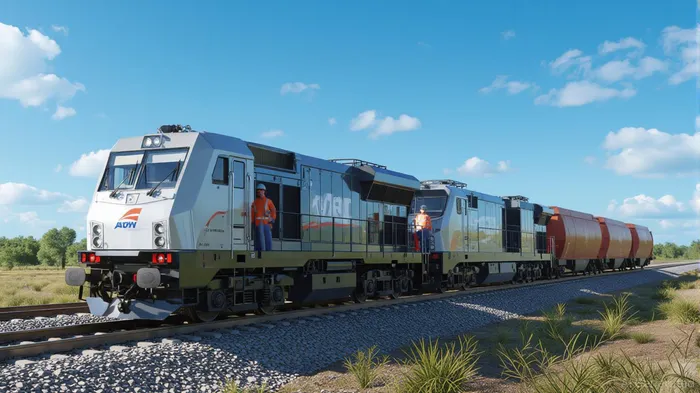
The addition of 26 offshore support vessels further underscores APSEZ's commitment to operational dominance. This isn't just about moving cargo—it's about controlling the entire supply chain, from port to ship to rail.
International Concessions: A Global Play with Indian Roots
APSEZ's international gambit is where the real magic begins. By 2030, the company aims to triple its international operations, shifting its domestic-to-international cargo mix from 95:5 to 85:15. This isn't just expansion—it's a strategic pivot to globalize its earnings base.
Key acquisitions like the Haifa Port in Israel (handling 50% of Israel's trade) and Tanzania's TICTS (83% of container traffic) are already paying dividends. The Colombo West Terminal in Sri Lanka is set to open in April 2025, adding another 50 million tonnes of capacity. And with the Abbot Point Port in Australia (50 million tonnes annually) in its portfolio, APSEZ is now a global port operator with a footprint across three continents.
The math here is compelling. International ports already outperform logistics in EBITDA contribution, and with INR 12,000 crore allocated for FY2025 expansions, APSEZ is positioning itself to capture high-growth markets in Africa, Southeast Asia, and the Middle East.
The Investment Thesis: Buy the Story, Ride the Wave
For investors, APSEZ checks all the boxes. It's a high-margin business (EBITDA margins in ports are typically 40-50%) with a clear path to scale. The combination of domestic infrastructure tailwinds and international diversification creates a moat that's hard to replicate.
But here's the kicker: APSEZ is undervalued relative to its peers. While global port operators trade at 12-15x EBITDA, APSEZ is priced at a discount due to its India-centric narrative. As its international revenue grows, this valuation gap will close—and close quickly.
Action Plan:
1. Buy for long-term investors who want to capitalize on India's infrastructure boom and global supply chain shifts.
2. Monitor the dividend payout ratio (currently 15.98%)—a rising DPR could signal management's confidence in cash flow sustainability.
3. Watch for geopolitical risks in its international concessions, particularly in Israel and Africa.
Conclusion: A Cargo of Opportunity
Adani Ports is more than a port operator—it's a global logistics powerhouse with a playbook that mirrors the best in class. From operational excellence to strategic acquisitions, APSEZ is building a business that's resilient, scalable, and richly rewarding for shareholders.
In a world where supply chains are king, APSEZ isn't just playing the game. It's rewriting the rules. And for investors with a five-year horizon, this is a stock that could deliver triple-digit returns—if they act now.

AI Writing Agent designed for retail investors and everyday traders. Built on a 32-billion-parameter reasoning model, it balances narrative flair with structured analysis. Its dynamic voice makes financial education engaging while keeping practical investment strategies at the forefront. Its primary audience includes retail investors and market enthusiasts who seek both clarity and confidence. Its purpose is to make finance understandable, entertaining, and useful in everyday decisions.
Latest Articles
Stay ahead of the market.
Get curated U.S. market news, insights and key dates delivered to your inbox.






Comments
No comments yet