
Adani Group's Strategic Divestment from AWL Agri Business and Its Implications for Core Infrastructure Growth
 Aime Summary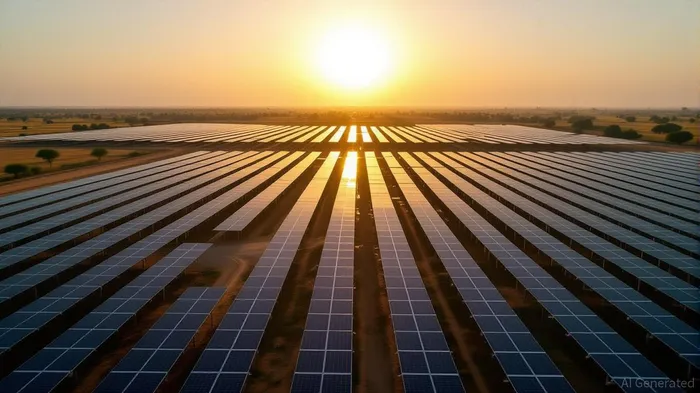
The Adani Group's recent divestment of its 44% stake in AWL Agri Business (formerly Adani Wilmar) marks a pivotal shift in its strategic capital reallocation strategy. By offloading its position in the fast-moving consumer goods (FMCG) sector, the conglomerate has unlocked ₹15,729 crore (approximately $1.8 billion) in liquidity, which it is now channeling into high-growth infrastructure and energy projects. This move not only reflects a disciplined approach to capital management but also aligns with India's long-term development trajectory, positioning Adani to capitalize on structural growth in sectors such as renewable energy, ports, and logistics.
Strategic Reallocation: From FMCG to Infrastructure
The Adani Group's decision to exit AWL Agri Business—a joint venture with Wilmar International—was driven by a clear imperative: to refocus on its core infrastructure and energy platforms. The group sold a 20% stake in AWL Agri Business to Wilmar's subsidiary for ₹10,874 crore and executed a 13.5% Offer for Sale (OFS) in January 2025 for ₹4,855 crore. These transactions reduced Adani's stake from 30.42% to 11%, ceding control to Wilmar, which now holds 64% of the company.
The proceeds from this divestment are being reinvested into infrastructure projects that accounted for 82% of the Adani Group's total EBITDA in FY2025. This reallocation underscores a shift from volatile FMCG operations to stable, long-term infrastructure assets. Adani Green Energy, for instance, is leveraging the capital to expand its renewable energy capacity to 100 GW by 2030, with the Khavda Solar Park serving as a cornerstone of this ambition. Similarly, Adani Ports & SEZ is scaling up cargo-handling capabilities, having processed 450 MMT in FY2025, while the group is also investing in copper smelters and transmission networks to diversify its industrial infrastructure.
Infrastructure as a Growth Engine
The Adani Group's infrastructure strategy is anchored in India's structural growth narrative. With the government targeting 500 GW of renewable energy by 2030 and a $1.5 trillion infrastructure deficit by 2030, Adani is uniquely positioned to benefit. Its $15–20 billion annual capex plan, with 80% allocated to infrastructure, includes ambitious projects such as:
- Adani Green Energy: Aiming for 100 GW of renewable capacity by 2030.
- Adani Ports & SEZ: Expanding port capacity to meet India's logistics modernization goals.
- Copper Smelters and Transmission Networks: Incubating new ventures to meet rising demand for industrial infrastructure.
These projects are not only aligned with India's energy transition but also offer annuity-like cash flows, making them attractive to institutional investors. The group's Return on Assets (ROA) of 16.5% in FY2025—outperforming global peers like NextEra EnergyNEE-- and DP World—further validates the efficiency of its capital deployment.
Financial Resilience and Investor Confidence
The divestment has significantly strengthened the Adani Group's balance sheet. Its net debt-to-EBITDA ratio has improved to 2.6x from 3.8x in FY2019, while its cash reserves now stand at ₹53,843 crore ($6.3 billion). This liquidity provides flexibility to fund capex without overleveraging, a critical advantage in a rising interest rate environment.
Institutional backing has also grown, with global investors like BlackRockBLK--, Apollo, and TotalEnergiesTTE-- investing $5 billion in FY2026. This confidence is rooted in Adani's disciplined capital management and its ability to execute large-scale infrastructure projects. For example, Adani Green Energy's P/E ratio of 12x is significantly lower than NextEra Energy's 25x, despite superior ROA, suggesting the group's infrastructure platforms are undervalued relative to global benchmarks.
Implications for Investors
For long-term investors, Adani's strategic reallocation presents compelling opportunities. The group's infrastructure platforms are poised for valuation re-rating as India's energy and logistics demand accelerates. Adani Green Energy, for instance, could see its valuation climb as it scales to 100 GW, while Adani Ports & SEZ is well-positioned to benefit from the Gati Shakti logistics network.
However, risks remain. Project execution delays, regulatory hurdles, or shifts in India's policy environment could impact timelines. Investors should monitor Adani's EBITDA growth, capex utilization, and debt metrics to gauge the sustainability of its infrastructure push.
Conclusion
The Adani Group's exit from AWL Agri Business is more than a divestment—it is a strategic recalibration toward infrastructure and energy, sectors where its scale and expertise can drive outsized returns. With India's infrastructure boom in full swing, Adani's disciplined capital reallocation and strong financials make it a compelling long-term investment, particularly for those aligned with the country's energy transition and urbanization goals. As the group continues to unlock value in its core assets, stakeholders can expect a trajectory of sustainable growth, underpinned by India's structural demand and Adani's execution prowess.

Stay ahead of the market.
Get curated U.S. market news, insights and key dates delivered to your inbox.
AInvest
PRO
AInvest
PRO



Comments
No comments yet