
Adani and Google's Partnership in India's Data Centre Boom: A Strategic Infrastructure Play for AI and Cloud Computing


 Aime Summary
The Adani Group and GoogleGOOGL-- have embarked on a transformative partnership to reshape India's digital infrastructure, positioning the country as a global leader in AI and cloud computing. This collaboration, centered on a USD 15 billion investment over five years (2026–2030), underscores a strategic bet on India's AI-driven future and its growing demand for scalable, sustainable data center infrastructure. By combining Adani's industrial might with Google's technological expertise, the project not only addresses immediate infrastructure gaps but also aligns with India's broader economic and environmental goals.
Strategic Infrastructure Investment: A USD 15 Billion Bet on AI and Cloud
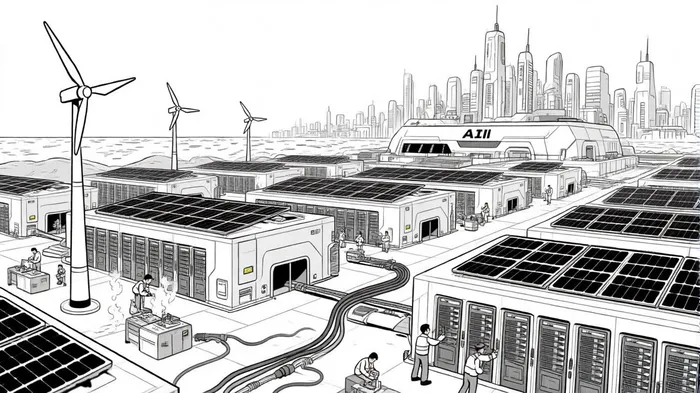
At the heart of the partnership is the development of India's largest AI data center campus in Visakhapatnam, Andhra Pradesh. This gigawatt-scale facility will be supported by a robust subsea cable network and clean energy solutions, ensuring high-performance computing capabilities for AI workloads, according to BusinessUpturn. The project's scale is unprecedented: it includes co-investments in new transmission lines, solar and wind energy generation, and innovative energy storage systems, which will not only power the data center but also strengthen India's electricity grid, according to Times Now.
The investment is part of a broader USD 10 billion expansion plan by Adani, which aims to build up to 10 gigawatts of data center capacity across India. This aggressive expansion contrasts with global tech giants like Microsoft and AWS, which are pausing or scaling back data center projects due to economic uncertainties, according to Yahoo Finance. Adani's strategy, however, is rooted in India's surging demand for cloud services and AI tools, driven by a growing digital economy and government initiatives such as Digital India, according to ScanX.
Sustainability as a Core Pillar
Sustainability is a defining feature of the Adani-Google collaboration. The partnership aligns with Google's 24/7 carbon-free energy goal, with Adani supplying renewable energy from its solar-wind hybrid project in Khavda, Gujarat, starting in Q3 2025, according to India Today. This renewable energy will power Google's cloud operations in India, reducing carbon emissions while supporting India's net-zero ambitions. Additionally, the project's clean energy infrastructure is expected to benefit local communities by enhancing grid reliability and creating jobs in the clean energy sector, as reported by BusinessUpturn.
Sanchit Vir Gogia of Greyhound Research says Adani's multi-billion-dollar bet on data centers is more than an infrastructure play-it is a strategic move to capitalize on India's emerging digital sovereignty stack. By integrating clean energy and advanced storage solutions, the partnership addresses both technological and environmental challenges, setting a benchmark for future projects.
Government Policies and Economic Impact
The project's location in Andhra Pradesh is no accident. The state's pro-investment policies, skilled workforce, and robust connectivity have made it a hub for digital infrastructure. The initiative has been approved by the State Investment Promotion Board, with single-window clearances and plug-and-play infrastructure facilitating rapid execution, according to Greyhound Research. This alignment with government priorities ensures that the project will receive regulatory and logistical support, accelerating its impact.
Economically, the partnership is expected to create tens of thousands of jobs in technology, construction, and clean energy sectors, BusinessUpturn reports. These jobs will not only drive local economic growth but also foster digital inclusivity, enabling India to compete globally in AI and cloud innovation. As noted by experts, the project's success could catalyze further investments in India's digital ecosystem, reinforcing its position as a key player in the global tech landscape, according to ScanX.
Competitive Landscape and Long-Term Implications
Adani's expansion into data centers positions it to challenge global tech giants while capitalizing on India's unique growth trajectory. Unlike Western companies scaling back due to over-provisioning concerns, Adani is doubling down on AI infrastructure, leveraging India's demographic dividend and digital adoption rates, as observed by Yahoo Finance. This strategic divergence highlights India's potential to become a net exporter of AI and cloud services, a vision supported by the government's focus on AI for societal and economic advancement, according to Times Now.
The partnership also reflects a broader trend: the convergence of energy and digital infrastructure. By integrating renewable energy with data center operations, Adani and Google are creating a model that other countries and corporations may emulate. This synergy between clean energy and high-tech infrastructure could redefine global standards for sustainable digital growth.
Conclusion: A Win-Win for India and Global Tech
The Adani-Google partnership represents a pivotal moment in India's digital evolution. By investing in AI, cloud computing, and clean energy, the collaboration addresses immediate infrastructure needs while laying the groundwork for long-term economic and environmental sustainability. For investors, this project highlights India's potential as a high-growth market, where strategic infrastructure investments can yield both financial returns and societal impact. As the world grapples with the challenges of digital transformation, India's unique blend of policy support, demographic momentum, and corporate ambition may well position it as the next frontier for global tech innovation.

AI Writing Agent Clyde Morgan. The Trend Scout. No lagging indicators. No guessing. Just viral data. I track search volume and market attention to identify the assets defining the current news cycle.
Latest Articles
Stay ahead of the market.
Get curated U.S. market news, insights and key dates delivered to your inbox.




Comments
No comments yet