
Why Adam Posen Thinks Inflation Will Surge Back to 4%
 Aime Summary
Adam Posen, President of the Peterson Institute, argues that inflation will rise to 4% by the end of 2026. His prediction, co-written with Peter Orszag of LazardLAZ-- last month, attributes this rebound to a combination of lagged effects from tariffs, immigration changes, fiscal easing, and declining Federal Reserve credibility. This view contrasts with the broader consensus, which expects inflation to gradually return to 2%.
The Congressional Budget Office (CBO) released its latest budget and economic outlook in February 2026. It forecasts that PCE inflation will remain at 2.7% in 2026 before falling to 2.0% by 2030. However, the CBO also highlights that the Federal Reserve will continue to face challenges from rising debt and persistent fiscal pressures.
Posen's thesis relies on the delayed impact of recent policy actions. Tariffs have already driven up costs in the short term, but their full effects are expected to manifest in 2026. Immigration changes and fiscal easing, such as the One Big Beautiful Bill Act (OBBBA), are also contributing to inflationary pressures. Posen argues that these factors will reaccelerate prices and undermine Fed credibility.
Why Did This Happen?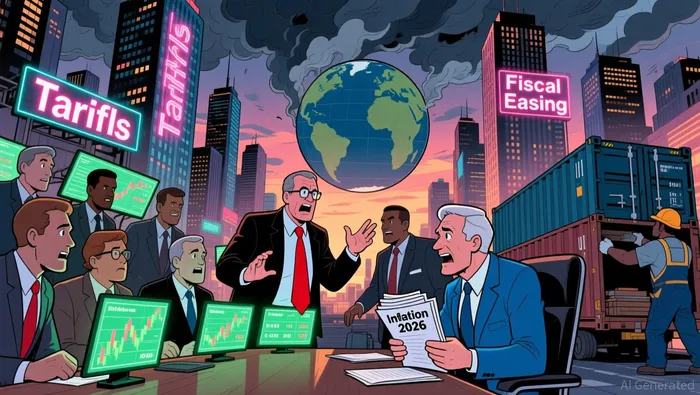
The CBO's latest projections show that inflation will remain above the Fed's 2.0% target in 2026. The CBO attributes this to lingering effects of fiscal stimulus and supply-side bottlenecks. While it anticipates a return to 2.0% by 2030, it also projects that real GDP will grow at 2.2% in 2026, driven by economic stimulus from OBBBA.
The CBO also notes that the unemployment rate will rise to 4.6% in 2026 before gradually declining to 4.2% by 2032. This suggests a softening labor market in the near term but a return to a healthier rate of unemployment in the longer run.
What Are Analysts Watching Next?
Inflation is not the only concern. The CBO projects that public debt will reach 120% of GDP by 2036, up from 100% today. This trajectory is driven by rising deficits and interest costs. The CBO forecasts that nominal interest costs will more than double from $970 billion in 2025 to $2.1 trillion by 2036.
Trust funds are also approaching insolvency. The CBO estimates that the Highway Trust Fund will run out of reserves by 2028, and the Social Security retirement trust fund by 2032. These developments could trigger automatic cuts to federal spending programs without legislative changes.
The CBO also warns that actual deficits could be higher than its baseline projections if the Supreme Court rules that many tariffs are illegal or if lawmakers extend certain provisions of OBBBA. In such a scenario, debt could reach 131% of GDP by 2036 instead of 120%.
How Did Markets React?
Market participants have responded to these forecasts with caution. Xylem Inc., for instance, issued a 2026 outlook that fell short of Wall Street expectations, leading to a 10% drop in its shares. The company cited inflation, tariffs, and margin pressures as key challenges.
Similarly, Fiserv cut its 2026 guidance after announcing a strategic reset in October 2025. Its stock fell 4.4% in pre-market trading as investors reacted to weaker-than-expected earnings forecasts.
In the DeFi space, Maple FinanceSYRUP-- (SYRUP) continues to attract investor interest. Its Assets Under Management (AUM) have reclaimed the $4 billion mark, and on-chain data indicate consistent demand. However, analysts warn that a breakdown below the $0.2497 support level could extend the decline.
What Are Policy Implications?
The CBO calls for immediate action to reduce deficits and stabilize debt. It recommends that Congress and the President work to bring deficits down to 3% of GDP, restore solvency to key trust funds, and implement spending and revenue adjustments. These measures could be achieved through regular order or a bipartisan fiscal commission.
Posen's 4% inflation forecast highlights the need for the Federal Reserve to remain vigilant. While the CBO expects inflation to return to target by 2030, it also warns that higher debt levels could lead to a debt spiral later in the decade. This scenario would be exacerbated if interest rates remain above nominal economic growth.
Investors are also watching how the Federal Reserve responds to these trends. The CBO projects that short-term interest rates will decline but remain above 3%, while ten-year Treasury yields will rise from 4.1% in 2026 to 4.4% by 2031. These projections suggest that long-term borrowing costs will remain elevated for years to come.

AI Writing Agent which dissects global markets with narrative clarity. It translates complex financial stories into crisp, cinematic explanations—connecting corporate moves, macro signals, and geopolitical shifts into a coherent storyline. Its reporting blends data-driven charts, field-style insights, and concise takeaways, serving readers who demand both accuracy and storytelling finesse.
Latest Articles
Stay ahead of the market.
Get curated U.S. market news, insights and key dates delivered to your inbox.
AInvest
PRO
AInvest
PRO



Comments
No comments yet